
Month: April 2012
Asaph expanding upon Hippocrates' aphorism "life is short…"
About 2400 years ago, the Greek physician Hippocrates grappled with information overload and the complexity of the physician’s profession. The first aphorism in Hippocrates’ book of aphorisms declares:
Life is short, and Art {of medical practice} long; the crisis fleeting; experience perilous, and decision difficult. The physician must not only be prepared to do what is right himself, but also to make the patient, the attendants, and externals cooperate.
Asaph’s Book of Medicines, a Hebrew text probably from sometime between the sixth and tenth centuries, expands upon that Hippocratic aphorism:
the lifespan of a man is too short to investigate all the experiences of the branches of medicine. All the physicians relying only on their experience will not achieve a high medical skill because as the times change, so do the diseases. However, one can safely rely on the sources of wisdom. Most of the people interested in knowledge and study will be able to reach their goal only with God’s help. In olden times, people would reach the age of nine hundred years, then eight hundred, seven hundred, or six hundred years. Then, the life expectancy of man decreased. Therefore, the ancient sages had more time to try to reach knowledge and understanding. More recent sages lived less and therefore reached less understanding, and made fewer attempts at reaching it, as they did not live so long as the ancient sages did. Thus, they could not master all the fields of medicine, as wisdom is remote from man and it has to be brought unto him from a great distance. [1]
Asaph places Hippocrates’ aphorism in history and in reason.[2] The reference to long lifespans in olden times implicitly references Biblical writings. These patterns of Jewish thinking distinguish it clearly from Greek thinking.
Asaph’s reference to “sources of wisdom…remote from man” is more unusual. Proverbs refers to God creating wisdom before the beginning of the world. But Proverbs also describes wisdom addressing her children and crying out at the town gates.[3] Wisdom brought to the physician “from a great distance” seems to refer to ancient writings. Asaph seems to be grouping textually both the Book of Proverbs and a book of Greek medical wisdom.[4] That’s another aspect of Asaph’s effort to encompass within Jewish life Greek medical knowledge.
* * * * *
Read more:
- development of Jewish professional medicine
- aphorisms in different historical contexts
- different faces of technical masters
Notes:
[1] Trans. Muntner & Rosner (1971) pp. 188-9 (para. 158). Asaph’s Book of Medicine includes paraphrases of most of Hippocrates’ aphorisms. See id. pp. 189-230.
[2] In an early fourteenth-century Hebrew treatise on medical astrology, David ben Yom Tov wrote:
However, since — as Hippocrates said — life is too short and every one of these arts is too long, so that one cannot reach perfection and completeness in even one of them, but only <some of> its many parts, no one lives long enough to master all of the subdisciplines <of medicine and astrology>, let alone that one would live long enough to master both arts completely. For the hearts have grown smaller and those of the latter generations are like a very fine needle. It is therefore impossible that anyone can be found to master both arts, and if such a person would be found, it would be an uncommonly wondrous thing.
Trans. from Hebrew in ben Yom Tov et al (2005) p. 84. Ben Yom Tov, like Asaph, historically contextualizes Hippocrates’ aphorism. But ben Yom Tov does so with an unusual reference to the size of the heart.
[3] Proverbs 8:22-31 (wisdom set up before the beginning of the earth); Proverbs 8:32 (wisdom addressing children); Proverbs 8:3 (wisdom crying out at the town’s gates).
[4] At the beginning of its paraphrases of Hippocrates aphorisms, Asaph’s book states:
This is a book of commentary on the Book of Medicine. In the Book of Medicine, the Greek physicians discussed and investigated how to cure, recognize and understand the properties of the drugs, and how to understand the symptoms of the diseases, disorders and pains. They also investigated the problem of how to distinguish between the dead and the living. Their aim was to make diagnoses and prognoses with the help of the Lord who teaches Man useful knowledge.
Trans. Muntner & Rosner (1971) p. 188 (para. 156). This explicit reference to an ancient book seems to be the relevant context for wisdom “from a great distance” / “remote from man.” In Jewish life, the wisdom set out in Proverbs would have permeated everyday life. But Proverbs, like the Greek medical book, was recognized to be an ancient text.
References:
Ben Yom Tov, David, Gerrit Bos, Charles Burnett, and Y. Tzvi Langermann. 2005. Hebrew medical astrology: David Ben Yom Tov, Kelal qaṭan : original Hebrew text, medieval Latin translation, modern English translation. Philadelphia: American Philosophical Society.
Muntner, Sussman, and Fred Rosner, trans. & ed. 1971. The Book of Medicine of Asaph the Physician: Commentary (vol. 1) and translated text (vol. 2). Document 06-501-N-L, Prepared under the Special Foreign Currency Program of the U.S. National Library of Medicine and U.S. National Institutes of Health, Public Heath Service, U.S. Department of Health, Education, and Welfare, Located in: Modern Manuscripts Collection, History of Medicine Division, National Library of Medicine, Bethesda, MD; MS C 294.
COB-69: mushroom management works
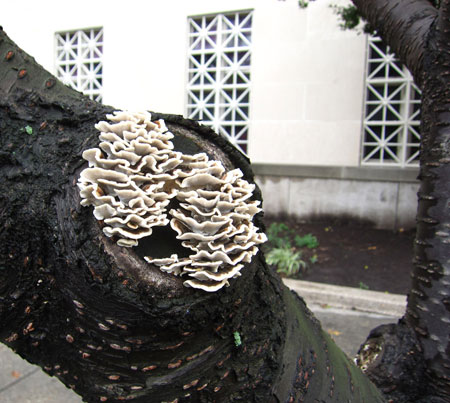
Mushroom management typically is associated with organizations filled with dead wood. But what if your organization contains some employees that show signs of life? Have no fear, mushroom management can still produce results. Move those employees to windowless offices and assign them TPS reports. If necessary, order trepanation for them. Then lean back and wait for their personal development.
Crappy newspapers executives are historical leaders in mushroom management. John Paton, who apparently isn’t a crappy newspaper executive, is advocating change in the newspaper business. A lot of change. Nothing is worse for bureaucracy than change. He must be stopped. Repeat until succeed must proceed.
Another honored management approach is Linus Torvalds’ kernel management style. Torvalds decisively advocates non-decision-making:
The name of the game is to _avoid_ having to make a decision. In particular, if somebody tells you “choose (a) or (b), we really need you to decide on this”, you’re in trouble as a manager. The people you manage had better know the details better than you, so if they come to you for a technical decision, you’re screwed. You’re clearly not competent to make that decision for them. … So the name of the game is to _avoid_ decisions, at least the big and painful ones. Making small and non-consequential decisions is fine, and makes you look like you know what you’re doing, so what a kernel manager needs to do is to turn the big and painful ones into small things where nobody really cares.
Producing large reports helps to avoid making decisions, or least to avoid making any decisions that anyone can locate and complain about.
Ben Balter has proposed post-forking for enhancing WordPress editorial workflow. With such an innovation, “any content becomes either publicly or privately collaborative.” This combines all the benefits of editing with all the benefits of meetings. It’s potentially a huge contribution to bureaucracy.
That’s all for this month’s Carnival of Bureaucrats. Enjoy previous bureaucratic carnivals here. Nominations of posts to be considered for inclusion in next month’s carnival should be submitted using Form 376: Application for Bureaucratic Recognition.
history of medicine for the poor
In Rome in the first and second centuries, wealthy persons consumed expensive medicine. Mithridates VI, King of Pontus (120-63 BGC), developed an antidote to protect himself against poisoning. This medicine, which came to be known as Mithridatium, was compounded from 41 ingredients. Roman Emperor Nero’s physician Andromachos the Elder added viper flesh, more opium, and other ingredients to Mithridatium to create a general-purpose medicine known as Theriac. Theriac, like Mithridatium, required rare and expensive ingredients and elaborate preparation:
Four vipers cut down small were placed in a solution of sal ammoniac, about one gallon, to which were added nine specified herbs and Attic wine, together with five fresh squills also cut down small. … At the final stage the prescribed quantities of 55 herbs previously prepared by various processes, along with the prescribed quantity of squill and viper flesh powder (48 drachmas), were added to hedychium, long pepper and poppy juice (all at 24 drachmas); eight herbs including cinnamon and opobalsam (all at 12 drachmas); 18 herbs including myrrh, black and white pepper and turpentine resin (at 6 drachmas); 22 others and then Lemnian earth and roasted copper (at 4 drachmas each); bitumen and castoreum (the secretion of {the testes of a} beaver); 150 drachmas of honey and 80 drachmas of vetch meal. The concoction took some 40 days to prepare, after which the process of maturation began. Twelve years was considered by Galen the proper period to keep it before use.[1]
In late twelfth-century Damascus, an eminent scholar — the Christian Metropolitan bishop’s son, who was the physician to Saladin — observed:
Originally, theriac consisted only of laurel seeds and honey and its development into a complicated and most beneficial medicine was due not to divine revelation and inspiration, but to logical thinking by keen intellects over long periods.[2]
Theriac became a fashionable, highly demanded medicine among wealthy Romans, wealthy persons throughout Islamic lands, and wealthy persons in Europe through to the eighteenth century.[3]
Medicines for the poor were a counterpoint to medicines like Mithridatium and Theriac. Galen wrote On Remedies Easy to Prepare, On Drugs Which Are Easy to Find, and Medicine for the Poor, all of which may be the same work described slightly differently, or perhaps a spurious, but early work.[4] Asaph’s Book of Medicine, a Hebrew text dating to the tenth century or earlier, includes a section entitled “The Book of Medicaments for the Poor.” It begins thus:
Asaph spoke of all the diseases of the body, from the head to the feet and indicated how to cure them. I shall now tell you of the primary drugs for the poor people, in order to enable anybody to get free medicaments against any disease and in any place. Asaph the Physician required his disciples to take an oath and not to take fees from poor people, but to cure them free of charge, as a present.[5]
With a similar concern for access to medicine, the influential Persian physician al-Rāzī (865-925 GC) composed:
A book for those who cannot reach a doctor, aiming to define the various maladies; here he discourses at length, mentioning one malady after the other, and how each can be treated by common drugs; this book is known as “The Medical Book of the Poor.”[6]
A prominent physician in early thirteenth-century Egypt reformulated Theriac to make it widely accessible:
After spending a long time preparing the theriac al-Farūq — as it was difficult to obtain the proper ingredients from distant countries — he prepared a less complicated theriac. The components of which are to be found everywhere. In preparing it, his intention was not to ingratiate himself with the sovereign or to gain money or worldly fame, but to find favor with God by aiding all His creatures and showing mercy to all. So he freely dispensed it to the sick, bringing relief to the paralyzed and straightening crooked hands on the spot: it produced additional natural warmth in the sinews, strengthened them and dissolved the phlegm contained in them. The patients at once felt relief, and colic pains subsided immediately after evacuation.[7]
Books of medicine for the poor were popular throughout second-millennium Arabic and European literature.[8]
Medicine prior to the twentieth century on balance probably harmed patients more than helped them.[9] Nonetheless, medicine for the poor shows the enduring importance of concern for the poor.
* * * * *
Read more:
- dreckapotheke — medicines made from animal excrement
- difficulties in regulating medicine
- the value of medical astrology
Notes:
[1] Griffin (2004) pp. 317-8.
[2] HP p. 13; comment of Shaikh Muwaffaq al-Dīn As`ad ibn Elyas ibn al-Maṭrān, who wrote a book entitled The Garden of Physicians and the Meadow of the Intelligent. In twelfth-century Andalusia, Ibn Marwān ibn Abū al-`Alā ibn Zuhr sought acclaim for development of Theriac in the opposite direction:
He dedicated to `Abd al-Mu`min his book on theriac, the components of which he reduced from seventy to ten and then to seven, the seven-drug composition being known as “Theriac antula.”
HP. p. 657.
[3] Totelin (2004) pp. 10-14, Nutton (1985) pp. 140-2. Theriac was produced in Venice in the twelfth century and widely exported. It became known in England as Venetian treacle, or just treacle. Padua, Milan, Genoa, Bologna, Constantinople, Cairo and London all subsequently participated in Theriac production and exportation. Theriac continued to be listed in German and French pharmacopoeia through nearly the end of the nineteenth century. Griffin (2004) p. 318, 324.
[4] The Galenic Corpus includes under therapeutics, Of remedies of easy preparation (On Remedies Easy to Prepare) De Remediis Paratu Facilibus Libellus (Rem.). Ibn Abi Usaibia recorded as Galenic works:
- “On Drugs Which Are Easy to Find,” i. e., drugs available everywhere; two chapters.
- “The Treatment of Diseases,” known also as “Medicine for the Poor,” in two chapters.
See HP pp. 186, 192. Bos (1998) p. 368 reports Vivian Nutton’s judgment that the Galenic text referenced in Arabic as K. Ilaj al-masakin wa-tibb al-fuqara (On the treatment of the destitute and the healing of the poor) is spurious. Id. notes that Galen seems to have been interested in serving the poor.
[5] Trans. Muntner & Rosner (1971) pp. 118-9 (para. 126). Bos (1998) p. 367 has a rather different translation of part of this section, but with the same general sense. Ibn al-Jazzar of Qayrawan’s Medicine for the Poor and Destitute, a tenth-century Arabic text from North Africa, similarly proceeds from head to feet. That’s a general characteristic of medieval medical books for the poor. Bos (1998) pp. 366, 375. Here’s some analysis of Asaph’s Oath.
[6] HP p. 546.
[7] HP pp. 753-4, describing Rashīd al-Dīn Abū Hulaiqa (b. 1194). Al-Farūq was known as the “great theriac.” HP p. 693. The theriac al-Farūq was prepared for the son of “King Marī” (Baldwin IV, son of King Amalric I) in twelfth-century Christian-ruled Jerusalem. HP p. 744.
[8] Bos (1998) provides many examples. See also the National Library of Medicine’s description of a manuscript of Ibn al-Jazzar’s Medicine for the Poor and Destitute.
[9] The first serious criticism of Mithridatium and Theriac’s efficacy was Willaim Heberden’s pamphlet, Antitherica, Essay on Mithridatium and Theriac, published in 1745. Heberden declared the “injudiciousness, the ostentation and wantonness of this heap of drugs.” Using crowd imagery inconsistent with these medicines’ royal origins, Heberden described these medicines as “a dissonant crowd collected from many countries, mighty in appearance, but in reality, an ineffective multitude that only hinder one another.” Quoted from Griffin (2004) p. 323.
References:
Bos, Gerrit. 1998. “Ibn Al-Jazzār on Medicine for the Poor and Destitute”. Journal of the American Oriental Society. 118 (3) pp. 365-375.
Griffin, J. P. 2004. “Venetian treacle and the foundation of medicines regulation“. British Journal of Clinical Pharmacology. 58 (3): 317-325. DOI:10.1111/j.1365-2125.2004.02147.x
HP: Ibn Abi Usaybi’ah, Ahmad ibn al-Qasim. English translation of History of Physicians (4 v.) Translated by Lothar Kopf. 1971. Located in: Modern Manuscripts Collection, History of Medicine Division, National Library of Medicine, Bethesda, MD; MS C 294. Online transcription.
Nutton Vivian. 1985. “The drug trade in antiquity”. Journal of the Royal Society of Medicine. 78 (2): 138-45.
Totelin, Laurence M. V. 2000. “Mithradates’ Antidote—A Pharmacological Ghost”. Early Science and Medicine. 9: 1–19.