A pharmacist demonstrated to the ninth-century Abbasid caliph al-Ma’mun that the pharmaceutical profession was poorly regulated. The pharmacist told al-Ma’mum:
it is a fact that a pharmacist will always have everything he is asked for, whether he really has it or not. He would hand over something he has in his shop and say that this is what is needed.
The pharmacist proposed an experiment to demonstrate his factual claim:
{The pharmacist said to al-Ma’mun} ‘if the Emir of the Faithful wishes, let him choose an unknown name and send a group of people to the different pharmacists to try and buy it. We shall then see what happens.’ Al-Ma’mun said: ‘I have already chosen a name — it is Saqatitha, which is the name of an estate not far from Baghdad.’ Al-Ma’mun sent several envoys to ask the pharmacists for Saqatitha. The pharmacists all said they had it, took the price from the envoys and gave them some object from their shop. They returned to al-Ma’mun with various objects — seeds, a piece of stone, hair, etc.
In addition to poor professional ethics among these pharmacists, an underlying regulatory problem is that drug buyers cannot effectively verify the properties of the drugs that they buy.
Medical patients also cannot easily know the effects of medical treatments. The personal physician to ninth-century Abbasid caliph al-Mu’tasim criticized another prominent physician, Yuhanna ibn Masawayhi:
The first thing in medicine is to know the measure of the illness, and to cure it with the appropriate treatment; Yuhanna, however, is the most ignorant of all God’s creatures as to the right measure of both illness and treatment. When he tends a person afflicted with fever, he gives him cooling medicines and food that induces cold and everything that might do away with his temperature, thus subjecting the patient’s stomach and body to a cold that needs treatment in its turn, by medicines and foods which induce heat. He treats this new condition in the way he did the first, with exaggeration, in order to do away with the cold, so that the sufferer falls ill from excessive heat. This way his master is always sick, either from heat or from cold. [2]
Some unethical doctors then and now treat patients to make them dependent on the doctor. At the same time, doctors often feel pressured by those under their care to “do something,” e.g. prescribe medicine, in response to their patients’ complaints. An eleventh-century physician in Cairo advised:
When summoned to a patient, first given him a medicine that is innocuous until you have diagnosed his illness, only then may you treat it. [3]
That advice implicitly recognizes patients’ demand for medicine, a demand that can be satisfied with medicine that has no effect.
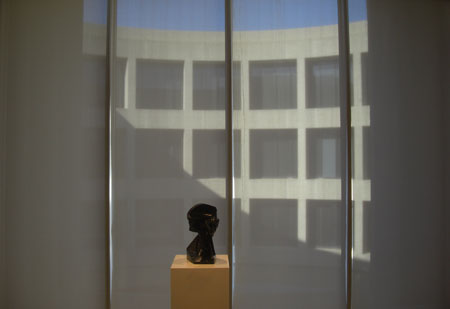
Because the human mind and body are physically one, medicine cannot treat just the patient’s body. A physician working in twelfth-century Baghdad had a patient who believed that a jar was perpetually resting on his head. The patient’s behavior was consistent with that belief:
Whenever he walked he used to avoid places with low ceilings, move gently and not let anyone get close to him, lest the jar incline or fall off his head.
The physician arranged with his servants for an imaginative treatment. When the patient arrived, the physician chatted with him and, setting up psychological tension, dismissed the patient’s report of a jar. Then the physician gestured to his servant:
The servant came and said, “By Allah, I have no other way but to break this jar in order to relieve you of it.” The servant swung the plank and struck at the air about an arm’s length above the patient’s head. At that moment the other servant cast down the jar from the roof. It made a tremendous crash and broke into fragments. When the sick man realized what had been done to him and saw the broken jar, he cried out in grief, being sure that this was his jar. This hallucination had such an effect on him that he recovered from his illness. [4]
The patient’s mental illness was real, and so was the cure.
Medical treatments historically have often been worse than the illness. A ninth-century physician, a favorite of Abbasid caliph al-Mu’tasim, taught the wisdom, “An ignorant physician instigates death.”[5] An eleventh century Cairo-based physician mocked a fellow physician with this poem:
Abu ‘l-Khair in the treatment of patients,
Has a hand that never fails.
Everyone seeking his assistance
Is buried after two days. [6]
Physicians commonly practiced bloodletting in response to a wide variety of symptoms. Bloodletting is now generally regarded as harmful. Physicians also commonly prescribed the medical concoction theriac for a wide variety of symptoms. Theriac, which had diverse and semi-secret ingredients, probably hurt most patients more than it helped.
Physicians who considered themselves experts struggled to have their expertise recognized. A physician working in twelfth-century Cairo wrote “an epistle on why it is difficult to find a competent physician and why ignoramuses are numerous”[7] Al-Razi (Rhazes), who practiced as a physician in early tenth-century Baghdad and Rey (near Tehran), wrote a series of works indicating professional frustration and defensiveness:
- a treatise on the motives which drive most people to seek the worst physicians rather than the best
- a treatise on why simple folk despise the expert physician
- an epistle on compound causes, the blamelessness of the physician, and the like
- an epistle on maladies which are fatal because of their severity and because of their unexpected occurrence, factors that prevent the physician from combating them, and his blamelessness in this respect
- an epistle on the fact that even the expert physician cannot cure all illnesses, for this would be an impossibility even for one with the skill of Hippocrates; but the physician deserves to be praised and thanked and the art of medicine glorified and honored, even though the physician cannot cure all illnesses even after he has risen above his contemporaries
- an epistle on the fact that the professional known by his profession is not to be found in the best fields, and not only in medicine; on the reason that the ignorant physicians, the boors and the women in the towns sometimes have more success in the treatment of certain maladies than the learned physicians, and the excusability of the latter
Al-Razi, who harshly criticized Islam, prophets, and revealed religion, engaged in extensive study of alchemy. He thus contributed significantly to the scientific development of chemistry. In retrospect, al-Razi’s expertise as a physician probably had little objective merit.
Ancient physicians’ wisdom has enduring value. A physician who practiced in eleventh-century Toledo advised:
drugs should not be used when it is sufficient to have recourse to an alimentary regime or the like. If it was absolutely necessary to employ drugs, he did not use compound ones {e.g. theriac} before trying the simple ones {e.g. an herb}. If he was forced to use the compound drugs, he restricted himself to as small dosages as possible.[9]
A physician in seventh-century Alexandria similarly advised, “Put the drug aside as long as your body can bear the illness.”[10] Human beings are wonderfully complex. Medical knowledge, the pharmaceutical industry, and the medical profession remain imperfect. Those realities should weigh in rational choice of medical treatment today.
* * * * *
Read more:
Notes:
[1] HP p. 301. The previous quote above is from id. In the translation, I have substituted the term pharmacist for the British-English term chemist.
[2] HP pp. 321-2. The criticizing physician was Salmawayhi ibn Bunan. According to Ishaq ibn Hunayn:
When Salmawayhi fell ill, al-Mu’tasin visited him and said, weeping: “Would you advise me what will be good for me after you have gone?” Salmawayhi replied: “You are very dear to me, my master, but you must turn to that bore Yuhanna ibn Masawayhi. When you complain of anything to him, and he prescribes different things for it, take the least complicated.”
Under treatment from Yuhann ibn Masawayhi, al-Mu’tasim died several months after Salmawayhi died. HP pp. 315-6. Yuhanna ibn Masawayhi’s treatment reportedly caused Salmawayhi’s death.
[3] HP p. 712 (advice of Ali ibn Ridwan).
[4] HP p. 504 (treatment of Awhad al-Zaman). The ninth-century Persian physician al-Razi was known for saying:
A physician must always be encouraging to his patient abut his health and hope for it, even when he entertains doubts, for the state of the body follows that of the spirits.
[5] HP p. 532 (saying of Ibn Raban al-Tabari).
[6] HP p. 720 (poem of Jurjis from Antioch, called in the West Abu-l-Baida). The mocked physician, Abu ‘l-Khair, was also known as Salama ibn Rahmun.
[7] HP p. 722 (epistle of Ibn al-Ainzarbi).
[8] HP pp. 547, 552. Al-Razi’s frustration and concern about competitors also extended to his fellow physicians. Among the sayings for which Al-Razi was known are these:
- The physicians who are ignorant and copiers and the young ones who have no experience and no knowledge, only desires, are all murderers.
- A patient must stick to one reliable physician only, for an error on his part, compared to his rightness, would be a trifling one.
- A patient who consults many physicians causes each one of them to fall into error.
HP p. 543.
[9] HP p. 637 (advice of Ibn Wafid).
[10] HP p. 222 (advice of Ibn Abjar). Similar wisdom occurs in a saying attributed to the seventh-century physician Nafi ibn al-Harith: “Avoid the use of remedies as long as possible; take them only when it is absolutely necessary, for whatever their benefit, the harm they do is as great.” HP p. 214.
Reference:
HP: Ibn Abi Usaybi’ah, Ahmad ibn al-Qasim. English translation of History of Physicians (4 v.) Translated by Lothar Kopf. 1971. Located in: Modern Manuscripts Collection, History of Medicine Division, National Library of Medicine, Bethesda, MD; MS C 294.

