flower of flowers: beloved woman as loveliest flower

In praising the greatness of God, a psalmist proclaimed:

Give thanks to the God of gods, for his mercy endures forever.
Give thanks to the Lord of lords, for his mercy endures forever. [1]

{ הודו לאלהי האלהים כי לעולם חסדו׃

הודו לאדני האדנים כי לעלם חסדו׃ }

The grammatical pattern of phrases like “God of gods” is an ancient specification for superlatives. In Psalms, “God of gods” refers to the one beloved God devoted to his specific people through a covenant like marriage. Men, prone as they are to gyno-idolatry, applied the “God of gods” grammatical pattern to beautiful women. To Meleager of Gadara more than two millennia ago, the exotic and loving young woman Zenophila was “the freshest flower of flowers {ἐν ἄνθεσιν ὥριμον ἄνθος}.”[2]

Some medieval men focused on clever flower-arranging instead of the arduous work of incarnating love on a daily basis. In a panegyric for the sixth-century Merovingian king Childebert II, the Italian poet Venantius Fortunatus described Childebert as:

a flowering flower of flowers, flowing with your flowery flower

{ florum flos florens , florea flore fluens }[3]

That’s flattery. In the context of seeking love, women tend to interpret flattery as a sign of weakness and desperation. The twelfth-century grammarian Serlo of Wilton played a more sophisticated game. He wrote:

A flower to the flower of flowers: “Flower, bloom your flower in moisture.
You are changeless splendor. You offer it to me, you more significant than I.
Spring of true spring, in truth spring, in spring you want
apples to be seen. Flower, you appear! You redden in perspiration. You shine more greatly!”

{ Flos floris flori: “Florem, flos, flore liquori.
Es nitor equalis. Mihi das, mihi plus specialis.
Ver veris veri, vero, ver, vere videri
vis mala. Flos, pares! Spumis rutilas. Mage clares!” }[4]

As a young man, Serlo of Wilton ardently loved women. This poem seems to be an erotic address of a young man (“a flower”) to his beloved young woman (“the flower of flowers”) in intimate embrace. It shows men’s characteristic self-devaluation relative to women, as well as men’s appreciation for women’s sexuality and the beauty of women’s vaginas. Yet this poem isn’t constructed as personal and spontaneous. It presents the words “flower {flos}” and “spring {ver}” serially in the standard grammatical Latin declension of six cases. Such formal verbal play undermines the intensely personal relation of incarnate love.

Flora, Roman goddess of flowers

Perhaps reacting to phrases such as “flower of flowers {flos florum}” and other formalistic uses of flowers in prior love poetry, a medieval poet insisted on the sensuous, incarnate reality of his beloved. She just happened to be named Flora, the same name as the ancient Roman goddess of flowers. But this Flora is as real as smell, sight, and sound:

My flower, pick a flower, because a flower designates love.
For this flower I am a prisoner with excessive love.
Sweetest Flora, always have the scent of this flower
so your beauty will be as lovely as the dawn.
Flora, see the flower, and when you see it, laugh for me!
To the flower speak well. Your voice is a nightingale’s song.
Give kisses to the flower. The flower becomes your red lips.

{ Suscipe, flos, florem, quia flos designat amorem.
Illo de flore nimio sum captus amore.
Hunc florem, Flora dulcissima, semper odora.
Nam velut aurora fiet tua forma decora.
Florem, Flora, vide, quem dum videas, michi ride.
Flori fare bene; tua vox cantus philomenae.
Oscula des flori, rubeo flos convenit ori. }[5]

A flower designates love, but this Flora isn’t just a representation. She’s a flesh-and-blood woman with sensory appeal richer than a glossy picture. This poem ends with an epigram:

The flower in a picture is not a flower but a figure.
One who paints a flower doesn’t paint the flower’s smell.

{ Flos in pictura non est flos, immo figura;
qui pingit florem, non pingit floris odorem. }

The thirteenth-century Romance of the Rose taught this wisdom so that other men would not be as foolish as Pygmalion. This poet, writing prior to the Romance of the Rose, had already learned the difference between a representation of a flower and an actual, beloved person.

woman receiving flowers from a man: illumination for "Suscipe, flos, florem" in the Carmina Burana

The “flower of flowers {flos florum}” can mean something other than abstractly the greatest or best flower. Like “God of gods” in Hebrew scripture, “flower of flowers” can also imply a particular personal relationship. The poem “My flower, pick a flower {Suscipe, flos, florem},” comes close to the phrase “flos florum,” but deliberately avoids it. The flower in this poem is a personally special flower, Flora. She is his flower, and she is as lovely as an actual flower. He wants to be her beloved. She and he are living persons. This poem expresses the Hebrew biblical sense of “God of gods” without using the phrase “flower of flowers {flos florum}.”

* * * * *

Read more:

Notes:

[1] Psalms 136:2-3. Similar phrases occur in Ezra 7:12, Ezekiel 26:7, Daniel 2:37, 1 Timothy 6:15, and Revelation 17:14, 19:16.

[2] Meleager of Gadara, Greek Anthology 5.144, “Already the white violet flowers {ἤδη λευκόιον θάλλει},” v. 3, ancient Greek text from Paton (1916-18), English translation from Dronke (1965) vol. 1, p. 181. For a review of the “flower of flowers {flos florum}” construction in ancient and medieval literature, but largely excluding the Bible, Donke (1965) vol. 1, pp. 181-92. Expressions such as “flower of flowers {flos florum}” and “rose of roses {rosa rosarum}” became common in hymns in Europe in the twelfth century. Id. p. 186. Dronke emphasized the abstract sense of “flos florum”:

The divine flower is the flower of flowers, uniting all their perfections and fulfilling them in a greater perfection.

Id. p. 184. In Godfrey of Saint-Victor’s twelfth-century sequence, Mary, bitterly lamenting the death of her son Jesus, declared

Flower of flowers, prince of morals,
fount of forgiveness,
how heavy with nails
is your punishment!

{ Flos florum, dux morum,
veniae vena,
quam gravis in clavis
est tibi poena! }

Carmina Burana, 14 additional, “Earlier not knowing lamentation {Planctus ante nescia},” stanza 3a, Latin text and English translation (modified slightly) from Traill (2018). This stanza connects Jesus’s abstract excellence to Jesus specifically being punished with nails on a cross.

[3] Venantius Fortunatus, Songs {Carmina}, Appendix 5, v. 10, Latin text from Leo (1881) p. 279, my English translation. This poem displays Venantius’s “greatest self-indulgence.” He uses “prosodic ornaments the way desperate amateur fiddlers use vibrato.” Levine (2008) p. 85.

[4] Serlo of Wilton, “A flower to the flower of flowers {Flos floris flori},” Latin text from Dronke (1965) vol. 2, p. 505, my English translation, benefiting from that of id. This poem survives on folio 59v of Paris, BnF Latin 6765. It’s poem 19 in Öberg (1965). In v. 3, Öberg reads “ver o ver” rather than Dronke’s “vero ver,” and in v. 4, “vis mea” rather than Dronke’s “vis mala.” Donke’s readings of the Latin text seem to me to make better sense.

Understandings / translations of this poem have varied considerably. It presents a variety of technical difficulties:

the denotative sense of the words dissipates before the verbal play and the poem becomes a weird textbook, declining flowers and spring into an absurdity of words and shifting forms … Such a poem is far more about grammatical forms, the ambiguities of syntax, and the shifting meaning of signs than it is about any objective subject matter.

Moser (2004) p. 156. My sense is that this poem is best read in the context of Serlo’s other love poems.

[5] Carmina Burana 186, “My flower, pick a flower {Suscipe, flos, florem},” vv. 1-7, Latin text and English translation (modified) from Traill (2018). The subsequent quote above is similarly vv. 8-9 (of 9) of “Suscipe, flos, florem.” Here’s the Mediaeval Baebes’ version of this song from their 2014 album Temptation.

[images] (1) Flora, the ancient Roman goddess of flowers. Painted by Jan Matsys in 1559. Preserved in the Hamburger Kunsthalle (Hamburg, Germany). Via Wikimedia Commons. (2) Woman receiving flowers from a man. Illumination for “Suscipe, flos, florem” on folio 72v of the Carmina Burana (München, Bayerische Staatsbibliothek, Clm 4660).

References:

Dronke, Peter. 1965. Medieval Latin and the Rise of European Love-Lyric. 2 vols. Vol. 1Vol. 2. Oxford: Clarendon Press.

Leo, Friedrich, ed. 1881. Venanti Honori Clementiani Fortunati presbyteri italici Opera poetica. Berolini: apud Weidmannos.

Levine, Robert. 2008. “Patronage and Erotic Rhetoric in the Sixth Century: The Case of Venantius Fortunatus.” Medieval and Renaissance Texts and Studies. 347: 75-94.

Moser, Thomas C. 2004. A Cosmos of Desire: the medieval Latin erotic lyric in English manuscripts. Ann Arbor: University of Michigan Press.

Öberg, Jan, ed. 1965. Serlon de Wilton: Poèmes Latins. Stockholm: Almqvist och Wiksell.

Paton, W.R., ed and trans. 1916-18. The Greek Anthology with an English Translation. London: William Heinemann (vol. I, bks. 1-6; vol. II, bks. 7-8; vol. III, bk. 9; vol IV, bks. 10-12; vol. V, bks. 13-16).

Traill, David A. 2018, ed. and trans. Carmina Burana. Dumbarton Oaks Medieval Library, 48-49. Cambridge, Massachusetts: Harvard University Press.

piggish men rebel against constraints of men’s lives

Men have long been disparaged as pigs. In the ancient Greek Odyssey, Queen Circe welcomed some of Odysseus’s men to her island of Aeaea. Then, with drugs and a stroke of her magic wand, she turned them into pigs. Women shouldn’t make men into their kept pigs.

Odysseus rescued his men. He threatened Circe with his sword. Seeing his tool, she supplicated him and begged him to unite with her in bed. But Odysseus, a man alive in more than just his little head, was wary:

Circe, how can you ask me to treat you with warmth,
you who in your halls have made my men into pigs,
and now detain me here, with guile bidding me
into your bed-chamber so that once I lie there
naked you may make me unmanly and vile.
Go to bed with you? Not me, not
until you consent to swear, goddess, a binding oath
that you’ll never plot new intrigue to hurt me.

{ ὦ Κίρκη, πῶς γάρ με κέλεαι σοὶ ἤπιον εἶναι,
ἥ μοι σῦς μὲν ἔθηκας ἐνὶ μεγάροισιν ἑταίρους,
αὐτὸν δ᾽ ἐνθάδ᾽ ἔχουσα δολοφρονέουσα κελεύεις
ἐς θάλαμόν τ᾽ ἰέναι καὶ σῆς ἐπιβήμεναι εὐνῆς,
ὄφρα με γυμνωθέντα κακὸν καὶ ἀνήνορα θήῃς.
οὐδ᾽ ἂν ἐγώ γ᾽ ἐθέλοιμι τεῆς ἐπιβήμεναι εὐνῆς,
εἰ μή μοι τλαίης γε, θεά, μέγαν ὅρκον ὀμόσσαι
μή τί μοι αὐτῷ πῆμα κακὸν βουλευσέμεν ἄλλο. }

After Circe swore not to trick him and not to emasculate him, Odysseus slept with her.

Of course Odysseus couldn’t joyfully do manly work while his men were kept as pigs. To hearten Odysseus, Circe released her kept pigs and returned them to their natural manly form. Odysseus and his men rejoiced to once again enjoy manly fellowship.

Odysseus remained at Circe’s home for a full year. He fulfilled husbandly duties for her while relaxing and feasting every night with his men. Odysseus and his men probably became fat. While men deserve a relaxing and comfortable home-based life, getting fat is bad for men’s health.

Odysseus’s men urged him to think of his home in Ithaca, where his wife Penelope and his son Telemachus awaited his return. Odysseus had been a conventional husband and father. He managed the queendom and fought to defend it. Circe required no such work from him. Some argue that a man must be insane to marry. Why should Odysseus, relaxing and feasting in Circe’s home, return to his conventional married life in Ithaca? He probably feared that if he didn’t return, he would be remembered not as a hero, but as a liar and a pig.

About two millennia later, Ersilia and Galeotto, rulers of the queendom of Anglia, were childless. Then three fairies charmed Ersilia. She subsequently gave birth to a son who appeared to be a pig. Ersilia and Galeotto loved their son even though he was a pig:

The child then, brought up carefully, would often come to his mother and, raising himself on his hind feet, put his snout and forefeet in her lap. The loving mother would in turn caress him, putting her hands on his bristly back, and hug and kiss him, no differently than if he were a human creature. And the child would curl his tail and show with obvious signs that the maternal caresses pleased him very much. The piglet, once somewhat grown, began to speak like a human and go about the city. Where there was garbage and filth, he would thrust himself into it, as pigs do. Afterwards, all dirty and stinking, he would return home. Running up to his father and mother and rubbing himself around their clothes, he made them all filthy with dung. But because he was their only son, they suffered everything in patience.

{ Il bambino adunque, diligentemente nodrito, sovente veniva alla madre, e, levatosi in piedi, le poneva il grognetto e le zampette in grembo. E la pietosa madre all’incontro lo accarezzava, ponendoli le mani sopra la pilosa schiena, ed abbracciavalo e basciavalo, non altrimenti che creatura umana si fusse. Ed il bambino avinchiavasi la coda, e con evidentissimi segni le materne carezze esserli molto grate le dimostrava. Il porcelletto, essendo alquanto cresciuto, cominciò umanamente parlare e andarsene per la città; e dove erano l’immondizie e le lordure, sì come fanno i porci, dentro se li cacciava. Dopo, così lordo e puzzolente, si ritornava a casa: e, accostatosi al padre ed alla madre e fregandosi intorno alle vestimenta loro, tutte da letame gli le imbruttava; e perciò che egli gli era unico figliuolo, ogni cosa pazientemente sofferivano. }[2]

When the pig grew older, he told his mother that he wanted to marry. His mother warned him that no woman would have a pig-man as her husband.

One day the pig declared that he wanted to marry a particular young woman. She was the eldest daughter of a poor woman with three daughters. Being married to a prince would be highly advantageous to the daughter and her mother, even if the prince were a pig. The daughter didn’t want to marry the pig-prince. Her mother persuaded her to marry him.

The daughter planned to kill her pig-husband on their wedding night. But the pig learned of her plan. After she had fallen asleep, he killed her in self-defense. Killing a spouse in self-defense is legal under the broad “battered wife” legal doctrine. Nonetheless, the queen harshly reproached her pig-son for killing his wife.

The pig wanted to marry his deceased wife’s sister. In response, the king favored killing his son to prevent him from committing more acts of self-defense. But the queen refused to allow her pig-son to be killed. Moreover, she persuaded the poor woman and her second-eldest daughter to accept a marriage to the pig-prince. Unfortunately, that marriage went as did the prior one. The pig killed his second wife in self-defense.

Now the pig wanted to marry the third daughter. Pig-men just don’t learn from experience. He told his mother of his desire. Furious, she absolutely denied his request. Then the pig threatened to kill his mother if she didn’t do what he wanted. That’s despicable. Nonetheless, still loving her son, she didn’t have him arrested and imprisoned for threatening murder. Instead, she humbly begged the poor woman’s youngest daughter, named Meldina, to marry her pig-son:

Meldina, my daughter, I want you to take Sir Pig for your husband. Do not have regard for him, but for his father and me. If you will come to know how to make yourself comfortable with him, you will be the luckiest and happiest lady that one can find.

{ Meldina, figliuola mia, voglio che tu prendi messer lo porco per tuo sposo: nè aver rispetto a lui, ma al padre suo e a me; che, se tu saprai ben esser con esso lui, sarai la più felice e la più contenta donna che si trovi. }

Meldina calmly responded that she would be honored as a poor woman to marry into the royal family. The queen wept at Meldina’s sweet spirit. The queen also feared for Meldina’s safety.

The just-married Meldina, dressed in lavish clothes and precious jewels, eagerly awaited her husband. Sir Pig arrived in his usual filthy state. The queen, who had supplied Meldina with her lavish attire, told her to push the pig away. But Meldina wisely said to the queen:

Sacred Majesty, of old
three wise lessons I’ve been told:
first, don’t waste your effort, please,
to seek impossibilities;
second, don’t go trusting quite
in things that are not fair and right;
third, the precious gift you hold
value as the rarest gold.

{ Tre cose ho già sentite raccontare,
Sacra corona veneranda e pia:
L’una, quel ch’è impossibile truovare,
Andar cercando, è troppo gran pazzia;
L’altra, a quel tutto fede non prestare,
Che ’n sè non ha ragion nè dritta via;
La terza, il dono prezioso e raro
C’hai nelle mani, fa che ’l tenghi caro. }

In light of such wisdom, wife and husband not only tolerated each other, but also loved each other dearly:

Sir Pig, who was not sleeping but heard clearly everything his wife had said, rose to his feet. He licked her face, her throat, her breasts, and her shoulders. She in turn caressed and kissed him, so that he was totally kindled with love. When the hour of repose came, the bride went to bed, waiting for her dear husband to come. It was not long before that husband, all filthy and stinking, went to bed. And she, raising the cover, bid him to come nearer to her. She set his head on the pillow, covering him well and closing the curtains so that he wouldn’t get a chill. When daylight came, Sir Pig, leaving the mattress full of manure, went off to feed.

{ Messer lo porco, che non dormiva ma il tutto chiaramente intendeva, levatosi in piedi, le lingeva il viso, la gola, il petto e le spalle; ed ella all’incontro l’accarezzava e basciava, sì che egli tutto d’amore si accendeva. Venuta l’ora di posare, andossene la sposa in letto, aspettando che ’l suo caro sposo se ne venisse; e non stette molto che ’l sposo, tutto lordo e puzzolente, se n’andò al letto. Ed ella, levata la coltre, se lo fece venire appresso, e sopra il guanciale li conciò la testa: coprendolo bene e chiudendo le cortine, acciò che freddo non patisse. Messer lo porco, venuto il giorno, e avendo lasciato il materasso pieno di sterco, se n’andò alla pastura. }

The queen feared that she would find her daughter-in-law dead after one night of marriage to her pig-son. Meldina instead was happy, even though her bed was covered with filth.

Some days later, the pig-prince revealed his secret to his wife. He showed her that he was merely wearing a stinking and dirty pigskin. Underneath that skin he was a fully human being, a man, an attractive and handsome young man. He embraced Meldina. All night long they enjoyed the delights of intimacy in their common human form. The following morning Meldina’s husband put on again his pigskin. He apparently didn’t want to be a man within the sexual feudalism of the court, nor to incur men’s obligation to risk death in the gender-discriminatory, men-on-men violence of war.[3]

Soon Meldina became pregnant. She birthed a handsome son, not a pig-human hybrid, but a fully human son. The queen and king were delighted to be grandparents of a fully human being. So too was Meldina. She couldn’t restrain herself from revealing her husband’s secret to her mother-in-law:

Most prudent queen, I thought that I was married to a beast. But you have given me for a husband the most handsome, the most virtuous, and the best-mannered young man that nature ever created. When he comes into my bedroom to lie down beside me, he takes off his stinking hide and, dropping it on the ground, becomes a tidy and lovely young man. No one could believe it, if she didn’t see it with her own eyes.

{ Prudentissima Reina, io mi credevo esser accompagnata con una bestia; ma voi mi avete dato per marito il più bello, il più vertuoso e il più accostumato giovane che mai la natura creasse. Egli, quando viene in camera per accoricarsi appresso me, si spoglia la puzzolente scorza, e, in terra quella diposta, un attilato e leggiadro giovane rimane. Il che niuno potrebbe credere, se con gli occhi propi non lo vedesse. }

The queen, who thought that she knew her own son, didn’t believe her daughter-in-law. So Meldina told her to come at night and peep into their bed-chamber.

That night the queen brought candles and the king to peep upon their son and daughter-in-law in bed. Looking into the bedroom, they saw a pigskin dropped on the floor. Men commonly drop with their clothes on the floor. In the bed, their son, looking and acting like a fully human man, was embracing his wife. The queen and king rejoiced. The king, undoubtedly following his wife’s order, commanded that the pigskin be shredded. Of course the royal couple never asked their son why he sought to avoid appearing to be a man. Men’s protests against gender injustices have long been suppressed.

Melinda’s husband became the new nominal king of Anglia. The people called him the Pig-King. He ruled in a way that pleased all the women of the realm. The men of the realm didn’t complain. Men relatively rarely complain. Meldina and her husband loved each other dearly and lived happily ever after. Their story is a conventional fairy tale for those who cannot perceive a piggish voice of men’s sexed protest.

* * * * *

Read more:

Notes:

[1] Homer, Odyssey 10.337-44, ancient Greek text from Murray (1919) via Perseus, my English translation, benefiting from those of id., Kline (2004), and Fagles (1996). Steadman (2020) provides helpful reading resources.

[2] Giovanni (Zoan) Francesco Straparola, The Pleasant Nights {Le Piacevoli Notti}, Night 2, Story 1, Italian text from Rua (1899), English translation (modified) from Smarr (1983) pp. 167-73. Le Piacevoli Notti was first published in Venice in 1550. Subsequent quotes above are similarly from this story. For alternate English translations, Beecher (2012) and Waters (1894).

Beecher offered a gynocentric interpretation of this pig-man tale:

Embedded in the narrative genes of Straparola’s tale is a memory of the struggle for purgatorial purification and redemption; in its future is the struggle for the psychological reform that makes a man fit company for female society. One is vestigial, the other in ovo.

Beecher (2012) vol. 1, p. 281. To the contrary, Straparola’s tale seems to me to provide women with insight into being loving spouses for men as they are. The challenge is significant, but the reward is great. Beecher at least declared, “Amusingly, our sympathy is on the side of the pig.” Id. p. 285. More sympathy for men would help to reduce systemic gender injustices causing, among other horrible effects, a massive male gender protrusion in the population of persons incarcerated.

Folklorists categorize this story as a “beast-bridegroom” tale, ATU 425A. It’s related to the well-know fairy-tales “Beauty and the Beast” and “Cinderella.” Beecher considered it to be rooted in Indian literature. He ignored the story of Circe, Odysseus, and his men in the Odyssey.

[3] Beecher characterized this tale as:

an emblematic depiction of the necessary adjustments within the couple whereby wifely tolerance and compassion ultimately reform the savage beast, allowing him to escape from his arrested self. That feature was later enhanced in the ‘Beauty and the Beast’ tradition in which the beast with a potential for kindness finds his better self through the ministrations of a sympathetic woman.

Beecher (2012) vol. 1, p. 282. The pig-husband revealed his secret to his wife because she loved him for what he was. That meninist moral has nothing to do with reforming a savage beast.

[image] Group of pigs. Photo by kallerna at a pig farm in Vampula, Finland, on July 31, 2021. Via Wikimedia Commons.

References:

Beecher, Donald. 2012. Giovanni Francesco Straparola. The Pleasant Nights. 2 vols. Toronto: University of Toronto Press.

Fagles, Robert, trans. 1996. Homer. The Odyssey. New York: Penguin Publishing Group.

Kline, A. S. 2004. Homer: The Odyssey. Poetry in Translation. Online.

Murray, A. T., ed. and trans., revised by George E. Dimock. 1919. Homer. Odyssey. Volume I: Books 1-12. Loeb Classical Library 104. Cambridge, MA: Harvard University Press.

Rua, Giuseppe. 1899. Le piacevoli notti di M. Giovanfrancesco Straparola da Caravaggio nelle quali si contengono le favole con i loro enimmi da dieci donne e duo giovani raccontate. 2 vols. Bologna: Romagnoli-Dall’ Acqua. Alternate presentation of 1927 edition.

Smarr, Janet Levarie, trans.. 1983. Italian Renaissance Tales: Selected and Translated, with an Introduction. Rochester, MI: Solaris Press.

Steadman, Geoffrey. 2020. Odyssey 9-12 Commentary. Online.

Waters, W.G., trans. 1894. Giovanni Francesco Straparola. The Nights. Vol. 1. Vol. 2. London: Lawrence and Bullen. Alternate presentation: vol. 1, vol. 2.

Indian-Persian-Arabic-Jewish-Christian wisdom in rotten world

The world has always been rotten. Translating into Middle Persian the ancient Indian wisdom of the Panchatantra, the sixth-century Persian royal physician Borzuya lamented:

We find, O my honored brethren and distinguished teachers, that the world is going backwards in this hard time of ours, in this our evil and vexatious generation. [1]

In the eighth-century Islamic caliphate, ibn al-Muqaffa translated Borzuya’s work into Arabic as the Kalila wa Dimna. In the eleventh century, a Syriac Christian translated Kalila wa Dimna into Syriac. Elaborating upon Borzuya’s claim that he was living among an “evil and vexatious generation,” the Syriac translator about five centuries later interpolated his own despair:

So it is especially in the days in which it has seemed good to your Excellency that this book should be brought to light and translated from Arabic into Syriac. For we find that the truth on which the world has been founded, and on which as if on solid adamant the Church of Christ has been built, is especially hidden by the teachers of the Church and the pastors of God. Yes, they have hidden in the heart of the earth that love which is the perfecter of all virtues, according to the testimony of the wise architect and zealous treasurer and heavenly apostle. Love is utterly taken from the world, especially from the priests and from those who seek the priestly office. Love is laid in the dust of the earth. [2]

The Syriac translator strongly criticized his fellow men of the Church:

Finally, the whole mass of humanity, especially the men of the Church, have put away the remembrance of the end from before their eyes. They have cast the fear of the Judge and of His keen vengeance behind their backs.

The Indian-Persian-Arabic worldly wisdom of Kalila wa Dimna is an alternative to corrupted or ignored Christian ethics. A sense of Christian ethical despair may have motivated the translation of Kalila wa Dimna from Arabic into Syriac in the eleventh century.

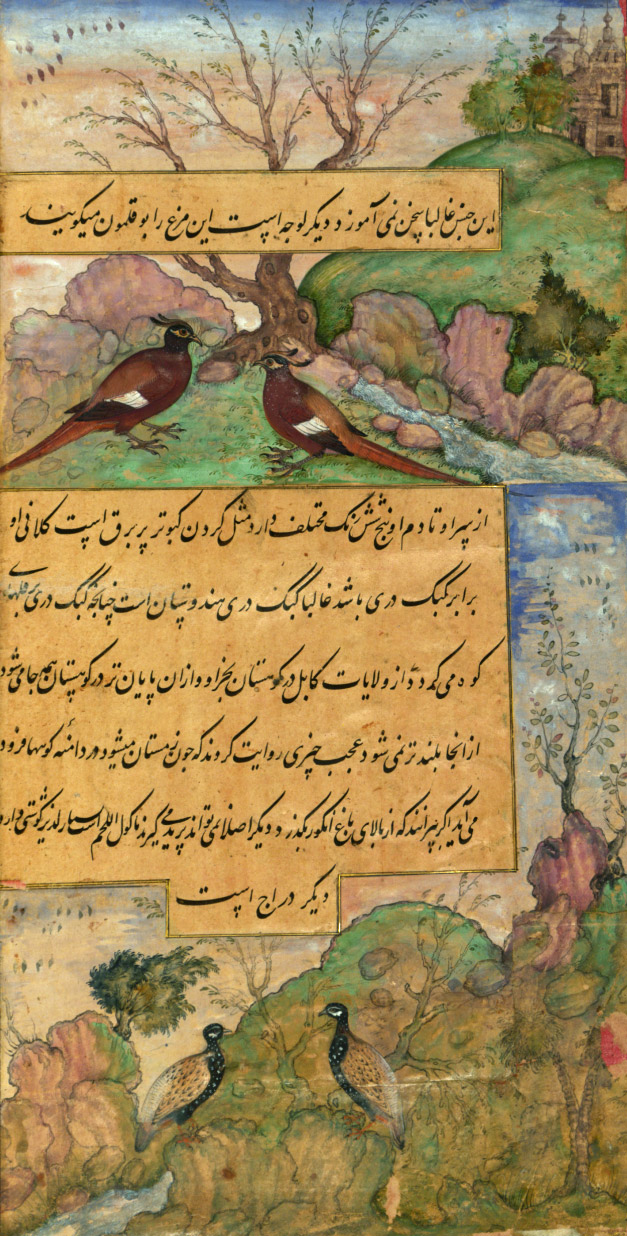
One story in Kalila wa Dimna suggests the eminence of Jewish scholars. A traveler met a holy man zealous in following his religious duties. The holy man welcomed the traveler as his guest and served him dates. In the course of their conversation, the holy man spoke Hebrew. The guest found Hebrew to be beautiful and desired to learn it. The holy man then instructed his guest with a story of a crow and a partridge. The crow saw a partridge strutting about and admired its manner of walking. The crow attempted to imitate the partridge, but couldn’t. In attempting to imitate the partridge, the crow corrupted his own manner of walking and became the most graceless of all birds. The holy man thus warned his guest not to attempt to learn Hebrew, for he would fail and moreover spoil his ability to speak his own language well.[3]

The story of the holy man and his guest suggests that, in the time and place of its composition, Hebrew was a prestigious language. That’s consistent with this story being written between roughly 550 GC and 1000 GC in central Mesopotamia. The Pumbedita Yeshiva and Sura Yeshiva then led highly regarded Jewish learning in central Mesopotamia (“Babylonia”). Persians, Christians, and Arabs probably regarded with a mixture of admiration and cultural fear eminent Jewish holy men representing such learning. The story of the holy man and this guest supports cultural insularity and defensiveness.

holy man and his guest in illustration to Kalila wa Dimna

In despair about Christian culture and translating the Indian-Persian-Arabic wisdom of Kalila wa Dimna, the Syriac translator was culturally defensive. He eliminated references to Hebrew in translating the story of the holy man and his guest. In his Syriac translation, the traveling guest refers only to a language that’s pleasant-sounding and that the wise desire to know. The Syriac translator also inserted into his translation many unmarked Biblical quotations as well as references to God coded as “the wise one,” “the chief of the wise,” or “the Witness.” While broadening access to Indian-Persian-Arabic wisdom, the Syriac translator also promoted Christian wisdom.

The Syriac translator’s inserted Christian wisdom makes Kalila wa Dimna more complex. Consider the story of the King of Kashmir and his talking pet bird Fanzah. The King’s boy and Fanzah’s fledgling son became friends. But one day the boy became annoyed at his young avian friend and killed him. Fanzah in retaliation gouged out the boy’s eyes and then flew to safety on a high perch outside the King’s palace. The King urged Fanzah to return. The King said that Fanzah had rightly taken vengeance and promised that he would not seek to harm Fanzah. Fanzah refused to return, even after a long, philosophical argument about dispelling anger, change of heart, and overcoming fear. Fanzah rightly feared that the King wished to do him harm.[4]

Early in his dialogue with the King, Fanzah spoke of punishment for deception. In the Arabic version, Fanzah declared:

The deceitful man is taken in his own snares. If he himself escapes the chastisement which he deserves, his crime is punished upon his children’s children. Now your son has acted treacherously towards mine, and I have lost no time in punishing him as he merited. [5]

The King’s son in anger acted wrongly, but not deceitfully. The King himself was acting deceitfully in claiming that he retained no anger toward Fanzah and didn’t seek to harm him. The Syriac translator ethically elaborated here through the voice of Fanzah:

O master who oppress your servants, know that everyone who does not observe his covenant or keep his oath, who neither fears his Maker nor stands in awe of the judgement of his Creator, has a bad end. And although the just Judge’s punishment may be delayed for a time while the long-suffering God bears with him, yet certainly justice will be required at last. And though justice may not be required of him, it will be required of his children, even to three and four generations. For very wonderful are the works of God, and his doings past finding out. [6]

The Syriac translator implied that the King or his descendants would have a bad end because of the King’s attempt to deceive and harm Fanzah. The story itself ends merely with Fanzah flying away from the King. The reader is left to imagine the King’s fate.

Mughal painting of Indian birds

In the rotten world, responding to violence with violence might be necessary to remain alive. In contrast to immediate, essential self-defense, responding to violence with violence more typically seeks to satisfy anger or prevent future violence. That’s acting in accordance with emotion or reasoned prophecy. An alternative is to believe that the God of Abraham will punish the wicked. Vengeance is mine, said this Lord.[7] Imagining that good will overcome evil might prompt doing good right now. Doing good right now is certainly immediately better than doing evil right now in what has long been the rotten world.

* * * * *

Read more:

Notes:

[1] Excerpt from Borzuya’s autobiography in the eleventh-century Syriac translation of Kalila wa Dimna. English translation (modified insubstantially) from Keith-Falconer (1885) p. 264, based on the Syriac text of Wright (1884). According to Knatchbull’s English translation of the Arabic text of De Sacy (1816), the corresponding Arabic text seems to say only “the age appeared to be going backwards.” Knatchbull (1819) p. 80.

The Syriac translator’s native tongue apparently was Arabic. His Syriac seems to have been learned formally in study of the Bible and biblical commentators. Keith-Falconer (1885) p. lix.

Many other persons at many other times and places have declared that humanity has become rotten. An author in twelfth-century central Europe lamented, “The old ways have passed {Transierunt vetera}.” In the thirteenth century, the Swabian-born wandering poet called The Marner wrote a poem that began, “Hastening towards its end, the world moves toward its setting {Mundus finem properans vergit ad occasum}.” Carmina Burana 9 addition. A Spanish writer in the fifteenth century declared, “Everything is going to hellfire and to evil {todo va a fuego y a mal}.” Lamenting the rottenness of the current world doesn’t imply abstract, general contempt for the world. Such laments remember a past, better world.

[2] Borzuya’s autobiography, English translation (modified for readability) from Keith-Falconer (1885) p. 264. Keith-Falconer explicitly bracketed this text as an addition of the Syriac translator. The subsequent quote above is similarly from id. p. 265.

[3] This story is variously called “The Ascetic and his Guest,” “The Hermit and the Traveler,” “The Monk and his Guest,” and “The Pious man and the Guest.” For freely available English translations, Knatchbull (1819), pp. 343-6, and Keith-Falconer (1885) pp. 217-8.

[4] This story is variously called “The King and the Bird,” “The King and the Bird Pinzih,” and “The Prince and the Bird Fanzah.” For freely available English translations, Knatchbull (1819), pp. 286-97, and Keith-Falconer (1885) pp. 178-85.

The Syriac translator inflected the practical wisdom of animals with Biblical concepts and references. For example, in his Syriac translation a lion says to a crow:

How evil is your counsel, and weak your intellect, and feeble your mind! You are remote from the truth, and devoid of compassion, and stripped of virtue. You were not faithful in being so insolent as to make this speech before me. Why, have you not heard that I made a promise to the camel, and gave him an oath, and made a faithful covenant between myself and him? And have you not heard that a man may distribute many talents to the poor, and not be so profited as a man who saves one soul from slaughter? How are you so insolent as to say to me: “Falsify your promises and be unfaithful to your covenant, and anger your Creator, and provoke your Judge for a little food that perishes, and inherit eternal torment?”

Keith-Falconer (1885) p. 179 (modified insubstantially for readability). In medieval Europe, Christians also wrote bizarre animal tales.

Keith-Falconer called the Syriac Christian translator a bad translator:

the numbers of Scriptural quotations and allusions which embellish almost every page of the book, are amply sufficient to betray the Christian translator. These of course have no place in the Arabic version. … the translator was a bad one. He did not always understand the text before him, as we have seen; and he often gave a different turn to a passage in order to bring out a Christian sentiment.

Keith-Falconer (1885) pp. lix-lx. The Syriac Christian translator wasn’t a faithful translator of his Arabic source. But the Syriac translator created a strange and interesting work.

[5] “The King and the Bird,” English translation from Knatchbull (1819) p. 288.

[6] “The King and the Bird,” English translation from Keith-Falconer (1885) p. 179. Cf. Exodus 20:5, Numbers 14:18, Psalms 40:5, 92:5, Romans 11:33-34.

[7] Deuteronomy 32:35, Romans 12:19, Hebrews 10:30.

[images] (1) Holy man and his guest. Illumination from an instance of Kalila wa Dimna made in the first quarter of the thirteenth century. Excerpt from folio 139v of BnF Arabe 3465. (2) Birds of Hindustan. Illustration (color-enhanced) from a late-sixteenth-century instance of the Baburnama. Folio preserved as accession # W.596.31B in the Walters Art Museum (Baltimore, USA). Also available on Wikimedia Commons.

References:

De Sacy, Silvestre. 1816. Calila et Dimna ou fables de Bidpai, en arabe précédées d’un mémoire sur l’origine de ce livre et sur les diverses traductions qui en ont été faites dans l’orient et suivies de la Moallaka de Lébid en arabe et en français. Paris: De l’Imprimerie Royale.

Keith-Falconer, I. G. N, ed. and trans. 1885.  Kalilah and Dimnah: or, The Fables of Bidpai: being an account of their literary history. Cambridge: University Press.

Knatchbull, Wyndham, trans. 1819. Kalila and Dimna, or, The Fables of Bidpai. Oxford: W. Baxter for J. Parker.

Wright, William. 1884. The Book of Kalilah and Dimnah or the Fables of Bidpai: Translated from Arabic into Syriac, being the later Syriac version (11th century): Syriac text edited from a unique manuscript of Trinity College library, Dublin, with a glossary, additions and corrections to the text. Oxford: Clarendon Press.

Christian hope for release from Hell implies repentance

Christian hope for release from Hell starts with personal repentance. A call for repentance apparently composed in central Europe in the seventh or eighth century was an abecedarius. That’s a poem in which successive stanzas begin with successive letters of the alphabet, abc… . This Latin abecedarius was about the fundamentals. It probably made young men uncomfortable:

You are audacious, young man.
While your pliant flesh boils upward,
you audaciously act wrongly.
You defile your limbs.

Remember, human, you are dust
and to dust you shall return.

Time is short, young one.
Consider that you will die
and that the last day is coming
and you will lose your finest bloom.

Remember, human, you are dust
and to dust you shall return.

In acquiescing to your flesh,
you deceive your soul.
While you bow to lust,
you remain wickedly deceived.

Remember, human, you are dust
and to dust you shall return.

{ Audax es, uir iuuenis,
dum feruet caro mobilis;
audacter agis perperam
tua membra coinquinas.

Adtende, homo, quia puluis es
et in puluerem reuerteris.

Breue est tempus, iuuenis,
considera, quod morieris
uenitque dies ultimus
et perdes florem optimum.

Adtende, homo, quia puluis es
et in puluerem reuerteris.

Carni tue consentiens
animam tuam decipis;
dum flecteris ad libidinem,
male deceptus remanes.

Adtende, homo, quia puluis es
et in puluerem reuerteris. }[1]

Misdirected desire can lead a person to Hell. So too can murder, stealing, idolatry, dishonoring one’s parents, and other sins.

Christ entering Hell

From a Christian perspective, Jesus Christ conquered sin and death. Moreover, sin and death are closely associated. They lead to Hell without Christ. An Easter play probably composed in central Europe early in the twelfth century describes Christ conquering Hell. He did that accompanied by angels and singing:

Then two angels, singing, precede Jesus to Hell:

When Christ, the King of Glory, entered Hell to conquer it, a chorus of angel preceding him gave orders that the rulers’ gates be penetrated. The holy people held captive in death cried out in a tearful voice: “Alleluia! Christ has risen and brought light to his people, for he has redeemed them with his blood!”

{ Tunc duo angeli precedentes Iesum ad infernum cantant:

Cum rex gloriae Christus infernum debellaturus intraret, et chorus angelicus ante faciem eius portas principum tolli praeciperet, sanctorum populus, qui tenebatur in morte captivus, voce lacrimabili clamaverat: Alleluia! Surrexit Christus et illuxit populo suo, quem redemit sanguine suo. }[2]

Do the holy people held captive in death include all persons who died before Christ rose? That’s a matter of Christian theological controversy. Medieval theologians divided Hell into two sections. In a section known as limbo, those who died without Christ, but who are worthy to be saved, await Christ descending to them. In another place, unrepentant evil-doers not having souls worthy of saving burn eternally in torment. Some persons hope that Christ leaves no souls in Hell. Others hope that the torments of Hell are eternal and especially brutal for mass murderers like Adolf Hitler.[3] No one knows the mind of God for certain, even those who believe that God is only the product of the minds of others throughout history.

The play The Harrowing of Hell in the Towneley Cycle, composed in England probably in the fourteenth century, explicitly indicates that Jesus leaves some souls to eternal damnation in Hell. Satan appears as a character in that play. When Jesus condemns Satan to Hell eternally, Satan pleads for Jesus to grant him some company there in perpetuity. Jesus promises that the following will remain forever with Satan in Hell: Cain, who killed his brother Abel; Judas, who betrayed Jesus; Ahitophel, who betrayed King David and supported Absalom’s rebellion; David and Abiram, who rebelled against Moses and Aaron; and “all who will not learn my law {all that will not lere my law}.” Satan was pleased:

Now here’s my hand in agreement. I consider myself paid.
These points are plainly for my profit.
If this be true what you have said,
I shall have more souls here than I have now.

{ Now here my hand, I hold me payde;
Thise poyntys ar playnly for my prow.
If this be trew that thou has saide,
We shall have mo then we have now. }[4]

But Jesus, whose is generally regarded as at least a nice guy, has as his final words in this play:

Come now forth, my children all.
I forgive you your sins.
With me now you shall go
to joy and endless bliss.

{ Com now furth, my childer all.
I forgyf you youre mys;
With me now go ye shall
To joy and endles blys. }

Perhaps Jesus changed his mind about everyone except Satan. But the play doesn’t explicitly say that.

Jesus conquered Hell. Adapting a description of righteous persons entering the Lord’s temple in Psalm 24, the twelfth-century Latin Easter play included the following scene:

Jesus comes to the gates of Hell and, finding them closed, sings:

Lift up your gates, you rulers, and you, everlasting gates, rise, and the king of glory will enter!

Then the devil says:
Who is this king of glory?

Jesus says:
The Lord, strong and powerful; the Lord, powerful in battle.

After repeating this three times, Jesus with a great charge shatters the gates of Hell.

{ Iesus veniens ad portas inferni et inveniens eas clausas cantat:
Tollite portas, principes, vestras, et elevamini, portae aeternales, et introibit rex gloriae.

Tunc diabolus:
Quis est iste rex gloriae?

Iesus:
Dominus fortis et potens, Dominus potens in proelio.

Hoc ter repetito Iesus magno impetu tandem confringit portas inferni. }[5]

In the Towneley Easter play, Jesus is less militant. Before the gate of Hell he declares:

You princes of Hell, open your gate
and let my folk go forth.
A prince of peace shall enter there
whether you allow it or not.

{ Ye prynces of hell, open youre yate
And let my folk furth gone;
A prynce of peasse shall enter therat
Wheder ye will or none. }[6]

This prince of peace is only vaguely threatening. His words are self-enacting:

This place shall no longer stand closed.
Open up and let my people pass!

{ This stede shall stand no longer stokyn;
Open up and let my pepill pas. }

At those words of Jesus, the gate of Hell burst open. God rules not only all the earth, but Hell, too.

Liberation from Hell prompts joy and love of God. The great Hebrew leader Moses and the great Hebrew prophet Isaiah conclude the Towneley Easter play:

Moses:
Make mirth, everyone both great and small,
and may we love our Lord
who has brought us from bitterness
to abide in bliss for all time.

Isaiah:
Therefore now let us sing
in love for our Lord Jesus.
Unto his bliss he will us bring!

{ Moses:
Make myrth, both more and les,
And love oure Lord we may
That has broght us fro bytternes
In blys to abyde, for ay.

Isaiah:
Therfor now let us syng
To love oure Lord Jesus;
Unto his blys he will us bryng }

In the twelfth-century Latin Easter play, the unnamed occupants of Hell sing about specific, common experiences of human suffering:

You have come, longed-for one, to us who have waited for you in darkness. We have waited for you to lead us, shackled, out of our prison on this night. Our sighs summoned you, and our continual torment called out to you. You are made hope for the desperate, a great comfort for those in torment.

{ Advenisti, desiderabilis, quem expectabamus in tenebris, ut educeres hac nocte vinculatos de claustris. Te nostra vocabant suspiria; te larga requirebant tormenta; tu factus es spes desperatis, magna consolatio in tormentis. }[7]

Hell isn’t just some abstract place for some souls after death. Persons experience Hell right here on earth.

Christ releasing captives from Hell

From a Christian perspective, release from Hell is enacted continually in history on every Easter of the year and every moment of every person’s life in which she or he returns to God with a sincere heart. Release from Hell renews the earth in a resurrection poem from sixth-century western Europe:

Greetings festive day, revered through the ages,
the day when God defeated Hell and reached the stars.

Behold, the grace of the world reborn attests
that all gifts have returned with their Lord.

Greetings festive day, revered through the ages,
the day when God defeated Hell and reached the stars.

So returning from the gloomy underworld, Christ triumphant
everywhere woods with foliage and meadows with flowers applaud.

Greetings festive day, revered through the ages,
the day when God defeated Hell and reached the stars.

The laws of Hell crushed, God moving above the stars
rightly praise light, firmament, fields, and seas.

{ Salve, festa dies, toto venerabilis aevo
Qua Deus infernum vicit et astra tenet.

Ecce renascentis testatur gratia mundi
Omnia cum Domino dona redisse suo.

Salve, festa dies, toto venerabilis aevo
Qua Deus infernum vicit et astra tenet.

Namque triumphanti post tristia tartara Christo
Undique fronde nemus gramina flore favent.

Salve, festa dies, toto venerabilis aevo
Qua Deus infernum vicit et astra tenet.

Legibus inferni oppressis super astra meantem,
Laudant rite Deum lux, polus, arva, fretum. }[8]

Remember, human, you are dust. You are substance of the ground that sustains woods with foliage and meadows with flowers. You greet the sea at shores. Repent, save yourself, and save the world.

* * * * *

Read more:

Notes:

[1] “Verses on Contempt for the World {Versus de contemptu mundi}” / “On the Chastity of Young Men {De castitate iuvenum},” stanzas 1-3, with refrain. Latin text (simplified presentation) and English translation (modified) from Cambridge Songs {Carmina cantabrigiensia} 18, edition of Ziolkowski (1994).

This poem survives in nine manuscripts, with the earliest dating from the end of the eighth century. The refrain comes from Genesis 3:19 and is part of the Ash Wednesday liturgy in Christian churches.

The preceding poem in Carmina cantabrigiensia is a lament upon the death of the Holy Roman Emperor Henry II, who died in 1024. It associates the death of Henry II with the need for communal repentance:

Let us lament our sins, friends,
let us lament and wail. Why are we silent?
On account of iniquity we have sunk far and wide into ruin;
we know the immeasurable king of heaven has been offended by this.

{ Lamentemur nostra, socii, peccata;
lamentemur et ploremus. quare tacemus?
pro iniquitate corruimus late;
scimus celi hinc offensum regem inmensum. }

Carmina cantabrigiensia 17, vv. 1-4, Latin text and English translation from Ziolkowski (1994). This lament survives only in Carmina cantabrigiensia.

[2] Carmina Burana 15 additional, “Here begins a play, or rather an exemplum, about the Lord’s resurrection {Incipit ludus, immo exemplum, dominicae resurrectionis},” 179, Latin text and English translation (modified) from Traill (2018). The play from line 124 to the end is missing in the Carmina Burana. Traill took the Latin text from the Klosterneuburg Easter Play, which he judged to be the source for the Carmina Burana Easter play. Id. vol. 2, p. 731. On the origin of Easter plays, Young (1914).

[3] The question of whether Hell is empty has attracted considerable recent debate. See, e.g. Bruce (2001), Chalk (2019), Santos (2021).

[4] The Towneley Plays 22, “The Harrowing of Hell,” vv 353-6, Middle English text from Epp (2017), my English modernization. The previous short quote and subsequent quote above are similarly from this play, v. 341 (all that will not lere my law) and vv. 373-6 (Now here my hand…).

[5] Carmina Burana 15 additional, “Incipit ludus, immo exemplum, dominicae resurrectioni,” 180-2, Latin text and English translation (modified) from Traill (2018). Christian thinkers from the second century believed that Christ saved worthy persons who had come before him. Cf. 1 Peter 4:6. Adapting Psalm 24 to Christ’s harrowing of Hell exists in the fifth-century Gospel of Nicodemus. On these lines in medieval drama, Young (1933) vol. 2, pp. 149-2. On the descent theme in medieval Latin hymns, Messenger (1936).

[6] The Towneley Plays 22, “The Harrowing of Hell,” vv 197-200, Middle English text from Epp (2017), my English modernization. Cf. Exodus 5.1. The subsequent two quotes above are similarly from this play, vv.209-10 (This place shall no longer stand closed…) and vv. 409-15 (Moses….).

[7] Carmina Burana 15 additional, “Incipit ludus, immo exemplum, dominicae resurrectioni,” 183, Latin text and English translation (modified) from Traill (2018).

[8] Venantius Fortunatus, Carmina 3.9, incipit “The days glow red distinguished with flower-bearing, mild weather {Tempora florigero rutilant distincta sereno},” excerpted and re-arranged to form “Greetings festive day, revered though the ages {Salve, festa dies, toto venerabilis aevo},” stanzas 1-3, with refrain, Latin text (with classical spelling) and English translation (modified) from Cambridge Songs {Carmina cantabrigiensia} 22, edition of Ziolkowski (1994). This version of Venantius’s poem was well-established by the tenth century. On its history, Messenger (1947).

[images] (1) Christ descending into Hell. Painting probably from the late sixteenth century by a follower of Hieronymus Bosch. Via Wikimedia Commons. (2) Christ releasing captives from Hell. Manuscript illumination made about 1190–1200, probably in East Anglia, England. Excerpt from folio 82v of The J. Paul Getty Museum, Los Angeles, Ms. 101.

References:

Bruce, Richard. c. 2001. “Is Hell Empty? My Comments on The New Oxford Review vs. First Things Debate.” Online.

Chalk, Casey. 2019. “Hell Is Real—and It Isn’t Empty.” Crises Magazine: A Voice fro the Faithful Catholic Laity. October 9. 2019, online.

Epp, Garrett, ed. 2017. The Towneley Plays. Kalamazoo: Medieval Institute Publications.

Messenger, Ruth Ellis. 1936. “The Descent Theme in Medieval Latin Hymns.” Transactions and Proceedings of the American Philological Association. 67: 126-147.

Messenger, Ruth Ellis. 1947. “Salve Festa Dies.” Transactions and Proceedings of the American Philological Association. 78: 208-222.

Santos, Julian. 2021. “Is Hell Empty?INFLAME Catholic. Online.

Traill, David A. 2018, ed. and trans. Carmina Burana. Dumbarton Oaks Medieval Library, 48-49. Cambridge, Massachusetts: Harvard University Press.
Young, Karl. 1914. “The Origin of the Easter Play.” PMLA / Publications of the Modern Language Association of America. 29 (1): 1-58.

Young, Karl. 1933. The Drama of the Medieval Church. Oxford: Clarendon Press.

Ziolkowski, Jan M. 1994. The Cambridge Songs (Carmina Cantabrigiensia). New York: Garland. Introduction.

medieval women taught men about true love

Men tend to be romantically simple. Moreover, men are often emotional, illogical, and dreamy. Consider, for example, the thirteenth-century Italian man poet Guido Guinizelli in his highly influential verses on love:

Love always repairs to the noble heart
like a bird winging back into its grove.
Nor was love made before the noble heart,
nor did nature, before the heart, make love.
For they were there as long as was the sun,
whose splendor’s ever bright.
Never did love before that shining come.
Love nestles deep inside nobility
exactly the way
one sees the heart within a fiery blaze.

Fire of love in noble heart is caught
like power gleaming inside a precious stone.
The value does not come down from the stars
until the sun has blanched the stone all pure.
Only after the might of the sun
has drawn out all that’s vile
does the star bestow its noble power.
Just so a heart transformed by nature pure,
noble and elect,
a woman star-like with her love injects.

{ Al cor gentil rempaira sempre amore
come l’ausello in selva a la verdura;
né fe’ amor anti che gentil core,
né gentil core anti ch’amor, natura:
ch’adesso con’ fu ’l sole,
sì tosto lo splendore fu lucente,
né fu davanti ’l sole;
e prende amore in gentilezza loco
così propïamente
come calore in clarità di foco.

Foco d’amore in gentil cor s’aprende
come vertute in petra prezïosa,
che da la stella valor no i discende
anti che ’l sol la faccia gentil cosa;
poi che n’ha tratto fòre
per sua forza lo sol ciò che li è vile,
stella li dà valore:
così lo cor ch’è fatto da natura
asletto, pur, gentile,
donna a guisa di stella lo ’nnamora. }[1]

That’s sparkling nonsense. Mundane life in love with a woman isn’t about nobility, nor about purity. It’s about humility in muddling through the mud that constitutes humanity. Guido Guinizelli probably never had a girlfriend, and surely not a wife. More than a millennium before Guinizelli was born, the great dispeller of delusions Lucretius wrote about fools like him.

medieval man in love without woman present

In medieval Europe, strong, articulate women sought to teach men about love. One woman explained:

I got really angry with my beloved
because he does whatever I tell him to.
Since I know that he loves me so,
I get angry with him for that.

And if someone else makes me upset,
I get angry with him, and it’s only right.
Since I know that he loves me so,
I get angry with him for that.

And he already knows how I am,
because I dump all my anger on him.
Since I know that he loves me so,
I get angry with him for that.

{ Assanhei m’ eu muit’ a meu amigo
por que mi faz el quanto lhi digo;
por que entendo ca mi quer ben
assanho me lhi por en

E, se m’ outren faz ond’ ei despeito,
a el m’ assanh’ e faço dereito;
por que entendo ca mi quer ben
assanho me lhi por en

E ja m’ el sabe mui ben mha manha,
ca sobr’ el deit’ eu toda mha sanha;
por que entendo ca mi quer ben
assanho me lhi por en }[2]

Women don’t like men who act like doormats or kitchen servants for them. Such men tend to get upset if a woman gets angry at them. Those men don’t value their intrinsic virtue. Men with a solid sense of self-esteem tolerate women whom they love being angry with them. Just as love implies having sex with your spouse even when you don’t feel like it, love requires meekness in accepting anger from a beloved. Women of course should not physically or emotionally abuse men, or vice versa. But a woman being angry doesn’t necessarily harm a man. Another medieval woman poignantly explained to an ignorant man:

My beloved, since you’re so upset
that I get angry at you,
by God, who should I get angry at,
beloved, or how will I survive?

If, my boyfriend and my love,
I can’t get angry at you, tell me this:
by God, who should I get angry at,
beloved, or how will I survive?

If I can’t get angry at you — whom I love
more than myself — when I feel like it,
by God, who should I get angry at,
beloved, or how will I survive?

If I’m not to get angry at you,
even without reason, whenever I like,
by God, who should I get angry at,
beloved, or how will I survive?

{ Meu amigo, pois vós tan gran pesar
avedes de mi vos eu assanhar,
por Deus, a quen m’ assanharei,
amig’, ou como viverei?

Se m’ eu a vós, meu amig’ e meu ben,
non assanhar, dizede m’ u~a ren:
por Deus, a quen m’ assanharei,
amig’, ou como viverei?

Se m’ eu a vós, que amo mais ca min,
non assanhar, se sabor ouver i,
por Deus, a quen m’ assanharei,
amig’, ou como viverei?

Se m’ eu a vós d’ assanhar non ouver,
si quer dõado, quando m’ eu quiser,
por Deus, a quen m’ assanharei,
amig’, ou como viverei? }[3]

Women need men, if only so they can be angry at them. Men must be able to figure that out.

Unless men become more reasonable and reject men-abasing courtly love, they are doomed to misery. A poet in the school of the courtly love poet Guido Guinizelli had a life that was neither sweet nor new:

I praise my beloved lady
beyond all other good women.
I will loyally serve her
and to her remain forever true.
She’s like a looking glass,
a diamond of utter virtue,
and has exceptionally good parentage.
That’s she, for whom I endure misery.

Her mouth, the color of red roses,
always fills me with yearning.
Her eyes are ever bright
like a star gleaming through clouds.
Her hand has fettered the life of my heart
without any need for chains.
My eyes have never seen a woman more lovely.
She looks like an angel!

My life is in her power.
She should bear that in mind.
Let me grow old with joy, for
I will never leave her side.
If she so desires, I will be happy,
for which I will serve her always, as I should.
If she so ordains, I am dead.
So I suffer unending pain.

{ Ich lob die liben frowen min
vor allen gvten wiben,
mit dienst wil ich ir stete sin
vnd immer stete beliben.
si ist als ein spigel glas
si ist gantzer tvgende ein adamas
vnd schoner zvhte ist si so vol,
von der ich chvmber dol.

Ir roter rosenvarwer mvnt,
der tvt mich senen diche,
ir ovgen brehent ze aller stvnt
sam stern dvrch wolchen blicche.
mins herzen leben ir hant
gebvnden hat an elliv bant.
min ovge sach nie schoner wip.
ein engel ist ir lip.

Min leben stat in ir gewalt,
daz sol si wol bedenchen,
lazze mich mit frovden werden alt,
ich wil ir nimmer wenchen.
wil si, ich lebe wol,
daz diene ich immer swie ich sol.
gebivtet si, ich lige tot.
svs leide ich wernde not. }[4]

Men lives should matter, even without women’s love. Meninism is the radical notion that men are human beings and that gender equality should be for men, too. Those who don’t read medieval literature are doomed to repeat it. Don’t be like that man.

* * * * *

Read more:

Notes:

[1] Guido Guinizelli, “Love always repairs to the noble heart {Al cor gentil rempaira sempre amore},” stanzas 1-2, Old Italian text from Contini (1960) vol. 2, pp. 460-4, English translation (modified slightly) from Wilhelm (1990) pp. 141-2. The English translations of Lorna de’ Lucchi (1922) and Rossetti (1861) are freely available online.

Guido Guinizelli wrote in the middle of the thirteenth century in central Italy. Underscoring the deep historical roots of gender inequality, Dronke called this poem “the most influential love-song of the entire thirteenth century.” Dronke (1965) vol. 1, p. 57, n. 1. Guinizelli was the leading exponent of the so-called “sweet new style {dolce stil nuovo}.”

[2] Fernan Rodriguez de Calheiros 5, Song about a beloved man {Cantiga de amigo}, “I got really angry with my beloved {Assanhei m’ eu muit’ a meu amigo}” (B 630, V 231), Galician-Portuguese text (editorial marks eliminated) from Cohen (2003), English translation (modified slightly) from Cohen (2010). Here’s this song at the Universo Cantigas site and at the Galician-Portuguese Medieval Songs site.

Fernan Rodriguez de Calheiros, also called Fernão Rodrigues de Calheiros, was a Portuguese man trobairitz active probably in the early decades of the thirteenth century.

[3] Vaasco Praga de Sandin 3, Song about a beloved man {Cantiga de amigo}, “My beloved, since you’re so upset {Meu amigo, pois vós tan gran pesar}” (B 636, V 237), Galician-Portuguese text (editorial marks eliminated) from Cohen (2003), English translation (modified slightly) from Cohen (2010). Here’s this song at the Universo Cantigas site and at the Galician-Portuguese Medieval Songs site.

Vaasco Praga de Sandin, also called Vasco Praga de Sandim, was a man trobairitz of Galician origin but active in Portugal. He seems to have been active in the first half of the thirteenth century.

[4] Carmina Burana, 2 additional, “I praise my beloved lady {Ich lob die liben frowen min},” Middle High German text from Bernt, Hilka & Schuman (1979) via Bibliotheca Augustana, English translation from Traill (2018). The Middle High German text of id. differs only in having editorially standardized spelling.

This poem is attested only in the Carmina Burana. While most of the Carmina Burana apparently was written about 1230 in the area of Tyrol, additional works such as this poem date latter. The temporal relation between this poem and Guinizelli’s “Al cor gentil” isn’t clear. The two poems are similar in associating a woman with an angelic being and the man being abjectly subservient to his beloved woman.

[image] Medieval man thinking about love for a woman. Illustration from Codex Manesse, made between 1305 and 1315. Manuscript preserved as UB Heidelberg, Cod. Pal. germ. 848, folio 30r. Thanks to University of Hiedelberg and Wikimedia Commons.

References:

Cohen, Rip. 2003. 500 Cantigas d’Amigo. Porto: Campo das Letras.

Cohen, Rip. 2010. The Cantigas d’Amigo: An English Translation. Online. 2016 edition.

Contini, Gianfranco, ed. 1960. Poeti del Duecento. Milano-Napoli: Riccardo Ricciardi.

Dronke, Peter. 1965. Medieval Latin and the Rise of European Love-Lyric. 2 vols. Vol. 1Vol. 2. Oxford: Clarendon Press.

Rossetti, Dante Gabriel. 1861. Early Italian poets from Ciullo D’Alcamo to Dante Alighieri (1100-1200-1300) in the original metres, together with Dante’s Vita Nuova. London: Smith, Elder, and Co.

Traill, David A. 2018, ed. and trans. Carmina Burana. Dumbarton Oaks Medieval Library, 48-49. Cambridge, Massachusetts: Harvard University Press.

Wilhelm, James J., ed. 1990. Lyrics of the Middle Ages: An Anthology. New York: Garland Publishing.