Medieval European poetry frankly expressed the joy of sex. Rather than being understood as problematic, sex between women and men was then thought to be natural. An exquisite thirteenth-century poem associated sex and sleep. It depicted these activities as natural bodily functions:
After pleasurable exchanges of love,
the brain’s substance becomes languid.
Then with a wonderful strangeness the eyes
mist over, floating on the eyelids as a raft.
Ah, how happy is the transition from love to sleep,
but sweeter and more welcome is the return to love.
{ Post blanda Veneris commercia
lassatur cerebri substantia.
Hinc caligant mira novitate
oculi nantes in palpebrarum rate.
Hei, quam felix transitus amoris ad soporem;
sed suavior <et gratior> regressus ad amorem. }[1]
Benefiting from much study, the learned, twelfth-century Parisian master-teacher Alan of Lille understood that young women and men tend to be sexually attracted to each other. Appreciating young’s women’s strong, independent sexuality and figuring it as a raging fire, Alan exhorted young men:
It’s better to come close to a raging fire than to a young woman, when you yourself are a young man.
{ magis approxima igni ardenti quam mulieri iuveni, cum et ipse sis iuvenis. }[2]
Sex has risks. Christian authorities have long taught doctrinally that sex is licit only between heterosexual spouses. In a more pastoral mode, medieval church leaders instructed that if one cannot be chaste, one must be careful.
Medieval thinkers understood that some aspects of sex and gender are complicated and confusing. Building upon Alan of Lille’s twelfth-century writings, in the twilight of medieval Europe Janus Secundus represented revered grammarians resolving gender trouble. In Latin, nouns have grammatical gender. But “cunt {cunnus}” and “cock {mentula}” have surprising grammatical gender:
“Tell us, Grammarians, why is ‘cunt’ a masculine noun,
and why is ‘cock’ considered a feminine noun?”
Thus I asked. Thus a more senior one among that respected clan
responded, raising his bushy eyebrows:
“The cock carries the business of the feminine across the sexes.
Therefore its gender is properly claimed for itself.
Untiringly performing without end the affairs of men,
the cunt is not thoughtlessly considered a feminine noun.”
{ Dicite, Grammatici, cur mascula nomina cunnus,
Et cur femineum mentula nomen habet?
Sic ego: sic aliquis senior de gente verenda
Retulit, attollens longa supercilia:
Mentula feminei gerit usque negotia sexus;
Inde genus merito vindicat illa sibi.
Indefessus agit res qui sine fine virorum,
Mascula non temere nomina cunnus habet. }[3]
Some grammarians themselves had gender trouble. Using today’s popular terms, one grammarian wasn’t cis-gendered, but was gender-fluid.
So a certain poet reported to me
that a grammarian of well-known strictness
was painfully tormented night and day.
He couldn’t call himself a learned masculine grammarian
nor could he call himself a learned feminine grammarian
in the title of his elegant book
since he himself was of neither gender.
My inspired poet, so as to lighten
now the heavy labor of this pitiful old man,
said, “Father, you will enunciate carelessly
if the masculine grammarians,
together with you and the feminine grammarians,
and with those of common gender and with those of neuter gender,
you will call all together the grammarian herd.”
{ Nam quidam mihi retulit poeta,
Notae Grammaticum severitatis
Noctes atque dies dolenter angi.
Quod nee Grammaticum vocare doctum,
Nee se Grammaticam vocare doctam
In libri titulo sui venusti
Possit, cum generis sit ipse neutri:
Cui vates meus, ut gravi labore
Iam tandem miserum senem levaret,
Secure pater, inquit, eloqueris.
Si te Grammaticosque masculinos
Tecum, Grammaticosque femininos,
Communesque simul, simulque neutros,
Omnes, Grammaticum pecus vocabis. }[4]
Inclusion and togetherness thus solved the grammarian’s gender trouble. Inclusion, togetherness, and fearless poetic creativity can also alleviate gender trouble today.
Asking persons what pronouns they prefer can be a simple courtesy. According to Théodore de Bèze, who followed John Calvin to became the spiritual leader of the Calvinists in sixteenth-century Geneva, a priest conducting a queer marriage asked a similar question:
That little curly-haired guy, whose wavy
hair weighs down upon his shoulders,
who has smooth skin and a small lisping voice,
who has flirty, winking eyes, and a soft walk,
and painted lips like a young woman —
yesterday, Posthumus, he was preparing for marriage,
when the most vile priest of all,
certainly very urbane and witty,
asked, “Among you women, which is going to be the groom?”
{ Cincinnatulus ille, cui undulati
Propexique humeros gravant capilli,
Qui tersa cute, blaesulaque voce,
Qui paetis oculis, graduque molli,
Et pictis simulat labris puellam,
Heri, Posthume, nuptias parabat,
Cum nequissimus omnium sacerdos,
Urbanus tamen et facetus hercle,
Utra sponsus foret rogare coepit. }[5]
Bèze’s disparaging characterization of the priest suggests that the priest knew, or should have known, which of the spouses identified as a man. Authorities today teach that the gender identities of spouses cannot be taken for granted. This early sixteenth-century priest anticipated current normative practice of asking persons for their pronouns. Yet this poem indicates a significant change in moral fervor. Neither Bèze and nor the priest was interested in demon-hunting dissenters from prevailing gender-identity orthodoxy. Such demon-hunting is pervasively practiced today.
[1] Carmina Burana 62, “When Diana’s crystal lamp {Dum Dianae vitrea},” st. 6, Latin text from Traill (2018) vol. 1, p. 244, English translation (modified slightly) from id. p. 245. Here’s an online Latin text of “Dum Dianae vitrea.” This poem, which has survived only in the Carmina Burana, has a variety of textual difficulties. On these issues, Traill (1988). Traill observed: “This is generally reckoned to be one of the finest poems in the Carmina Burana.” Traill (2018) vol. 1, p. 524.
[2] Alan of Lille {Alanus de Insulis}, The Art of Preaching {Ars praedicandi}, Chapter 5, “Against Dissipation {Contra luxuriam},” Latin text from Patrilogia Latina vol. 210, col. 121D, my English translation, benefiting from that of Evans (1981).
[3] Janus Secundus, Epigrams 1.73, Latin text from Price (1996), p. 86, my English translation, benefiting from that of id. For an earlier Latin text, Burmannus & Bosscha (1821) vol. 1, p. 356. On sexual ambiguity in medieval literature, Murphy (2018). On the significance of grammar and sex in Alan of Lille’s thinking, Ziolkowski (1985). On grammatical gender and sex in ancient Rome, Corbeill (2008) and Corbeill (2015). Corbeill analyzed “the imagined development of sex and gender in ancient Rome.” Id. 19. One might also consider the actual development of sexually reproducing organisms that have inhabited the earth for approximately 1.2 billion years.
In Venice about 1733, Giacomo Casanova reportedly was given a different answer to this query about the genders of cunnus and mentula: “It’s said that a slave always bears the name of his master {Disce quod a domino nomina servus habet}.” Giacomo Casanova, The Story of My Life {Histoire de ma vie}, via Kluth (2008). That answer apparently drew upon marginalized analysis of gynocentrism going back to classical Greece and Rome.
[4] Janus Secundus, Epigrams 1.18.32-45, Latin text from Price (1996), p. 85, my English translation, benefiting from that of id. For an earlier Latin text of the full epigram, Burmannus & Bosscha (1821) vol. 1, pp. 303-6.
An earlier epigram expressed concern about the effect of castration on grammatical gender:
His genitals removed, the boy’s sex shifted from settled to unsettled —
he whom the hand grasping for profit cut.
Since the eunuch moves with a feminine sway,
you would doubt what it is, man or more of a woman.
The castrator has removed the entire art of grammar,
he who has taught that “human” has a neuter gender.
{ Incertum ex certo sexum fert pube recisa,
quem tenerum secuit mercis avara manus.
Namque ita femineo eunuchus clune movetur,
ut dubites quid sit, vir <magis> an mulier.
Omnem grammaticam castrator sustulit artem,
qui docuit neutri esse hominem generis. }
Anthologia Latina 97 (108R), Latin text from Kay (2006) p. 43, my English translation, benefiting from those of id. p. 43 and Corbeill (2015) p. 152. In effects on human welfare, castration culture is surely much more significant than problems of grammatical gender.
[5] Théodore de Bèze, Iuvenilia (first edition, 1548), Epigrams 96, “To Posthumus about a certain man {in quendam, ad Posthumum},” Latin text from Summers (2001) p. 312, my English translation, benefiting from that of id. p. 313. For a freely available Latin text, Machard (1879).
A more feminine appearance probably makes men more appealing to woman tending toward self-absorption. In one of Lucian’s Dialogues of the Gods, Zeus complains that he has to make major transformational efforts to have women fall in love with him. Eros in response counsels Zeus:
If you want women to fall in love with you, you shouldn’t go shaking that shield of yours or carrying your thunderbolt around with you. Instead, make yourself as attractive as you can and tender to behold. Let your hair grow long in curls and do your hair up with a ribbon like Bacchus. Wear a purple robe and golden slippers, and come in dancing to the music of pipes and timbrels. Then you’ll find you have more women running after you than all of Apollo’s Bacchantes put together.
Lucian, Dialogues of the Gods 6(2), “Eros and Zeus {Ερωτοσ και Διοσ},” ancient Greek text and English translation (modified slightly) from MacLeod (1961).
[6] Corbeill ominously observed:
Grammatical gender may have originated as an innocent accident of morphology. In practice, however, its system provided Latin speakers a means of organizing, categorizing, delineating — and in many cases marginalizing — features of the world around them.
Corbeill (2015) p. 19. The grotesque marginalization of injustices against men doesn’t seem to be an effect of grammatical gender. The marginalization of acute injustices against men seems to be related to real social and biological processes.
[image] Selfie by Douglas Galbi, May 21, 2021.
References:
Burmannus, Petrus, and Petrus Bosscha, eds. 1821. Ioannis Nicolaii Secundi Hagani Opera omnia. Vol. 1. Vol. 2. Lugduni Batavorum: Apud S. et J. Luchtmans.
Corbeill, Anthony. 2015. Sexing the World: Grammatical Gender and Biological Sex in Ancient Rome. Princeton University Press.(review by Matthew P. Loar, by Sarah Rey)
Evans, Gillian R., trans. 1981. Alan of Lille. The Art of Preaching. Kalamazoo, MI: Cistercian Publications.
Kay, N. M. 2006. Epigrams from the Anthologia Latina: text, translation and commentary. London: Duckworth.
MacLeod, M. D., ed. and trans. 1961. Lucian. Dialogues of the Dead. Dialogues of the Sea-Gods. Dialogues of the Gods. Dialogues of the Courtesans. Loeb Classical Library 431. Cambridge, MA: Harvard University Press.
Summers, Kirk M., ed. and trans. 2001. A View from the Palatine: the Iuvenilia of Théodore de Bèze. Medieval & Renaissance Texts & Studies, v. 237. Tempe, AZ: Arizona Center for Medieval and Renaissance Studies.
Traill, David A. 2018, ed. and trans. Carmina Burana. Dumbarton Oaks Medieval Library, 48-49. Cambridge, Massachusetts: Harvard University Press.
Ziolkowski, Jan M. 1985. Alan of Lille’s Grammar of Sex: the meaning of grammar to a twelfth-century intellectual. Cambridge, Mass: Medieval Academy of America.
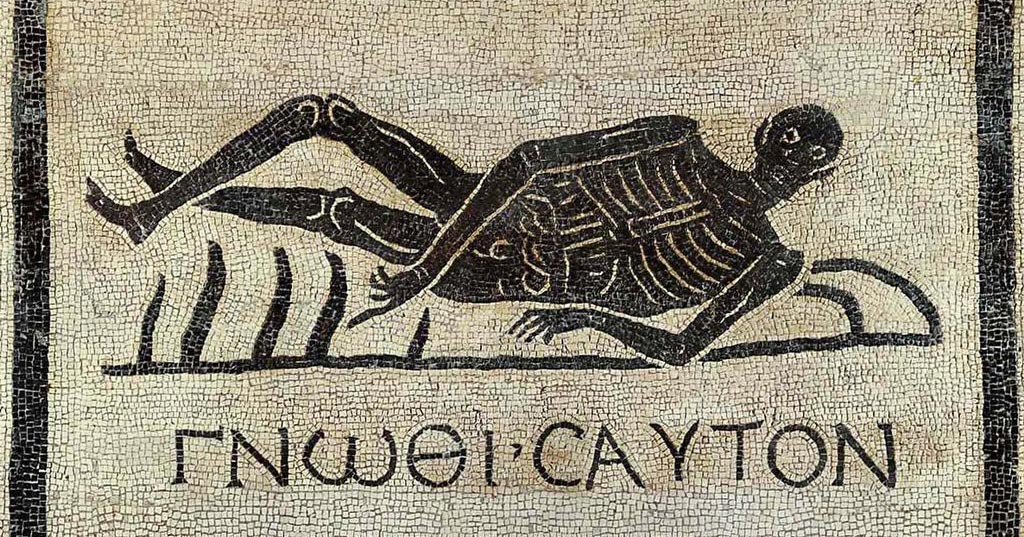
In Ovid’s Metamorphoses, the prophet Tiresias declares that the infant Narcissus would live to an old age “if he would not know himself {si se non noverit}.” That prophecy contradicts famous ancient Greek wisdom of the Delphic Oracle: “know yourself {γνῶθι σεαυτόν}.” To the ancient Greeks, γνῶθι σεαυτόν meant know your place with respect to your familial and civic status and dominant ethics.[1] As a double transsexual, Tiresias knew that women get more pleasure from sex than men do. Moreover, men are expected to give up their lives for women, accept being criminalized in relation to women, endure risks of being cuckolded, and tolerate being forced into financial fatherhood. Anti-men gender injustices can motivate men to structure their relationships with women so as to protect themselves. But the anonymous twelfth-century lai Narcissus and Danae {Narcisus et Dané} and Jean Renart’s early thirteenth-century Lai of the Reflection {Lai de l’Ombre} show naturalized gods of gynocentrism putting men into their gynocentric place of self-abasing love for women.
Unlike Ovid’s subtle linguistic play and irony, the twelfth-century lai Narcisus et Dané explicitly declares its didactic intent. Men bear a vastly gender-disproportionate burden of soliciting amorous relationships and enduring love rejections. Not challenging that gynocentric construct, Narcisus et Dané instead teaches that men must not reject women’s love solicitations:
And if it happens that a woman begs a man for his love,
if he rejects her, whoever he may be,
I insist and maintain without contradiction
that he should be burned or hanged.
{ Et s’il avient que femme prit,
Qui que il soit qui l’escondit,
Je voel et di sans entreprendre
Que on le doit ardoir u pendre. }[2]
In Narcisus et Dané , Narcissus is a beautiful, fifteen-year-old. Like the much-honored virgin goddess Artemis, Narcissus enjoyed hunting wild animals rather than pursuing love relationships with humans:
He has no interest in love and knows nothing about it.
He dislikes ladies in their chambers and keeps away from them.
{ D’amer n’a soing ne rien n’en set,
Dames en canbres fuit et het. }
While most men intensely love women, men should have the freedom to choose to live apart from women. That’s what Narcissus sought to do.
Unfortunately, the king’s daughter Danae became madly in love with Narcissus. Not privileged enough to receive a golden shower from Jupiter as the classical Danae did, this medieval Danae resolved to accost Narcissus early in the morning:
The maiden came straight to him.
He looked at her and saw how beautiful she was.
Because she is up and about at that time of day,
he believes that she is a goddess or a fairy.
He dismounts and bows to her.
The young girl draws close to him,
and before she says a word to him,
she kisses his eyes and embraces him.
{ Tot droit a lui vint la pucele;
Cil l’esgarda, si la vit bele:
Por ce qu’a tele eure est levee
Cuide que ce soit diuesse u fee.
Del ceval descent, si l’encline.
Pres de lui se trait la mescine;
Eins que li die autre parole,
Les eus li baise, si l’acole. }
Under today’s sex regulations, Danae sexually assaulted Narcissus. But women even raping men is scarcely taken seriously. Narcissus asked the self-absorbed Danae to identify herself. She then performed what modern seduction authorities call the “apocalypse opener”:
Fair lord, I will tell you this clearly:
I desire you more than anything.
My heart is completely distraught because of you.
From now on it’s only right
that you should have mercy on me.
I’m not sending you word of this, but telling you in person,
and I’m begging on my own account, not for anyone else.
Look at me, know who I am!
I who am speaking to you like this,
I am the daughter of your lord, the king.
For love of you I’m lost in thought day and night.
Love has given me safe conduct here,
and love is making me bold.
I would not have come here otherwise.
Now let the one who cries for mercy receive mercy,
for my whole life depends on you.
You alone can restore me to health,
and we are free to love one another.
Fair lord, grant me your love,
give me back my health, and take away my pain,
for we are very much alike in age,
and very similar in beauty.
{ Biaus sire, ce te di jou bien:
Je te desir sor tote rien,
Mes cueurs est mout por toi destrois;
Des ore mais est il bien drois
Que tu aies de moi merci.
Nel te mant pas, ains le te di;
Je pri por moi, nient por autrui.
Esgarde, saces qui je sui!
Je qui ensi paroil a toi
Sui fille ton seignor le roi.
Por t’amor pens et jor et nuit;
Amors m’a ça livré conduit,
Amors me done hardement:
N’i venisce pas autrement.
Or ait merci, qui merci crie,
Car en toi pent tote ma vie.
Tu seus me peus santé doner:
Mout nous poons bien entramer
—Biaus sire, otroie moi t’amor,
Rent moi santé, tol moi dolor!—
Car assés somes d’un aé
D’une maniere de biauté. }
In soliciting love from Narcissus, Danae asserted the power differential between them. She was the king’s daughter. He was just a handsome young man. What man would dare say no to the king’s daughter?
Despite the power differential between them, Narcissus decisively rejected Danae’s proposition. He looked at her and said:
By God, maiden, you are very foolish
to have ever broached this subject,
and you have taken upon yourself an unwise course
by getting yourself involved in love already.
You would have done better to stay asleep!
…
Should a king’s daughter behave like this?
It’s not appropriate for either me or you
to know anything whatsoever about love,
for we are still too young.
You say that Love is ill-treating you.
I cannot put that right for you,
and I know nothing about such suffering.
I shall not be trying it out in the near future,
but if it’s true that love is causing you pain,
I shall avoid it. God forbid
that I should try it out, just to suffer!
I don’t wish to know anything about love,
and I advise you to go home.
You are wasting time with your useless entreaties.
{ Par Diu, pucele, mout es fole
Quant onques en meüs parole,
Et male cose as mout enprise,
Qui ja t’es d’amer entremise:
Encor te venist mius dormir!
…
Doit ensi aler fille a roi?
N’apartient pas n’a moi n’a toi
K’amer saçons ne tant ne quant,
Car trop somes encor enfant.
Tu dis qu’Amors te fait mal traire:
De ce ne te puis jou droit faire;
Je ne sai rien de tel ahan
Ne ne l’asaierai auan.
Mais se c’est voirs que mal te face,
Garderai m’en: ja Diu ne place
Que je l’assai por mal avoir!
Je ne quier rien d’amer savoir.
Mais je te lo, va t’en ariere;
Tu pers et gastes ta proiiere. }
Danae cried. She was wearing scarcely any clothes, and she had a beautiful body. But unlike so many other men, Narcissus didn’t yield to a woman’s tears, even when she was young, beautiful, and nearly naked. It was an astonishing situation:
There is no nobleman on earth so splendid,
no prince, count or king so lofty,
no emperor or emir,
who could for very long prevent himself
from weeping in sympathy with her.
Narcissus doesn’t care about anything she says to him.
{ Sousiel n’a si rice baron,
Prince, conte ne roi si haut,
Enpereor ne amiraut,
Ki longement se tenist mie
Qu’i ne plorast de conpaignie.
De quanqu’ele li dit n’a cure: }
In response to Narcissus’s rejection of her, Danae cursed him using traditional Greco-Roman religion:
You gods of heaven and earth,
and of the air and of the sea,
all of you who know anything about love
and are in his power,
and you, Venus, who have betrayed me,
together with the god of Love, your son,
rescue me from this peril,
and take vengeance on him
for whom I am dying in despair!
Make him find out what love is
in such a way that nothing can save him!
{ Vous, diu du ciel et de la terre,
Et cil de l’air et de la mer,
Vos tuit qui rien savés d’amer
Et qui estes en sa baillie,
Et tu, Venus, qui m’as traïe
Ensanble au Diu d’Amors, ton fil,
Giete me hors de cest peril
Et de celui prendés vengance
Por cui je muir sans esperance!
Faites qu’il sace qu’est amors,
Si qu’il ne puist avoir secors! }
Danae’s curse is cruel and unjust. Men should be allowed to say no to women.
While hunting a stag like Aeneas’s son Iulus, Narcissus sought a drink in a pool of clear, deep water. In that pool he saw his reflection. But he didn’t know himself. He perceived his reflection to be a beautiful woman. He felt intense love for this reflection of a woman. He grieved that she wouldn’t come out to him. He stayed beside the pool all day and throughout the night, but the woman never came to him or spoke to him. After his tears disturbed the water and the woman vanished, he realized in despair that he loved his own reflection. He declared:
The body, the face that I see there,
I can find all this in myself.
I love myself. This is folly!
Was such madness ever heard of?
{ Le cors, le vis que je la voi,
Ce puis je tot trover en moi.
J’aim moi meïsme, c’est folie!
Fu onques mais tes rage oïe? }
Loving oneself isn’t madness. The Torah commands, “You shall love your neighbor as yourself {וְאָֽהַבְתָּ לְרֵעֲךָ כָּמוֹךָ}.” Christian scripture repeats that commandment seven times.[3] Loving yourself, in the sense of cherishing the wonderful work that you are, is a prerequisite to loving others. Men must love themselves in their human being, not merely regard themselves as instruments that others value.
Narcissus didn’t understand love. He sought to love Danae as an alternative to loving himself. That led to both of them dying:
The young man dies, his life ebbs away.
The maiden moves closer to him.
She holds him so tightly to her
that she forces the soul out of her body.
This is the work of Love, which had overwhelmed her.
Both of them died in this way.
{ Li vallés muert, la vie s’en vait;
La pucele plus pres se trait,
Vers soi le trait par tel aïr
Du cors se fait l’ame partir.
Ç’a fait Amor, qui l’a souprise:
Andui sont mort en itel guise. }
Men must understand that they bear a seminal blessing.[4] Women must understand that if they treat men as their personal possessions and smother men, they will kill themselves and men.
Jean Renart’s Lai of the Reflection {Lai de l’Ombre} presents a man who had sex with many women, but didn’t love any of them in the sense of being a woman’s feudal servant. Then the god of Love intervened to compel this man to became madly in love with one particular woman.[5] His insane love was associated with his sensual desire:
If only the lady I love had made a noose
around my neck with her two arms!
All night I dream that I embrace her
and that she grasps me tightly and holds me close.
But waking up tears me away from this embrace
before I can achieve the greatest of pleasures.
Then I search my bed and feel for
her lovely body that burns and inflames me.
{ Car m’eüst ceste fet un laz
De ses deus braz entor le col!
Tote nuit songe que l’acol
Et qu’ele m’estraint et embrace.
180 Li esveilliers me desembrace
En ce qu’i plus me delitast;
Lors quier par mon lit et atast
Son biau cors qui m’art et esprant }[6]
The man journeyed to propose his love to this woman. He offered to be her feudal servant and fight battles for her. He proposed:
Retain me as your servant by giving me a jewel,
or a belt or a ring,
or accept one of mine.
Then I assure you that there will be no service
a knight renders a lady
that I would not perform for you,
even if I should lose my soul, God help me.
Your sweet face and soft features
can retain me for very little.
I am completely under your authority
with whatever strength and power I have.
{ [Retenez] moi par un joel,
Ou par çainture ou par anel,
Ou vos [recevez] un des miens;
Et je vos creant qu’il n’iert biens
Que chevalier face por dame—
Se j’en devoie perdre l’ame,
Si m’ait Dex—que je n’en face.
Vo douz vis et vo clere face
Me puent de pou ostagier;
Je sui toz en vostre dangier,
Qanque jë ai force et pooir.’ }
That’s a death-wish like having her make a noose with her arms around his neck. Men have long accepted living in sexual feudalism to women. Men in love with women should instead insist on their equal human dignity with women and seek a conjugal partnership.
This woman, who was married, flirted adroitly with the man. She speculated that he must have many mistresses already. She refused to become his mistress. Then he secretly slipped his ring onto her finger and promptly left. In Ovid’s Amores 2.15, a man gives a ring to a beloved woman with much sexual innuendo. Medieval miracle stories told of men being married to Mary, the mother of Jesus, by placing a ring onto the finger of a statue of her.[7] The woman could have just sent the ring back to the man. Instead, she summoned him back to her.
The woman insisted that the man accept personally her return of the ring to him. He didn’t want to receive it. They argued at length. Ultimately the man reasoned according to the gynocentric ideology of “courtly love“:
He is not a true lover who does not
do his utmost according to his lady’s wishes.
And know this, that a man who neglects to do
a thing of which he’s capable does not love at all.
And so everything I decide to do
must be governed by her command,
since my actions cannot be otherwise
than according to what she desires.
{ N’est pas amis qui jusqu’en son
Ne fet au voloir de s’amie;
Et sachiez que cil n’ainme mie
Qui riens qu’il puisse en lait a fere.
Si doi atorner mon afere
Du tot en son conmandement,
Car il n’en doit estre autrement
S’a la seue volenté non. }
If all of a man’s actions are in accordance with a woman’s desire, his self has been absorbed into her. The man no longer remains for her to love. In fact, the fastest way to lose a woman’s love is to act as her doormat.
After taking back his ring in accordance with the woman’s command, the man enacted a transformed version of the story of Narcissus. He and the woman were sitting at a well:
He leaned over the well,
which was only nine feet
deep, and he did not fail
to recognize in the clear, still water
the reflection of the lady whom
he loved more than anything in the world.
{ Il s’est acoutez seur le puis,
Qui n’estoit que toise et demie
Parfonz, si ne meschoisi mie
De l’eaue, qui ert bele et clere,
L’ombre de la dame qui ere
La riens ou mont que plus amot. }
If the man leaned over the well, he would have seen his reflection, not the reflection of the lady. Given his subservience towards her, he not surprisingly mistook himself for her. While absorbed in her, he nonetheless retained his own vitally important guile:
“Know this now for sure,” he said,
“that I will not take this ring back with me.
Instead, my sweet lover will have it,
the one I love best after you.”
{ ‘Sachiez’, fet il, ‘tot a un mot,
Que je n’en reporterai mie;
Ainz l’avra ja, ma douce amie,
La riens que j’aing miex enprés vos.’ }
“God!” she said, “It’s only us here!
Where have you found her so quickly?”
{ ‘Diex!’ fet ele, ‘ci n’a que nos!
Ou l’avrez vos si tost trovee?’ }
The man played out his version of the story of Narcissus:
“In God’s name, that noble, worthy lady
will be shown to you immediately.”
“Where is she?”
“By heavens, see her there,
your lovely reflection which is waiting for it!”
He took the ring, and held it out to her.
“Here!” he said, “my sweet lover,
since my lady wants nothing of it,
you will certainly take it without argument.”
The water rippled gently
as the ring fell into it,
and when the reflection broke up,
he said, “Look, my lady, she has now accepted it.
My reputation is greatly enhanced,
since she, who emanates from you, has taken it.
Would that there were a door or gate
down there! Then she could come here,
so that I might thank her
for the honor that she has done to me.”
{ ‘En non Deu, ja vos ert mostree
La preuz, la gentil qui l’avra.’
‘Ou est?’ ‘En non Deu, vez la la,
Vostre bel ombre qui l’atent!’
L’anel a pris, et si l’i tent.
‘Tenez!’ fet il, ‘ma douce amie:
Puis que ma dame n’en velt mie,
Vos le prandrez bien sanz mellee.’
L’eaue s’est un petit troblee
Au chëoir que li aneaus fist;
Et quant li ombres se desfist,
‘Vez, dame!’ fet il, ‘or l’a pris.
Molt en est amendez mes pris,
Quant ce, qui de vos est, l’enporte.
Car n’eüst or ne huis ne porte
La jus! si s’en venroit par ci,
Por dire la seue merci
De l’oneur que fete m’en a.’ }
While the man apparently confused his reflection and the woman’s reflection, he knew that no one could pass through a reflection to the world above. The woman, in contrast, was as deluded as Narcissus:
Never, either before or after,
since Adam bit into the apple,
has a man made such a fine, courtly gesture!
I cannot imagine how he thought of it,
when to my reflection for love
he threw his ring into the well.
{ Onques mes devant në aprés
N’avint, puis que Adanz mort la pome,
Si bele cortoisie a home!
Ne sai conment il l’en membra
Quant por m’amor a mon ombre a
Jeté son anel enz ou puis. }
In Genesis, no man came before the Adam who bit into the fruit in the Garden of Eden. In Jewish and Christian understanding, the man biting into the fruit was a grave wrong against God’s love for humans, humans that God made in God’s own image. However, the woman’s misunderstandings about Genesis are ones that today many persons might make. More significantly, while Jean Renart doesn’t quite say so explicitly, he implies that the woman thought that the man actually loved her reflection.[8] She apparently perceived only the pretext of his action:
Now your heart has joined with mine
by these fine words and pleasing ways,
and by the gift that you have made
to my reflection in my honour.
{ Tot vostre cuer ont el mien mis
Cil doz mot et cil plesant fet,
Et li dons que vos avez fet
A mon ombre, en l’onor de moi. }
The woman loved herself in the sense that she valued highly her own being and regarded her love for another as a precious gift to the other. Yet she loved the man because of what the man did in relation to what he described as her reflection. Like Narcissus, she came to love through her reflection and delusion.[9]
Lai de l’Ombre ends with anticipation. The married woman gave one of her rings to the man and took him as a lover. Jean Renart then concluded:
For since their wit and Love
have brought their hearts together,
the game which remains, it seems to me,
they will both manage to enjoy well.
And so, from now on, be fully silent about this.
Here ends the Lay of the Reflection.
Count, you who know of numbers!
{ Que puis que lor sens et Amors
Ont mis andeus lor cuers ensenble,
Du geu qui remaint, ce me senble,
Venront il bien a chief andui;
Et or s’en taise a tant meshui!
Ici fenist li Lais de l’Ombre:
Contez, vos qui savez de nombre! }
The concluding imperative, “Count, you who know of numbers,” evokes the calculating behavior by which the man gained the woman’s love. Others among Jean Renart’s audience probably were able to count similar experiences.[10] The man had pledged to be completely subservient to her. She in turn was as deluded about him as Narcissus was about his own reflection. Listeners with literary sophistication would have heard echoes of falling tears in the ending of the Lai de l’Ombre.
The oppressive, deeply entrenched tradition of putting men into their gynocentric place in relation to women offers neither women nor men a true way to love. Men who allow themselves to be merely reflections of women’s desires bring death to themselves. Women who love images of men imagined to be women are as deluded and ill-destined as Narcissus was.
[1] For Tiresias’s prophecy to Narcissus, Ovid, Metamorphoses 3.348. According to Pausanius, the Seven Sages of Greece dedicated the maxims “know yourself {γνῶθι σαυτὸν} and “nothing to excess {μηδὲν ἄγαν}” to Apollo at Delphi. Pausanius, Description of Greece {Ἑλλάδος Περιήγησις} 10.24.1. Among other maxims attributed to the Delphic oracle are ones relevant to men living under gynocentrism: “intend to marry {γαμεῖν μέλλε}” and “control your wife’s spending {γυναικὸς ἄρχε}.” See Joannes Stobaeus, Anthology 3.1.173. The significance of these ancient maxims suggest that in the ancient Mediterranean world men were reluctant to marry and that men who did marry had difficulty controlling their wives’ spending.
[2] Narcissus and Danae {Narcisus et Dané} vv. 29-32, Old French text and English translation (modified slightly) from Eley (2002). Where Burgess & Brook (2016), pp. 194-207, seems to me to offer a significantly better translation, I’ve drawn upon that.
Narcisus et Dané survives in three manuscripts providing a complete text and one manuscript providing a partial text. Eley (2002) and Burgess & Brook (2016) are based on the C manuscript: Paris, BnF fr. 2168. Narcisus et Dané is thought to have been written c. 1155-1170. Eley (2002) p. 10.
Both Eley (2002) and Burgess & Brook (2016) use the names Narcisus and Dané within their English translations. Critical studies typically use those names as well. I’ve favored the classical spellings Narcissus and Danae to emphasize the relationship to classical myth. On the classical myth of Danae, see, e.g. Hyginus, Fabulae 63. A relevant connection between Danae and Dané is the father constraining his daughter’s opportunities for love.
Subsequent quotes from Narcisus et Dané are similarly sourced. They are vv. 119-20 (He has no interest in love…), 447-54 (The maiden came straight to him…), 461-82 (Fair lord, I will tell you this clearly…), 485-9,493-506 (By God, maiden…), 526-31 (There is no nobleman on earth…), 612-22 (You gods of heaven and earth…), 865-8 (The body, the face…), 999-1004 (The young man dies…).
[3] Leviticus 19:18. Similarly, Matthew 19:19, 22:39, Mark 12:31, Luke 10:27, Romans 13:9, Galatians 5:14, and James 2:8. Thinking according to preoccupations of gynocentrism, scholars have debated whether Narcissus concerns courtly love. “Narcissus does not in fact support the courtly model.” Seaman (1998) p. 25. More importantly, Narcissus challenges gynocentrism and provokes thought about how men are to love themselves rightly.
[4] In Ovid’s Metamorphoses, Narcissus didn’t know what he looked like. He loved his reflection because he was deluded, not because he suffered from excessive self-love. Modern understandings of narcissism differ significantly from the classical story of Narcissus. Stone (2016). A similar difference existed in medieval stories of Narcissus. Seaman (1998). Narcisus et Dané superficially attributes Narcissus’s and Danae’s death to Narcissus refusing Danae’s amorous solicitation.
[5] In Marie de France’s lai Guigemar, the knight Guigemar had similarly pursued a non-gynocentric lifestyle:
There was no lady or young woman under heaven,
no matter how noble or beautiful,
who, if he had asked her for her love,
would not have willingly accepted him.
Many women asked him often,
but he had no desire for that.
No one could perceive
that he wished to have love:
on account of this both strangers and his friends
considered him lost.
{ Suz ciel n’out dame ne pucele
ki tant par fust noble ne bele,
se il de amer la requeïst,
ke volentiers nel retenist.
Plusurs l’en requistrent suvent,
mais il n’aveit de ceo talent.
Nuls ne se pout aparceveir
k’il volsist amur aveir:
pur ceo le tienent a peri
e li estrange e si ami. }
Marie de France, Guigemar, vv. 59-68, Old French text and English translation (modified slightly) from Waters (2018). While hunting, Guigemar chased a stag (adult male deer) and shot it in the head with an arrow. But the deer was actually a hind (adult female deer). The arrow that Guigemar shot bounced back and wounded him in the “thigh {cuisse}.” The hind then cursed Guigemar to suffer great pain and sorrow in love for a woman. He subsequently did.
[6] Jean Renart {Jehan Renart}, Lai of the Reflection {Lai de l’Ombre} vv. 176-83, Old French text and English translation (modified slightly) from Tudor, Hindley & Levy (2004). Where Burgess & Brook (2016), pp. 229-243, seems to me to offer a significantly better translation, I’ve drawn upon that.
Lai de l’Ombre survives in seven manuscripts. Tudor, Hindley & Levy (2004) and Burgess & Brook (2016) are based on the E / S manuscript: Paris, BnF nouv. acq. fr. 1104. Lai de l’Ombre was written early in the thirteenth century, probably between 1202 and 1204, or between 1217 and 1222. Jean Renart {Jehan Renart} is explicitly named as the author of Lai de l’Ombre within the text. He also wrote Romance of the Rose or of Guillaume de Dole {Roman de la Rose ou de Guillaume de Dole}.
Subsequent quotes from Lai de l’Ombre are similarly sourced. They are vv. 515-25 (Retain me as your servant…), 850-7 (He is not a true lover…), 878-83 (He leaned over the well…), 884-7 (Know this now for sure…), 888-9 (“God!” she said…), 890-907 (In God’s name, that noble, worthy lady…), 918-23 (Never, either before or after…), 932-5 (Now your heart has joined with mine…), 956-62 (For since their wit and Love…).
[7] The story of putting a ring on the finger appears in Gautier de Coincy’s early thirteenth-century compilation, The Miracles of Our Lady {Les Miracles de Nostre-Dame}. For an English translation of the relevant text, Blumenfeld-Kosinski (2001) pp. 636-8. Blumenfeld-Kosinski explained:
The story of the ring on the statue originated in Roman times when the statue was that of the goddess of love, Venus. William of Malmesbury in the twelfth century was the first to substitute the Virgin Mary for Venus.
Id. p. 652, n. 6. This story of putting a ring on the finger occurs as story 8 in John of Garland’s Star of the Sea {Stella Maris}, as well as in many other medieval works. For a review, see Baum (1919) and notes on story 8 in Wilson (1946).
[8] The important vv. 921-3 are:
Ne sai conment il l’en membra
Quant por m’amor a mon ombre a
Jeté son anel enz ou puis.
Tudor, Hindley & Levy (2004) translated those verses as:
I cannot imagine how he thought of it,
when for love of my reflection he threw
his ring into the well.
But as Burgess & Brook (2016), p. 243, indicates, a more accurate translation of “a mon ombre” is “to my reflection.” That leaves narrowly ambiguous the man’s love-object in throwing his ring into the well. Ambiguity is a characteristic of the language of Lai de l’Ombre. Kay (1980), Tudor, Hindley & Levy (2004) pp. 12, 15. In the larger context, the man’s love-object in throwing his ring into the well seems to me clearly the woman, not whatever reflection appears in the well.
[9] The woman subsequently offered the man a ring of her own. Her action underscores her earlier delusion that the man surreptitiously putting a valuable ring on her finger was an act of force. She was free at any time to take his ring off, sell it, throw it away, or send it back to him. Instead, exerting her privilege of gynocentric domination, she summoned her man-servant back to her to receive his ring personally.
[10] The concluding verse of Lai de l’Ombre evokes in part Ovid, Amores 1.5.25: “Who wouldn’t know what followed {cetera quis nescit}?” Beston commented:
Literally Renart’s farewell invites the potential poets in his audience to go on and compose their own version of the story from the point where he leaves it, but he may also be making a pun on con [cunt] and nombre [numbers, metre], saying also, “Let your sexual imagination play freely upon their games, you who know all about it from your own ample experience!”
Beston (1998) p. 29.
[images] (1) Mosaic with human lying on earth (representing “be mindful that you are a human being; be mindful of death {hominem te esse memento; memento mori}”), with inscription “ΓΝωΘΙ CΑΥΤΌΝ {know yourself}.” From the first century at San Gregorio, along the Via Appia in Rome, Italy. Via Wikimedia Commons. (2) The nymph Echo observing as Narcissus gazes lovingly at his reflection in a pond. Painted by John William Waterhouse in 1903. Preserved as accession # WAG 2967 in the Walker Art Gallery (UK). Via Wikimedia Commons. (3) Narcissus gazing into a well. Painted by Dirck van Baburen early in the seventeenth century. Held in a private collection. Via Wikimedia Commons.
Beston, John. 2011. “Sex and other games in Jean Renart’s Le Lai de l’Ombre.” AUMLA: Journal of the Australasian Universities Modern Language Association. 115: 21-35.
Blumenfeld-Kosinski, Renate. 2001. “Gautier de Coincy: Miracles of the Virgin Mary.” Ch. 28 (pp. 627-653) in Head, Thomas F., ed. Medieval Hagiography: an anthology. New York, NY: Routledge.
Burgess, Glyn S., and Leslie C. Brook, trans. 2016. Twenty-Four Lays from the French Middle Ages. Liverpool: Liverpool University Press.
Cooper, Linda F. 1981. “The Literary Reflectiveness of Jean Renart’s Lai de l’Ombre.” Romance Philology. 35 (1): 250-260.
Eley, Penny, ed. and trans. 2002. Narcisus et Dané. Liverpool Online Series, 6. Liverpool: University of Liverpool, Department of Modern Languages and Cultures.
Gier, Albert. 1998. “L’anneau et le miroir: Le Lai de l’ombre à la lumière de Narcisse.” Romanische Forschungen. 110 (4): 445-455.
Kay, Sarah. 1980. “Two Readings of the Lai de l’Ombre.” The Modern Language Review. 75 (3): 515-527.
Seaman, Gerald. 1998. “The French Myth of Narcissus: Some Medieval Refashionings.” Disputatio. 3: 19-33. Disputatio, vol. 3, is Poster, Carol, and Richard J. Utz, eds. Translation, Transformation and Transubstantiation in the Late Middle Ages. Evanston, Ill: Northwestern University Press.
Stone, Greg. 2016. “The Myth of Narcissus as a Surreptitious Allegory about Creativity.” Philosophy and Literature. 40 (1): 273-284.
Tudor, Adrian, trans. and Alan Hindley and Brian J. Levy, eds. 2004. Jean Renart. Le Lai de l’Ombre. Liverpool Online Series, 8. Liverpool: University of Liverpool, Department of Modern Languages and Cultures.
Waters, Claire M. 2018. The Lais of Marie de France: Text and Translation. Peterborough, Ontario: Broadview Press.
What man today would wish to be married to Helen of Troy? According to Homer’s Iliad and Odyssey, millennia ago King Menelaus of Sparta was married to Helen. They had serious difficulties in their marriage. In brief, after marrying Menelaus, Helen eloped with the handsome Trojan prince Paris. That adultery prompted the Trojan War and its massive slaughter of men. Helen called herself a shameless whore. Nonetheless, Menelaus welcomed her back as his wife.
Menelaus’s servant-man Eteoneus seemed to appreciate the risk of Helen committing adultery again. When two king’s sons, Telemachus and Pisistratus, arrived in regal style at Menelaus’s palace, Eteoneus asked if he should send them away. Not offering hospitality to these young men would be a serious violation of ancient Greek ethics. However, given Helen’s past behavior and the terrible Trojan War, sending the young men away might be a prudent choice.
Menelaus called Eteoneus a fool for thinking of sending the young men away. Menelaus, who favored forgetfulness with respect to Helen, instead welcomed them to his table. When Helen arrived and saw these regal, handsome young men, she was amazed:
Do we know, Menelaus, favored by Zeus, who these
men declare themselves to be who have come to our house?
Shall I lie or speak the truth? My heart bids me speak.
For never yet, I declare, have I seen one so like another,
whether man or woman — amazement holds me, as I look —
As an astute scholar has pointed out, Helen might be thought to be re-imagining Paris coming to meet her. But recognizing a different handsome young man, she continued:
as this man resembles the greathearted Odysseus’s son,
Telemachus, whom that warrior left in his home
a newborn child when for me, a shameless whore, you Achaeans
came to the walls of Troy, pondering in your hearts fierce war.
Helen acted like a shameless whore in committing adultery with Prince Paris of Troy. Moreover, Helen’s epithet for Menelaus, “favored by Zeus,” recalls that Helen’s father was Zeus. Having taken the form of a swan, Zeus cuckolded King Tyndareus of Sparta to engender Helen with Tyndareus’s wife Leda. Menelaus was thus in a royal line of cuckolds. He knew that Helen was not truly a goddess, nor even a faithfully loving, flesh-and-blood woman. Yet he remained married to her.
Before modern technologies of repression and censorship, men freely discussed the dangers of marriage. Late in sixteenth-century Europe, Ponticus questioned Cornelius’s interest in marrying:
Since, Cornelius, you wish to have a wife, I seek to know:
by what motive does marriage attract you?
You assume that you would live thereafter more happily. While
I may be wrong, you will not thus choose to be blessed.
Either your wife will be ugly (no lying, I implore:
if you’re joined to such a spouse, will you be blessed?),
or she’ll be average-looking. This moderate beauty, I admit,
is best, but this moderate beauty fades quickly.
If beautiful, she’ll have a thousand adulterous men,
and you could never say, “She’s wholly mine.”
Even if she’s faithful to you (if no other happens to ask),
she’ll bear a thousand births, and bear a thousand griefs.
If sterile, with you alone she’ll thus slowly spend years.
Out of many days, none would be without strife.
You may add she’ll be stubborn-headed, clinging to her opinion,
and other traits that you can learn from many husbands.
So cease to hope then for a blessed life;
rather, let your bed be celibate and without strife.
If the narrow path of happiness actually exists,
it isn’t hidden between a woman’s buttocks.
{ Cum velis uxorem, Corneli, ducere: quaero
Coniugium placeat qua ratione tibi?
Scilicet ut deinceps vivas foelicior: atqui
Fallor ego, aut non hac lege beatus eris.
Uxor enim aut deformis erit, (tune, obsecro, talis
Si tibi sit coniunx iuncta, beatus eris?)
Aut forma mediocris erit: modus iste, fatemur,
Optimus; at subito deperit iste modus.
Aut formosa, ideoque viris obnoxia mille,
Et de qua nequeas dicere, tota mea est.
Ut sit casta tamen, (nemo si forte rogarit),
Mille feret natos, taedia mille feret.
Aut sterilis tecum tardos sic exiget annos,
Nullus ut e multis sit sine lite dies.
His addas caput indomitum, mentemque tenacem,
Caeteraque a multis quae didicisse potes.
Desine sic igitur vitam sperare beatam,
Sic potius celebs et sine lite torus
Hic etenim si qua est felicis semita vitae,
Femineas iuxta non latet illa nates. }[2]
In most men’s minds, all women are like Laodamia of Phylace. Unlike the Spartan mothers instructing their sons to achieve victory or death, Laodamia urged her husband Protesilaus to enjoy her love. Nonetheless, Protesilaus joined all the other Greek men leaving home to besiege Troy. Laodamia urged him to guard his life in that horrific Trojan War:
Against Hector, whoever he is, if you have care for me, be on guard.
Have this name inscribed in your mindful heart!
When you have avoided him, remember to avoid others,
and think that there are many Hectors there.
And make sure that you say, as often as you prepare to fight:
“Laodamia herself commanded me to hold back.”
If it’s fated that Troy should fall to the Greek army,
it will fall without you receiving any wound.
Let Menelaus fight and strive against the enemy.
Let the husband seek his wife among enemies.
Your case is different. You fight only to live,
and to be able to return to your lady’s loyal breasts.
{ Hectora, quisquis is est, si sum tibi cura, caveto;
Signatum memori pectore nomen habe!
Hunc ubi vitaris, alios vitare memento
Et multos illic Hectoras esse puta;
Et facito dicas, quotiens pugnare parabis:
‘Parcere me iussit Laodamia sibi.’
Si cadere Argolico fas est sub milite Troiam,
Te quoque non ullum vulnus habente cadet.
Pugnet et adversos tendat Menelaus in hostis;
Hostibus e mediis nupta petenda viro est.
Causa tua est dispar; tu tantum vivere pugna,
Inque pios dominae posse redire sinus. }[3]
Mothers of Phylace gather and cry out to me:
“Put on your royal garments, Laodamia!”
No doubt I should wear cloth soaked in purple dye
while he wages war beneath the walls of Troy?
Should I comb my hair, while his head is pressed by a helmet?
Should I wear new clothes, while my husband bears harsh arms?
As I can, I imitate your labors in my rough attire,
so they say, and I go through these times of war in sadness.
{ Conveniunt matres Phylaceides et mihi clamant:
“Indue regales, Laudamia, sinus!”
Scilicet ipsa geram saturatas murice lanas,
Bella sub Iliacis moenibus ille geret?
Ipsa comas pectar, galea caput ille premetur?
Ipsa novas vestes, dura vir arma feret?
Qua possum, squalore tuos imitata labores
Dicar, et haec belli tempora tristis agam. }
He is not suited to engage with naked steel
and bear a savage breast against opposing men.
He is able with far greater strength to love than to fight.
Let others wage war; let Protesilaus love!
{ Non est quem deceat nudo concurrere ferro,
Saevaque in oppositos pectora ferre viros;
Fortius ille potest multo, quam pugnat, amare.
Bella gerant alii; Protesilaus amet! }
The depth and passion of men’s love for women can hardly be understood. Probably sensing his love for her, Laodamia of Phylace ardently loved her husband:
No snow-white dove ever so rejoiced in her
partner, though it’s much said that she shamelessly,
always nipping with her beak, gathers kisses,
more so than a much-willing woman sex-worker.
But you alone overcame the great madness of these doves
as soon as you were first matched with your golden-haired man.
{ nec tantum niveo gavisa est ulla columbo
compar, quae multo dicitur improbius
oscula mordenti semper decerpere rostro
quam quae praecipue multivola est mulier:
sed tu horum magnos vicisti sola furores,
ut semel es flavo conciliata viro. }[4]
Laodomia’s golden-haired husband Protesilaus didn’t go to Troy because he wanted Helen or was lacking a woman’s love at home. He suffered from a mythic understanding of what it means to be a hero:
His wife, her cheeks torn in wailing, was left in Phylace
and his house was but half completed when a Trojan warrior killed him
as he leapt from his ship, by far the first of the Achaeans to Trojan land.
Protesilaus was thus killed in violence against men at Troy, “hateful Troy, unhappy Troy {Troia obscena, Troia infelice}”:
Troy, the evil, a communal grave for Asia and Europe,
Troy the bitter ashes of men and all manliness,
have you not even brought pitiful death to our brother?
Oh, brother in misery taken from me,
you a delightful light taken from your miserable brother.
{ Troia (nefas) commune sepulcrum Asiae Europaeque,
Troia virum et virtutum omnium acerba cinis:
quaene etiam nostro letum miserabile fratri
attulit. Hei misero frater adempte mihi,
hei misero fratri iucundum lumen ademptum }[6]
Love lost for many of our brothers. Men who are dead cannot entertain women with stories of their daring deeds. Men need not entertain women with stories of their daring deeds. Men’s very selves are more than sufficient for truly loving women.
Men and women must be realistic. To Catullus, a woman like Lesbia was “a shining-white divine woman {candida diva}.” Although adored with all-too-common gyno-idolatry, that woman like Lesbia didn’t love like Laodamia. Catullus explained:
I will bear the rare infidelities of my modest mistress
so as not to be too annoying in the manner of fools.
…
Nonetheless, not led to me by her father’s right hand,
she comes into the house smelling of Assyrian perfumes
and gives a stolen, sweet gift in a wonderful night,
taken from the very embrace of her husband himself.
That is enough, if that alone is given to me.
{ quae tamen etsi uno non est contenta Catullo,
rara verecundae furta feremus erae,
ne nimium simus stultorum more molesti:
…
nec tamen illa mihi dextra deducta paterna
fragrantem Assyrio venit odore domum,
sed furtiva dedit mira munuscula nocte
ipsius ex ipso dempta viri gremio.
quare illud satis est, si nobis is datur unis }
Catullus dearly loved Lesbia, or another woman like Lesbia, even though she wasn’t faithful to him:
And far before all, she who is dearer to me than myself,
my light, who living, makes it sweet for me to live.
{ et longe ante omnes mihi quae me carior ipso est,
lux mea, qua viva vivere dulce mihi est. }[7]
Medieval lyric, which developed across many more centuries than Catullus’s poetry, offered a way that suits many men better:
I say that it’s a great folly
to investigate or test
one’s wife or one’s lover
as long as one wants to love her,
since one should rightly keep
from investigating through jealousy
what one would not like to discover.
{ Je di que c’est granz folie
d’encerchier ne d’esprover
ne sa moullier ne s’amie
tant com l’en la veut amer,
ainz s’en doit on bien garder
d’encerchier par jalousie
ce qu’en n’i voudroit trover. }[8]
Men’s love for women doesn’t actually arise from mythic ideals in men’s minds. It arises from men’s desire to love and be loved in the flesh, with all the weaknesses and conflicts of human desire born within the chain of merely human being.
Konstan (2015), pp. 304-6, identified the subtle wit in this incident. Konstan remarked:
Telemachus is no longer a boy; he is later described as entering upon manhood, and now possessing beauty or κάλλος (18.219), a word associated with sexual attractiveness and applied in the Homeric epics particularly to Paris and Helen, as well as to Odysseus when he is rejuvenated by Athena and meant to look sexy (Nausicaa falls for him).
Id. p. 306.
[2] Théodore de Bèze, Iuvenilia (first edition, 1548), Epigrams 91, “Ponticus to Cornelius, on not getting married {Ponticus Cornelio, de uxore non ducenda},” Latin text from Summers (2001) p. 304, my English translation, benefiting from that of id. p. 305. For a freely available Latin text, Machard (1879).
Like many medieval and early modern scholars, Bèze was well-versed in the classics. His reference to “moderate” beauty as being best alludes to an Aristotelian ethical precept. In v. 11, “if no other happens to ask {nemo si forte rogarit},” Bèze invokes Ovid, Amores 1.8.43, “The only chaste woman is one who hasn’t been propositioned {Casta est quam nemo rogavit}.”
Bèze’s subsequent epigram presents Cornelius’s contrasting evaluation. It concludes:
The path of virtue is tight, so it’s truly said.
That’s what I’m seeking, Ponticus, the road that is tight.
{ Semita virtutis stricta est, si vera loquuntur.
Haec quoque quam quaero, Pontice, stricta via est. }
Epigrams 92, “Cornelius to Ponticus, on getting married {Cornelius Pontico, de uxore ducenda}” vv. 17-8, sourced as previously. Cf. Matthew 7:14. Within this apparent double-entendre is Cornelius’s desire for a virgin’s tight vagina. Summers (2001) p. 432, note to v. 18. The contrast between semita and via similarly plays across chastity and promiscuity in women.
Théodore de Bèze became the Geneva-based spiritual leader of the Calvinists late in the sixteenth century. Today’s hate-guardians scrutinize years of social-media posts to denounce persons who have uttered offensive words. These commissars are far more doctrinaire and intolerant than Bèze and other sixteenth-century Calvinists ever were.
Laodamia’s love for Protesilaus is nearly incomprehensible in modern literary criticism. Underscoring the need for meninist literary criticism, Manwell (2007) includes the following section titles: “Studying Masculinity, or Why Should we care about men?” and “Studying Roman Masculinity or Why Should We Care about Dead White Men?”
These possess the greatest modesty, and adultery is unknown to either sex: they do not violate the faith of marriage. They maintain house together. Unless unmated or widowed, a dove doesn’t leave its nest.
{ inest pudicitia illis plurima et neutri nota adulteria: coniugii fidem non violant, communemque servant domum: nisi caelebs aut vidua nidum non relinquit. }
Pliny, Natural History 10.104, Latin text and English translation (modified slightly) from Rackham (1940). Propertius 2.15.27-8 similarly suggests doves’ fidelity.
Laodamia, along with the female dove, are best interpreted as figuring Catullus:
One thing is made clear by the end of the dove simile: that Laodamia has stood for Catullus all the time. He is the extravagant kisser, and he has expressed feelings of almost fatherly love toward Lesbia.
Theodorakopoulos (2007) p. 327. Put less starkly, Laodamia refers to both Lesbia and Catullus, with Catullus more like Laodamia than Lesbia is. de Villiers (2008).
For good scholarly companions to reading Catullus 68, Theodorakopoulous (2007) and Leigh (2015). Some scholars have divided Catullus 68 into two or three poems. Leigh (2015) convincingly argues that it is one poem.
[6] Catullus, Carmina 68.89-96, sourced as previously. Troia obscena, Troia infelice is from id. v. 99. The subsequent three quotes are from vv. 70 (shining-white divine woman), 135-7, 143-7 (I will bear the rare infidelities…), and 159-60 (And far before all…). A woman being led by her father’s right hand signifies a marriage ceremony.
Brotherhood among men potentially threatens gynocentrism. Scholars working in support of the dominant ideology strive to make brotherhood among men suspect, e.g. by pitting it against men’s love for women:
But this idea of brotherhood, absorbed from the Catullan corpus, takes its place in a certain emotional geography in which brotherhood has as its concomitant, or even its motivation, a rejection of the woman.
In this article, I argue that Catullus, having found the masculine vocabulary of grief inadequate, turns to the more expansive emotions and prolonged focus on the deceased offered by mythological examples of feminine mourning.
Seider (2016) p. 280. The gendered disposal of men in war, with resulting massive slaughter of men represented in epics such as the Iliad, socially constrains possibilities for men’s grief. To be adequately understood, gendered distinctions in mourning must be considered within the context of social devaluation of men’s lives. Similarly, Catullus’s wide-ranging and often outrageous performance of masculinity is best understood with respect to the constraints of dominant gynocentrism. Cf. Wray (2001).
[7] For contrasting views on Lesbia’s relation to Catullus’s beloved woman in Catullus 68, Öhrman (2009) and Rawson (2016).
According to Lowrie, aspects of the third section of Catullus 68 suggest movement to “a verbal artifact that exists outside the realm of physicality,” and it also emphasizes “blessing and life.” Lowrie (2006) pp. 129, 130. That section seems to me to embrace a mundane, embodied appreciation for women and men’s love for each other — love that’s entrenched and rooted in the realm of physicality.
Under regimes of paternity attribution by marriage, a man having sex with a married woman not his wife doesn’t face the risk of forced financial fatherhood. In a twelfth-century pseudo-Ovidian poem, Ovid recognized this advantage of having sex with married women:
If furtive sexual intercourse, as often happens, produces
a birth, her spouse will always raise it for you, because
the wife’s son is always presumed to be the husband’s.
{ … si coitum furtivum ut saepe, sequatur
fetus, semper eum tibi sponsus alet, quia semper
filius uxoris praesumitur esse mariti. }
About the Old Woman {De vetula} 2.397, Latin text from Hexter, Pfuntner & Haynes (2020) pp. 146-8, my English translation, benefiting from that of id. On the other hand, men committing adultery have throughout history been subject to being punished with castration.
[8] Jean Renart, The Romance of the Rose or of Guillaume de Dole {Le roman de la Rose ou de Guillaume de Dole} vv. 3625-31, Old French text from Lecoy (1962), English translation (modified slightly) from Psaki (1995). The French trouvère Gace Brulé composed this lyric that Renart inserted into Le roman de la Rose ou de Guillaume de Dole.
In a thirteenth-century Galician-Portuguese song, the main trobairitz complained that a noble husband ignored being cuckolded:
Never have I seen such wrong
as what this nobleman does to me,
and everybody in these parts
knows exactly what I mean:
the nobleman, whenever he likes,
goes to bed with his lovely wife
and doesn’t pay me the slightest heed!
He doesn’t fear me in the least
but holds me in disdain instead,
for his wife, whom he adores,
will give him sons until she’s dead:
what nerve he has to give his name
to the three children that I made
without giving me a shred of credit!
I feel such pain I’m sure it must
be worse than any other kind:
he takes my lady off to bed,
says she’s his and spends the night
in peace without a second thought,
and when she bears a son or daughter,
he doesn’t recognize it’s mine!
{ Nunca [a]tan gran torto vi
com’ eu prendo dun infançon;
e quantos ena terra son,
todo-lo tẽẽ por assi:
o infançon, cada que quer,
vai-se deitar con sa molher
e nulha ren non dá por mi!
E já me nunca temerá,
ca sempre me tev’en desden;
des i ar quer sa molher ben
e já sempr’ i filhos fará;
si quer três filhos que fiz i,
filha-os todos pera si:
o Demo lev’ o que m’en dá!
En tan gran coita viv’ oj’ eu,
que non poderia maior:
vai-se deitar con mia senhor,
e diz do leito que é seu
e deita-s’ a dormir en paz;
des i, se filh’ ou filha faz,
nono quer outorgar por meu! }
Joam Garcia de Guilhade, song of scorn {cantiga d’escarno}, manscript B 1498, V 1108, Galician-Portuguese text and English translation from Zenith (1995) pp. 70-1. Also freely available online at Cantigas Medievais Galego-Portuguesas.
[9] Men have long struggled to understand themselves, not as instances of “man,” but as distinctively gendered human beings. Consider an academic vignette from the beginning of the twenty-first century:
the implied reader of this monograph has just staggered into my office to turn in his seminar paper after pulling an all-nighter.
He slumps into the nearest chair, then leans forward, frowning and steepling his fingers. “Remember back in the introduction, where you say ‘Catullus, c’est nous’? In reader-response terms, you mean the mental picture you get of the author is an essential part of the reading process. The reader imagines him, in the flesh, speaking to her as she reads, right? OK, according to Iser, she draws on her own knowledge and experience to fill in the gaps and naturally, if she’s a classicist, she’s going to give the author she imagines a background and life story, based on the immediate historical context, any biographical data, and so on. So what do you think happened to your Catullus, the one you imagined when you were reading the poems?”
He looks over at me expectantly. The kid has absorbed all the theory, and he can talk it even when brain-dead. He should go far in this profession.
Skinner (2003) pp. 181-2. This man graduate student in the humanities suffers from learned gender abstraction. In the U.S. today, about twice as many women as men are now earning advanced degrees in literary and humanistic fields. For data, see note [8] in my obituary for Peter Dronke. Even as this man graduate student speaks as a reader of Catullus, he imagines a woman reading Catullus. For men students’ personal well-being and the intellectual development of all students, meninist literary criticism must be welcomed and included in university literary courses.
Hexter, Ralph J., Laura Pfuntner, and Justin Haynes, ed. and trans. 2020. Appendix Ovidiana: Latin poems ascribed to Ovid in the Middle Ages. Dumbarton Oaks Medieval Library, 62. Cambridge, MA: Harvard University Press.
Konstan, David. 2015. “Wit and irony in the Epic Cycle.” Ch. 9 (pp. 303-327) in Fantuzzi, Marco, and Christos Tsagalis, eds. The Greek Epic Cycle and Its Ancient Reception: A Companion. Cambridge: Cambridge University Press.
Lecoy, Félix. ed. 1962. Jean Renart. Roman de la Rose ou de Guillaume de Dole. Paris: Champion. Publié en ligne par l’ENS de Lyon dans la Base de français médiéval, dernière révision le 30-12-2010.
Leigh, Matthew. 2015. “Illa domus illa mihi sedes: On the Interpretation of Catullus 68.” Ch. 10 (pp. 194-224) in Hunter, Richard, and S. P. Oakley, eds. Latin Literature and its Transmission: Papers in Honour of Michael Reeve. Cambridge: Cambridge University Press.
Lowrie, Michele. 2006. “Hic and Absence in Catullus 68.” Classical Philology. 101 (2): 115-132.
Manwell, Elizabeth. 2007. “Gender and Masculinity.” Ch. 7 (pp. 111-128) in Skinner (2007).
Murray, A. T., trans., revised by George E. Dimock. 1919. Homer. Odyssey. Volume I: Books 1-12. Loeb Classical Library 104. Cambridge, MA: Harvard University Press.
Öhrman, Magdalena. 2009. “The Potential of Passion: The Laodamia Myth in Catullus 68b.” Ch. 3 (pp. 45-58) in Nilsson, Ingela, and Emmanuel C. Bourbouhakis, eds. Plotting with Eros: essays on the poetics of love and the erotics of reading. Copenhagen: Museum Tusculanum.
Psaki, Regina, ed. and trans. 1995. The Romance of the Rose or of Guillaume de Dole (Roman de la Rose ou de Guillaume de Dole). New York: Garland Publishing.
Rackham, Harris, ed. and trans. 1940. Pliny. Natural History. Volume III: Books 8-11. Loeb Classical Library 353. Cambridge, MA: Harvard University Press.
Skinner, Marilyn B. 2003. Catullus in Verona: a reading of the Elegiac libellus, poems 65-116. Columbus: Ohio State University Press
Skinner, Marilyn B., ed. 2007. A Companion to Catullus. Malden, MA: Blackwell Publishing.
Summers, Kirk M., ed. and trans. 2001. A View from the Palatine: the Iuvenilia of Théodore de Bèze. Medieval & Renaissance Texts & Studies, v. 237. Tempe, AZ: Arizona Center for Medieval and Renaissance Studies.
Theodorakopoulous, Elena. 2007. “Poem 68: Love and Death, and the Gifts of the Muses.” Ch. 18 (pp. 314-332) in Skinner (2007).
Wray, David. 2001. Catullus and the Poetics of Roman Manhood. Cambrdige, UK: Cambridge University Press. (review by Marilyn Skinner)
Zenith, Richard, trans. 1995. 113 Galician-Portuguese Troubadour Poems. Manchester: Carcanet, in association with Calouste Gulbenkian Foundation, Instituto Camões.
The form and sexual action of men’s penises has engendered prevalent figures of the penis as weapon and brutalizing representations of men’s sexuality. Moreover, men historically have been commonly required, implicitly or explicitly, to purchase sex from women with material provisions or money. Desperate to improve their status as men, fools like Brunel the donkey in Nigel of Canterbury’s twelfth-century Mirror of Fools {Speculum stultorum} seek larger penises. William of Blois’s Alda, written in Europe about 1168, highlights a more excellent way. In Alda, the mendacious servant Spurius sought with a stolen meat-pie to win back the love of his beloved slovenly Spurca. Pyrrhus, however, gained Alda’s love with only the delightful action of his penis.
William of Blois meant Alda to be recognized as a classic. Alda includes an author’s prologue modeled after similar prologues by the classical African Roman playwright Terence. In his prologue, William characterized Alda:
Until recently foreign, this tale has come,
seized from the bosom of Menander, into the Latin language.
Uncouth, exiled, and rustic in words of common persons,
it had been in words of that cultured poet himself.
And since it sought the attention of a new comic poet
who could take the place of Menander himself,
I wished to offer myself for Menander, although I am
less than unequal to the proposed task and the matter is far beyond me.
I will be said to have represented a cypress for a shipwreck,
that my poem runs beyond the proposed path.
{ Venerat in linguam nuper peregrina Latinam
Hec de Menandri fabula rapta sinu:
Vilis et exul erat et rustica plebis in ore,
Que fuerat comis vatis in ore sui.
Dumque novi studium comedi quereret illa,
Quem vice Menandri posset habere sui
Me pro Menandro volui sibi reddere, longe
Impar proposito materiaque minor.
Pro fracta navi dicar simulasse cupressum:
Extra propositum musa cucurrit iter. }[1]
The classic Greek sage Aesop prophetically critiqued wrongs of established, elite culture. Offering himself in the place of Menander, William of Blois performed a similar critique.
Alda begins with Ulfus lamenting the impending death of his pregnant wife Alda. After living in conjugal partnership with Alda, Ulfus despaired of living without her:
Just as the wholeness of one mind and one
spirit united us, let one day carry us away!
Where are you receding without me, my greater part, my flame?
How will I, a large part of you, live without you?
{ Ut nos integritas unius mentis et unus
Spiritus univit, auferat una dies!
Quo sine me, pars magna mei, mea flamma, recedis?
An sine te vivant pars ego magna tui? }
He began to weep. Alda, the less emotional spouse, urged her husband to quell his tears. She urged him to tell himself that he caused her to become pregnant and hence to die in childbirth. Wives sometimes say such unkind and unfair words to their husbands!
With the benefit of his sense of guilt, Alda sought to have her husband obey her dying wish. She explained that in dying she would give birth to a daughter:
I traverse, I do not die. I am transfused into another’s limbs
assumed from my body and yours.
She was part of you; first she was in her father. From father she flowed
into mother as a formless mass and raw ball.
She is equally ours; we live equally in her.
And through her I can be more lawful to you.
Therefore from the inners of my faithfulness,
good man, may the inners of your tenderness receive this gift to you.
{ Transeo, non morior, alios transfundor in artus
Sumptos de nostro corpore deque tuo.
Pars erat ista tui: prius in patre, de patre fluxit
In matrem, informis massa globusque rudis.
Est pariter nostra, pariter vivemus in illa
Et per eam potero iustior esse tibi.
Hanc igitur nostris a visceribus pietatis.
Vir bone, suscipiant viscera blanda tue. }[2]
With a mother’s characteristic sense of possession of “her” children, Alda urged Ulfus to care for the daughter she would birth in her death. She described this forthcoming daughter as Ulfus’s offspring. She declared:
I entrust her to you. Through her I am entrusted to you,
and you receive your wife in your offspring.
So that you would not live without me, I live, surviving in her.
Thus I, whom the fates have seized, remain for you.
Let her feel a mother’s love in her father,
and the role of mother pass from mother into father.
May she inherit and be the heir of love for me. With the love
that joined me to you, let her be joined to you.
{ Hanc tibi committo, tibi que committor in illa,
Inque tua uxorem suscipe prole tuam.
Ne sine me vivas, ego vivo superstes in illa;
Sic me, quam rapiunt fata, reservo tibi.
In patre maternos affectus sentiat illa
Et pro matre vices in patre matris agas
Heres ista mei succedat amoris, amore
Quo tibi iuncta fui, iuncta sit ista tibi. }
As family courts today should recognize, but don’t, a father can be just as good of a mother as a mother is. However, Alda amalgamated a man’s love for his wife with his love for his daughter. Ancient Greek literature highlighted irregularities in familial relations.[3] In accordance with Alda’s wish, her daughter was named Alda. That surely was an ominous portent to classically learned medieval readers.
Alda became a beautiful young woman. From her youngest years, her father protected her from seeing any other man. He taught her good morals and self-discipline. Anticipating the direction of today’s college sex police, he allowed her to associate only with other women of good morals. Nonetheless, descriptions of Alda’s extraordinary beauty spread far and wide.
Pyrrhus heard of Alda’s extraordinary beauty. He was equal to her in age and family status, and their fathers had equal wealth. But Pyrrhus and Alda were unequal in heart. Her heart wasn’t moved by men she had never seen. He, however, became insanely in love with her from her reputation alone. Pyrrhus’s love for Alda is another example of medieval love from afar.
Pyrrhus begged his servant-man Spurius for help. Spurius was a shrewd, fat servant keen to acquire more food. Spurius counseled that gifts are necessary for a man to win a woman’s heart.[4] Spurius’s beloved Spurca threw him out because of his inability to provide her with sufficient gifts. Spurius advised Pyrrhus to have him deliver a fine meat-pie to Alda to gain her love. When Pyrrhus explained that he had no money, Spurius suggested stealing money from Pyrrhus’s father. Pyrrhus did that. Then he gave Spurius money to acquire a meat-pie and deliver it to Alda.
Spurius, however, attempted to use the meat-pie to buy love from Spurca. He imagined:
This meat-pie will re-knot, will renew Spurca’s
love and restore it to you.
With a cheerful face she’ll receive you after you’ve been locked outside by a purse filled with air and folded up.
{ Iste renodabit, iste integrabit amorem
Spurce pastillus restituetque tibi.
Vultu suscipiar hilari, quem bursa coegit
Excludi, faciens aëre plena plicam. }
Men should not have to buy love from women. Women should not violently attack men. Reality, however, is different:
Spurius enters. She turns towards him obliquely
a thunderbolt of eyes, and seizing a spinning-pin she bursts upon him.
Her barrage of blows tramples him down: “Go, scoundrel, get out!”
she screams, but he offers the sacred meat-pie that he carries.
Reverence for such a great sacrament appeases her. Her anger
cools. Friendship is reestablished, and their quarrel falls away.
{ Spurius ingreditur, oculorum obliquat in illum
Fulmen et arrepta prosilit illa colo.
Ictibus inculcat ictus: “I, furcifer, exi!”
Clamat, sed profert que gerit illa sacra.
Placat eam tanti sacri reverentia, friget
Ira, reformatur gratia lisque cadit. }
Spurca and Spurius feasted on the meat-pie, along with some wine that Spurius stole. After dinner, they slept in Spurca’s meager straw bed under a paltry sack-blanket that couldn’t even cover them both. The text doesn’t indicate that Spurca and Spurius did as much as kiss each other. They merely enjoyed a purloined meal together. That’s like a couple in a sexless marriage that mainly consists of them eating in restaurants together. Men cannot buy women’s true love-passion.
Returning to Pyrrhus the next day, Spurius claimed that he had been seized as a procurer. He was beaten, and the meat-pie was taken from him, allegedly at Alda’s home. Spurius declared that Pyrrhus had no hope of gaining Alda’s love. That claim only further inflamed Pyrrhus’s love for Alda. He became seriously love-sick.
With the help of an old woman who had long served as a nurse for his family, Pyrrhus found a better way. His sister looked just like him except for her different sex. Moreover, she tutored Alda. The old woman-nurse provided Pyrrhus with some relevant instruction. Then she arranged for Pyrrhus to dress in his sister’s clothes and to go in his sister’s place to teach Alda.
The cross-dressed Pyrrhus was an extraordinary teacher to Alda. He taught her what was most important:
My work would show me to be unfaithful to you, oh
faithful companion, if I were to refuse to you my knowing.
Learn what I have newly learned: what my diligent nurse
has passed on to me, this I wish to share with you.
Do not neglect to repeat frequently what I teach,
and when you die, you will not die completely.
After you fulfill your fate for you, you will be alive.
You yourself will survive you in a large part of you.
{ Ne fateatur opus infidam me tibi, fida
O comes, invideam si tibi scire meum,
Disce quod addidici: mea quod michi sedula nutrix
Tradidit, hoc tecum participare volo.
Quod doceo non dissimules iterare frequenter
Totaque non poteris, dum moriere, mori!
Vivam servabis tua te post fata tibique
Ipsa tui magna parte superstes eris }
Those are complicated words. They thematically echo the death-bed words of Ulfus’s wife Alda. An experienced teacher should be able to teach this lesson better. In fact, Pyrrhus had learned through participation, and he himself taught through participation:
“So that the seeds of my teaching not lack fruit,
fully press your form to my form,” Pyrrhus said.
“Do what I do and may your actions help my actions,
may your desires join to my desires!”
{ “Ne careant fructu documenti semina nostri
Totam conformes te michi”, Pirrus ait;
“Quod faciam facias et facta meis tua factis
Succurrant, votis sint tua iuncta meis.” }
Pyrrhus embraced Alda, and she embraced him. They pressed their bodies together and gave and received many kisses. She felt waves of pleasure and delight from this lesson.
Alda sought to learn more. She asked to be taught this lesson many times.[5] She also asked about the instruments for this practice:
These instruments, which in such sweet use I enjoy
you teaching me, where can I find them?
What is it and where do you get this rigid swelling of your groin
and this strange tail that you work so hard?
{ Instrumenta, quibus tam dulces utar in usus
Edoceas, ubi sint invenienda michi!
Quid sit et unde refer tumor inguinis iste rigentis
Caudaque nescioque sic operosa tibi!” }
Pyrrhus explained:
Since a new peddler has displayed for sale many such
tails recently in this city,
the whole city has gathered in the marketplace. Young women especially
crowded there. Love of new merchandise attracted me to the first one.
Prices varied according to variations in weight of the tails.
Smaller tails cost less; bigger ones, more.
I bought a smaller one, because I had less money.
That devoted tail pressed to provide you with services.
It did what it could, but if its size
had been bigger, it could have pleased you more.
{ Cum tales multas venales exposuisset
Caudas nuper in hac institor urbe novus,
In fora colligitur urbs tota locumque puelle
Stipant; prima nove mercis amore trahor.
Impar erat pretium pro ponderis imparitate;
Magni magna, minor cauda minoris erat.
Est minor empta michi, quoniam minus eris habebam:
Sedula servitiis institit illa tuis.
Fecit quod potuit, sed si dimensio maior
Esse ei, poterat plus placuisse tibi. }[6]
Alda groaned and lamented her teacher’s economics:
Woe to you, excessively frugal! You would have been happy to be poor
if you had bought the biggest tail of the tails available!
{ Ve tibi, parca nimis! Pauper feliciter esses,
Si tua caudarum maxima cauda foret! }[7]
Pyrrhus didn’t give Alda anything other than intimacy with himself. Moreover, her appreciation for large penises didn’t prompt her to disrespect him. She was satisfied with him giving her lessons with the instrument he had. They enjoyed being with each other.
As medieval European culture recognized, human sexuality could be wrongfully expressed. A mid-thirteenth-century Galician-Portuguese song figured a woman’s abuse of men’s sexuality:
Maria Negra is looking sadder:
why does she buy so many cocks
when in her hand they always rot,
dying in haste and without grandeur?
A big dick purchased yesterday
was by evening completely flayed,
and another cock already has horse-disease.
She’s gotten rather poor in the process
of buying cocks — how sad her lot!
The cocks she buys never last long
after she sticks them in her hospice,
because they always end up dying
of gripes or heaves, or else stop trying,
having worked to sheer exhaustion.
{ Maria Negra, des[a]ventuirada!
E por que quer tantas pissas comprar,
pois lhe na mãa nom querem durar
e lh’assi morrem aa malfada[da]?
E num caralho grande que comprou,
o onte ao serãa o esfolou,
e outra pissa tem já amormada.
E já ela é probe tornada,
comprando pissas, vedes que ventuira!
Pissa que compra pouco lhe dura,
sol que a mete na sa pousada;
ca lhi convém que ali moira entom
de polmoeira ou de torcilhom,
ou, per força, fica end’aaguada. }[8]
This poem plausibly sets out a playful variation on the penis-peddler topos represented in Alda.[9] Yet it also has a moral undercurrent. This woman doesn’t show concern for men’s health. She merely uses and disposes of a series of cocks. The poem ends with her a “crazy old lady {velha sandia}” lying on the ground with all her cocks dead.
Not slavishly imitating classical Greek literature, Alda further developed the classical theme of irregular familial relations to present new moral understanding. Unlike the expected classical scenario, Ulfus did not have sex with his daughter. Alda became pregnant through what she thought was a woman’s teaching. She understood this woman’s teaching to mean Pyrrhus’s sister’s teaching of her, not the old woman-nurse’s teaching of Pyrrhus. By this “tragic flaw,” which was neither tragic nor a flaw, the foolish father Ulfus gained new appreciation for women’s strong, independent sexuality and for transgender persons:
The feminine sex cannot unlearn the flaw common
to it, nor will any woman remain chaste for long.
A young woman should not associate with another young woman,
for she will reconstruct herself from woman into man!
Here’s a memorable lesson to add to all:
a male woman impregnated my virgin daughter’s womb.
I don’t know whether woman or man or neuter
made herself my Sally-in-law, or I don’t know, son-in-law.
I wasn’t expecting a son-in-law for me of the womanly sex.
I carry the wound of an unexpected enemy.
{ Nec vitium commune potest dediscere sexus
Femineus nec erit femina casta diu.
Non est ulterius socianda puella puelle:
Fabricat ipsa sibi de muliere marem!
Exemplum super hoc cunctis memorabile, nostre
Virginis implevit mascula virgo sinus.
Nescio quis mulier vel que vir quodve neutrum
Fit michi seu genera, nescio, sive gener.
Nec generum expectans sexu michi de muliebri
Non expectato vulnus ab hoste tuli. }[10]
Men as a gender should not be regarded as enemies, nor should transgender persons be regarded as enemies. Ulfus at least came to acknowledge the existence of transgender persons.
Alda has a life-affirming ending. While Spurius’s attempt to buy love from Spurca wasn’t fruitful, Alda and Pyrrhus’s love produced a child. Medieval transphobia heaped disparagement on Pyrrhus’s sister for allegedly impregnating Alda. To dispel that harm, Pyrrhus revealed that he had engaged in cross-dressing. He was then publicly praised. Alda and Pyrrhus married. They undoubtedly had more children and lived happily ever after.
[1] William of Blois {Guillaume de Blois}, Alda, vv. 13-22 (from prologue), Latin text of Bertini (1998) via Diago Lizarralde (2017), my English translation, benefiting from the Spanish translation of id. and the English translations of Crawford (1977) and Elliott (1984). Subsequent quotes from Alda are similarly sourced.
Alda has survived in at least eight medieval manuscripts. The earliest of these was written early in the thirteenth century. Bisanti (2018) pp. 2-3. Alda is included in a group of works called Latin Elegiac Comedies.
Menander is known to have written a play called Androgynos or Cretan {Άνδρόγυνος ή Κρής}. In the second century BGC, the leading Roman comic playwright Caecilius Statius translated Menander’s Androgynos into Latin. The extent to which Menander’s Androgynos influenced Alda has been a matter of scholarly contention. One viewpoint:
Since ‘Alda’ is subtitled in one reference (after a necessary and obvious emendation) ‘Androgynaeculum’, the probability that Guillaume’s source was a prose hypothesis of the ‘Androgynos’ must be very high although the link cannot of course be proved beyond all doubt.
Whitehorne (2000) p. 310. An alternate viewpoint is that nothing but the name of Menander remains in Alda. For a learned review of the scholarly dispute, Bisanti (2018) pp. 4-8.
Alda conspicuously displays classical learning. The reference in William’s prologue to a cypress and a shipwreck alludes to Horace discussing what’s natural and appropriate. Horace, The Art of Poetry {Ars Poetica} vv. 19-21. Alda also includes many references to Ovid’s Amores and Metamorphoses, as well as to works of Virgil and Juvenal. Diago Lizarralde (2017) p. XVII. The characters Ulfus and Spurius invoke the Roman god Jupiter, while Ulfus’s wife Alda, dying in childbirth, calls upon the Roman goddess of childbirth Lucina. Pyrrhus, from the Greek Πύρρος, was an alternate name for Neoptolemus, son of Achilles and Deidamia in ancient Greek myth. Pyrrhus of Epirus was a third-century king of the Greek tribe of Molossians.
Medieval authors apparently held Alda in high regard. Alda influenced other Latin Elegiacal Comedies, Old French fabliaux, and other medieval literary works of the twelfth and thirteenth centuries. Bisanti (2018). Boccaccio himself copied Alda into a manuscript (Firenze, Biblioteca Medicea Laurenziana, Laurentianus XXXIII 31) of literary work of interest to him. Alda apparently influenced Boccaccio’s story of Alibech and Rustico in the Decameron. Bisanti (2019-20) pp. 20-4.
Many modern scholars haven’t adequately appreciated Alda. In an article published in 1914, a classics scholar declared that the Latin Elegiac Comedies were “always coarse and generally vile; “one of the very worst” is Alda. Oldfather (1914) p. 222. A leading scholar of the Latin Elegiac Comedies, in contrast, rightly declared Alda to be “truly extraordinary {davvero straordinario}”:
not just “a splendid piece of medieval Latin poetry in which only the name of Menander remains,” but also and above all a complex rhetorical and formal system characterized by essential parodic, anthropological, and folkloric components.
{ non solo «uno splendido pezzo di poesia latina medievale in cui di Menandro è rimasto soltanto il nome», bensì anche e soprattutto un complesso sistema retorico e formale caratterizzato da un’ineliminabile componente parodistica, antropologica e folklorica.}
Bisanti (2018) p. 61, with the quoted passage from a scholarly work of Ferruccio Bertini, the most recent editor of Alda.
“The Quarrel of the Flea and the Fly {Pulicis et musce iurgia},” a twelfth-century debate poem, has also been attributed to William of Blois. For that poem, Scolari (1985) and Boutemy (1947).
Subsequent quotes above from Alda are from vv. 61-64 (Just as the wholeness…), 95-102 (I traverse, I do not die…), 103-110 (I entrust her to you…), 301-4 (This meat-pie will re-knot…), 313-18 (Spurius enters…), 435-42 (My work would show me…), 445-8 (So that the seeds of my teaching…), 483-6 (These instruments…), 489-500 (Since a new peddler has displayed…), 513-4 (Woe to you, excessively frugal…), 547-56 (The feminine sex cannot unlearn…).
[2] Elliott and Crawford translated iustior… tibi as “dearer to you.” This contextually unusual Latin expression seems to me to allude to Ulfus not having sex with his daughter Alda, in contrast to his wife Alda, and hence being “more lawful” in the sense of 1 Corinthians 7:7-8.
Despite his failure in love, Spurius acted like Ovid as a teacher of love to Pyrrhus. Spurius promised to compose love verses for Alda on Pyrrhus’s behalf. Alda, vv. 253, 258. Ovid in his Art of Love {Ars Amatoria} advised wooing a woman with gifts of food and love poetry. Ars Amatoria, 2.264-86. Spurius adapted Ovid’s teaching to his own situation and didn’t bother offering love verses to Spurca. Pyrrhus later acted as a contrasting teacher to Alda.
[5] Alda appropriated Horace in praising her teacher:
What can I give you worthy of such teaching?
No gratitude will be worthy of your services.
Repeat, I beg, these teachings. Repeated a second time,
they will stick more firmly in my mind.
If you repeat them ten times, ten repetitions will please me.
Nothing could ever be more pleasing to me.
{ Quid tibi pro tantis dignum referam documentis?
Par erit obsequiis gratia nulla tuis.
Hec documenta, precor, iteres; iterata secundo
Herebunt animo firmius illa meo.
Si decies repetas, decies repetita placebunt:
Nil umquam poterit gratius esse michi. }
Alda, vv. 477-82. Cf. Horace, The Art of Poetry {Ars Poetica} v. 365: “This pleased once; that repeated ten time will continue to please {haec placuit semel, haec deciens repetita placebit}.”
[6] Drawing upon conventional, violent figures of men’s sexuality, the teacher provided further teaching on this instrument’s provision of pleasure and immortality:
If with luck it’s drawn out superbly to a protuberant swelling
pushing away from me, with lust it escapes and flees.
Ready to wrestle, it seeks a partner for wrestling.
What it played with you, this was a wrestling match for it.
Therefore after repeated blows and much sweaty
battles, it gives off sweat, much exhausted with its work.
Then it suffers a certain fatigue and with a shudder
pays a worthy tribute to its woman-victor.
Then the swelling subsides, the prior superb stiffness droops,
and the tail, drawn back into its fold, grows weak.
{ Tenditur in tumidum si forte superba tumorem,
Exit et a nobis pene revulsa fugit
Promptaque luctari sociam luctaminis ambit;
Quod tecum lusit, hoc sibi lucta fuit.
Post crebros igitur ictus sudataque multum
Prelia presudat hausta labore suo.
Tunc patitur quedam fastidia cumque tremore
Victrici solvit digna tributa sue.
Tunc sedet ille tumor, pendet rigor ante superbus
Inque suos languet cauda redacta sinus. }
Alda, vv. 501-10. Diago Lizarralde (2017) p. 17, n. 34, documents difficulties in translating this passage.
[7] Anti-meninists might claim that a woman actually wrote Alda and that this poem merely records a young woman’s fantasy. But marginalized literature throughout history documents women’s enthusiasm for men’s bountiful genitals.
[8] Pero Garcia Burgalês, song of mockery {cantiga d’escarnho}, “Maria Negra is looking sadder {Maria Negra, desventuyrada}” (B 1384, V 993), vv. 1-14 (stanzas 1-2), Galician-Portuguese text from Cantigas Medievais Galego-Portuguesas, English translation (modified slightly) from Zenith (1995) p. 181. Zenith’s translation has “glanders” for amormado in v. 7. Glanders is a disease that primarily affects horses. When it affects mucous membranes, it causes increased mucus production.
Many songs by Pero Garcia Burgalês have survived. At least three concern Maria Negra. In one, the male singer asserts his own strong, independent sexuality:
Maria Negra, well-shaped lady,
I hear that you’re in love with me.
If you love me, then you’re lucky,
and I dare say
you’ll be after my ass today.
How very much I strove to earn
this tryst I surely don’t deserve!
If you love me, then you’re lucky,
and I dare say
you’ll be after my ass today.
In order not to journey alone,
why not bring your maid along?
If you love me, then you’re lucky,
and I dare say
you’ll be after my ass today.
{ Dona Maria Negra, bem talhada,
dizem que sodes de mim namorada.
Se me bem queredes,
por Deus, amiga, que m’ôi sorrabedes
se me bem queredes.
Pois eu tanto por voss’amor hei feito,
ali u vós migo talhastes preito!
Se me bem queredes,
por Deus, amiga, que m’ôi sorrabedes,
se me bem queredes.
Por nom viir a mim soa, sinlheira,
venha convosc’a vossa covilheira.
Se me bem queredes,
por Deus, amiga, que m’ôi sorrabedes,
se me bem queredes. }
Pero Garcia Burgalês, song of mockery {cantiga d’escarnho}, “Maria Negra, well-shaped lady {Dona Maria Negra, bem talhada}” (B 1383bis, V 992), vv. 1-15 (stanzas 1-3), Galician-Portuguese text from Cantigas Medievais Galego-Portuguesas, English translation (modified slightly) from Zenith (1995) p. 179. Pero Garcia Burgalês also wrote “Maria Negra vi eu, em outro dia” (B 1382, V 990).
[9] Bistanti (2018) provides a thorough review of Alda’s influence on twelfth and thirteenth-century literature. But id. doesn’t include Pero Garcia Burgalês’s song. Representations of penis-trees are known to have existed in Europe no later than 1265. Mattelaer (2010). Like the penis-peddler, penis-trees symbolize women’s relatively privileged position with respect to sexual opportunities.
[10] Cross-dressing was a classical seduction strategy. Consider, e.g. Achilles and Deidamia. In Robert de Blois’s mid-thirteenth-century verse romance about the parents of Narcissus, Floris et Liriope, the man Floris impregnated Liriope while he pretended to be a woman. Liriope exclaimed:
I have never heard news
of two young women who loved each other so much.
I believed that I would never love
any man the way that I love you,
nor did I believe that kisses would please me as much
if I received them from a man.
{ Onkes mais nen oi noueles
Que tant s’amaissant .II. puceles;
Mais n’ameroie tant, ce croi,
Nul home tant com ie fas toi,
Ne tant, ce cuit, ne me plairoit
Li baisiers, s’uns hons me baisoit. }
Floris et Liriope, vv. 1003-8, Old French text and English translation (modified slightly) from Seaman (1998) p. 31. For a freely available Old French text, von Zingerle (1891).
[11] Underscoring William of Blois’s standing within the Christian Church, Pope Alexander III made William an abbot with episcopal status in 1167. White (1935) p. 488. William of Blois was the brother of the eminent twelfth-century church / court official and poet Peter of Blois.
[images] (1) Servent Parmeno offers to help love-stricken Phaedria in Terence’s Eunuchus. Illumination on folio 36v of a manuscript compilation of Terence’s comedies. Made at St. Albans Abbey about 1150. Preserved as University of Oxford, Bodleian Library MS. Auct. F. 2. 13. (2) Penis-tree fresco at the Fonte dell’Abondanza in Massa Marittima (Grosseto province, Tuscany, Italy). Painted in 1265. Figure 1 in Mattelaer (2010). Used in accordance with U.S. copyright law.
References:
Bertini, Ferruccio, ed. and trans. (Italian). 1998. “Guglielmo di Blois, Alda.” Pp. 11-109 in Bertini, Ferruccio, ed. Commedie latine del XII e XIII secolo: VI. Genova: Università di Genova.
Boutemy, André. 1947. “Pulicis et musce iurgia: Une œuvre retrouvée de Guillaume de Blois.” Latomus. 6 (2): 133-146.
Crawford, James Martin. 1977. The Secular Latin Comedies of Twelfth Century France. Ph. D. Thesis. Indiana University, USA.
Diago Lizarralde, Santiago Andrés. 2017. Alda de Guillermo de Blois, una comedia elegíaca medieval. Universidad de los Andes, Tesis Literatura Facultad de Artes y Humanidades, Departamento de Humanidades y Literatura. Bogotá, Colombia.
Elliott, Alison Goddard, trans. 1984. Seven Medieval Latin Comedies. New York: Garland.
Seaman, Gerald. 1998. “The French Myth of Narcissus: Some Medieval Refashionings.” Disputatio. 3: 19-33. Disputatio, vol. 3, is Poster, Carol, and Richard J. Utz, eds. Translation, Transformation and Transubstantiation in the Late Middle Ages. Evanston, Ill: Northwestern University Press.
Scolari, Antonia, ed. and trans. (Italian). 1985. “I Versus de pulice et musca de Guglielmo di Blois.” Studi medievali. 26: 373-404.
In their ardent love for women, men commonly proclaim that the women of their place are more lovely than women anywhere else. Late in the eleventh century near Pavia, a learned cleric apparently made that sort of boast. His love poem, known as Verses from Ivrea {Versus Eporedienses}, is a work of extraordinary literary sophistication. It also exemplifies the playfulness that generated the medieval tradition of Cyprian’s Banquet {Cena Cypriani} and outrageous parodies of the liturgy and even of women. The leading scholar of Versus Eporedienses has pointed to “its unique place in the history of Medieval Latin literature.”[1] Versus Eporedienses provides early medieval examples of metrical love poetry, description of a young woman {descriptio puella}, eternal glory via poetry, and engagement with classical Trojan myth. Beyond those merits, Versus Eporedienses should be further credited with playfully mythologizing Pavia’s women as lovely and accessible.
Versus Eporedienses characteristically begins with a small, odd change to a classical literary convention. When the winter has passed and new flowers appear, love is in the air along with birds and bees and fantasies. So Versus Eporedienses begins:
While it pleased me to play along the banks of the river Po,
chance and desire granted that a nymph returned from the river.
It was the season of flowers which is the whole source of love,
in the month of April, when writing is a pleasing allure.
{ Cum secus ora uadi placeat mihi ludere Padi,
Fors et uelle dedit, flumine Nimpha redit.
Tempus erat florum, quod fons est omnis amorum,
Mense sub Aprili cum placet esca stili. }[2]
At last I approached, checking who she might be.
Offering her a seat, I took a step closer.
Immediately struck by her beauty, I noticed her memorable actions,
and scarcely restrained myself from violating her.
{ Accessi tandem scrutatus que sit eandem,
Inuitans sedem de prope duco pedem.
Mox specie tactus memorandos conspicor actus
Et uix continui quod sua non minui }
Checking out persons of amorous interest is normal. However, inviting a river nymph on the banks of the Po to sit down seems strange, particularly since the narrator hasn’t yet spoken to her. Moreover, seating for river nymphs usually isn’t a feature of river banks. The scene plays as if the lover has invited a woman friend into his home. But then he observes her “memorable actions {memorandi actus}.” Is she wiggling her ichthyic hips swimmingly as she sits down? He immediately declares that he could hardly restrain himself from violating her. That “suggests a sexual assault.”[3] Immediately following his urge to violate her, he reveals that he’s too shy to speak:
And having become like a mute, I finally uttered these few words,
very timidly but still passionately:
“Young woman, halt your step by the charming Po
and by other streams. I beg you not to leap so quickly.”
{ Factus et ut mutus, tandem sum pauca locutus
Et multum pauide sed tamen hec auide:
“Siste, puella, gradum per amenum postulo <P>adum
Et per aquas alias tam cito <n>e salias.” }
Leaping in streams suggests that the girl has a fish’s tail in place of legs. That makes his reference to her “step {gradus},” like his earlier invitation for her to be seated, incongruous. He praises her beauty briefly and declares:
Juno and Jove weren’t an ardently loving couple in classical myth. Moreover, Venus outshone Juno in the goddesses’ beauty contest. The author of Versus Eporedienses is an extremely learned poet. The oddities of his poem are best regarded as deliberately playful.[4]
The river nymph shuns the man and turns away her head. In the Aeneid,Dido burned with love for Aeneas. The river nymph perhaps knew Dido’s fate: “she feared talking as much as being burned by fire {sic timet ipsa loqui sicut ab igne coqui}.” But unable to restrain herself, she speaks:
If you want to know about my lineage, a royal lineage honors me.
Noble is my mother, noble is my father.
If you inquire about my forefathers, you seem to do violence to gods
from whose blood every market square knows I descend.
Make no mistake about this: the land of Troy brought me forth,
a land consecrated to a god famous for my progenitor.
{ Si de prole uoles, decorat me regia proles,
Nobilis est mater, nobilis ipse pater.
Si proauos queris, dis uim fecisse uideris,
Sanguine de quorum me sapit omne forum.
Ne super hoc erra, genuit me Trohica terra,
Terra dicata deo nota parente meo. }
This river nymph is no ordinary river nymph, but a descendant of Trojan nobility with a divine bloodline. No wonder she couldn’t restrain herself from speaking. She’s been convincingly associated with Ovid’s Amores 3.6 and Rhea Silvia, mother of Romulus and Remus in influential Roman founding myth.[5] Rhea Silvia lived before Christians established pride as a cardinal sin. The river nymph could thus freely brag that even the rabble in every market square recognize her divine blood.[6] The goddess Venus favored Troy and mothered Aeneas, a mythological forefather of Rhea Silvia and Rome. Versus Eporedienses implies that the river nymph isn’t quite as beautiful as Venus. She probably isn’t as beautiful as the Greek woman Helen either. Troy, more closely associated with Hecuba than Helen, isn’t famous for attractive women.
After the river nymph declares that she is a Trojan princess, the man in Versus Eporedienses isn’t shy about expressing his interest in her. He doesn’t seek a politically useful marital alliance. He seeks caring, joyful sex:
If picking flowers from this meadow could be pleasing,
you might, moved by the offering of my prayers,
you might often under this sunshade, beautiful young woman,
be in joyful play as a man’s desired care.
{ Si foret hoc gratum floris decerpere pratum,
Tu posses mecum munere mota precum,
Sepe sub umbella posses, speciosa puella,
Ludere letari, cura cupita mari. }
“Deflowering” is a brutalizing metaphor for a man having sex with a virgin woman. This man, in contrast, highlights joy and care in repeated sexual play. He would also would like to gaze on her naked:
A spring of fresh water runs beneath a leafy olive’s branches,
beneath the tender boughs is the shelter of the goddess Venus.
In springtime it might perhaps be pleasing to bathe,
so advises the spring, the fresh grass, and the worthy place itself.
{ Currit aque uiue fons frondes subter oliue;
Ramis sub teneris umbra dee Veneris.
Tempore sub ueris placeat quod forte laueris,
Fons monet herba recens et locus ipse decens. }
There’s nothing subtle about suggesting a bath together in fresh spring water amid greenery in a shelter of the goddess of love. Yet this proposition is just the beginning of Versus Eporedienses.
Versus Eporedienses primarily concerns inviting the beloved river nymph into a city. As the leading scholar of Versus Eporedienses observed, the poet is redirecting myth:
The Ivrean poet-narrator not only appropriates Thetis’s golden cups (VE, line 58), Berenice’s onyx stone (VE, line 64), the tent that once belonged to Darius, Alexander the Great, Evander, and the Emperor Henry IV (VE, lines 151–56), the garments that Paris offered to Helen (VE, lines 215–16) etc., he also, and most importantly, seduces a Trojan princess! The erudite message is that the Po Valley now is the new Troy.[7]
In Amores 3.6, the lover seeks his beloved in the country, across a mountain stream. In Versus Eporedienses, the lover seeks to bring his beloved into a city:
Since you please the crowd, if you want, let us stay in the city;
all that you seek, you will get from the city.
The glory of the city is very great: it has rich inhabitants,
no man can know such a great drinking vessel.
…
There you may see all that is, except the pains of Hell.
Cities are for pursuing pleasure; they’re places with desired beauty.
…
If you shun the face of people to escape the commotion,
if you look for pleasure, seek within the city walls.
A hundred chambers are there, by no means lacking clients’ praise,
elegantly furnished and decorated, suffering no defect or decay.
{ Cum placeas turbe, si uis, maneamus in urbe:
Totum quod queres, illud ab urbe feres.
Maximus urbis bonos: dites habet illa colonos,
Tantum scire sinum nemo potest hominum.
…
Omne quod est cernas ibi penas preter Auernas:
Urbs est cura ioci, forma cupita loci.
…
Si populi uultum uites uitando tumultum,
Si qua placere tenes, menia quere penes.
Sunt camere centum minime sine laude clientum:
Cultus opis uarie labe carens carie. }[8]
The city is the “delightful place {locus amoenus}” at scale. In the city, one woman can please a crowd, and in a hundred elegant chambers, a hundred women please their lovers. The city is a place of commercial love.
Men have long sought to acquire women’s love through sumptuous provisioning. A poem from tenth-century Europe begins:
Come soon, sweet beloved,
you whom I love as my own heart,
come into my little room,
laden with many ornaments.
Couches are laid out there,
and the house is ready with curtains,
and in the house flowers are scattered
and fragrant herbs mixed with them.
A table is prepared there,
laden with every food.
Acclaimed wine is abundant there,
and whatever delights you, dear one.
Sweet harmonies sound there,
and flutes blow above them.
A servant-boy and a well-trained servant-girl there
compose beautiful songs for you.
He strokes his guitar with a pick,
she composes a melody with her lyre,
and helpers bring platters
full of colored cups.
{ Iam, dulcis amica, venito
quam sicut cor meum diligo:
intra in cubiculum meum
ornamentis cunctis onustum.
Ibi sunt sedilia strata
atque velis domus parata
floresque in domo sparguntur
herbaeque fragrantes miscentur.
Est ibi mensa apposita
universis cibis onusta:
ibi clarum vinum abundant
et quiquid te, cara, delectat.
Ibi sonant dulces symphoniae,
inflantur et altius tibiae;
ibi puer et docta puella
pangunt tibi carmina bella.
Hic cum plectro citharam tangit,
illa melos cum lira pangit;
Portantque ministri pateras
pigmentatis poculis plenas. }[9]
These stanzas insistently invite the beloved to go to a place of abundance. However, understanding that men’s gender burden of provisioning women tends to demean men, the man asserts his human being and his human love beyond providing things:
Not pleasing so much to me is the feasting,
rather more the sweet conversation,
not the abundance of so many things,
as much as delightful intimacy.
Come right now, my chosen sister
and my delight beyond all others,
come beaming light of my eyes
and greater part of my soul.
{ Non me iuvat tantum convivium
quantum predulce colloquium,
nec rerum tantarum ubertas
ut dilecta familiaritas.
Iam nunc veni, soror electa
et pre cunctis mihi dilecta,
Lux mee clara pupille
parsque maior anime mee. }[10]
I have been alone in the woods
and delighted in hidden places.
I have often fled commotion
and avoided multitudes of people.
{ Ego fui sola in silva
et dilexi loca secreta:
Frequenter effugi tumultum
et vitavi populum multum. }
This woman has lived like the river nymph along the backs of the Po. In Versus Eporedienses, the man invites the woman, not into his room, but into a city. The city offers her far more riches that those of the man’s home in the earlier invitation poem.
Versus Eporedienses amplifies the earlier “Come soon, sweet beloved {Iam, dulcis amica, venito}” to comic incongruity. It offers the beloved everything in exaggeration. It’s the clowning charmer, intending to provoke giggles, outdoing the imploring gentleman. Versus Eporedienses doesn’t explicitly describe the results of its invitation. “Who wouldn’t know what followed {cetera quis nescit}?”[11] Of course the beautiful river nymph settled in the city with her charming-clown lover.
While not explicitly named, the city in Versus Eporedienses is best understood to be Pavia. Pavia was the capital of the Kingdom of the Lombards, who ruled most of Italy from 568 to 774. After Charlemagne conquered the Lombards, subsequent emperors were crowned King of Italy in Pavia before they traveled to Rome to be crowned as Holy Roman Emperor. Pavia, politically the most important city in the medieval Po Valley, was then and there the most appropriate mythic successor to Troy.[12]
Pavia had a medieval reputation for beautiful, sexually eager women. Queen Eadburh of Wessex, characterized in the Life of Alfred {Vita Ælfredi} as sexually eager and pursuing sexual relationships even as an abbess, ended her life begging (and also perhaps working as a prostitute) in ninth-century Pavia. In his late-eleventh-century chronicle, Landulf Senior (Landulf of Milan) recited a learned saying: “Milan for clerics, Pavia for pleasures, Rome for buildings, and Ravenna for churches {Mediolanum in clericis, Papia in deliciis, Roma in aedificiis, Ravenna in ecclesiis}.”[13] Writing about 1163, the Archpoet proclaimed:
Who in the fire’s depths feels not the flame?
Who detained in Pavia, lives there without blame,
where Venus, beckoning youths to the game,
seduces with her eyes, her quarry set to tame?
Put down Hippolytus in Pavia today,
there’d be no Hippolytus the succeeding day.
To love, beneath the sheets, leads every single way.
Among all those towers, Truth hasn’t place to stay.
{ Quis in igne positus igne non uratur?
quis Papiae demorans castus habeatur,
ubi Venus digito iuvenes venatur,
oculis illaqueat, facie praedatur?
Si ponas Hippolytum hodie Papiae,
non erit Hippolytus in sequenti die.
Veneris in thalamos ducunt omnes viae,
non est in tot turribus turris Alethiae. }[14]
Versus Eporedienses isn’t primarily political mythology. Versus Eporedienses is mythology about how Pavia came to be the leading medieval city for beautiful women engaged in commercial sexual relations.
Versus Eporedienses probably contributed to making the women of Pavia famous. Following classical precedents, its poet promises his beloved woman immortality:
Any who desires to give herself to me lives in my praise.
She will be immortal, unless my Muse perishes.
My Muse cannot die or age in a thousand years.
She will continue to endure, nor will what she has loved disappear.
Homer’s verse lives, deserving to be commonly known in recitation,
and makes Nireus, whom he has honored, into a god.
Your Lycoris, O Horace, lives perennially,
nor can she die who, through your verse, is made famous in public talk.
Take careful note of why Corinna is recognized:
Ovid made her live when he put her name on everyone’s lips.
In order to endure forever, take care to place yourself under me.
If you so resolve, you will be made eternal by poetry.
{ Laude mea uiuit mihi se dare queque cupiuit,
Inmortalis erit, ni mea Musa perit.
Musa mori nescit nee in annis nulle senescit,
Durans durabit nec quod amauit abit.
Quod decet ore teri uiuit dictamen Omeri
Et facit esse deum quem coluit Nereum.
Perpetuis horis tua uiuit, Flace, Liquoris,
Nec ualet illa mori carmine fama fori.
Perspicue signa quare sit nota Corinna:
Viuere Naso facit quando per ora iacit.
Vt semper dures, mihi te subponere cures,
Quod si parueris, carmine perpes eris. }[15]
Lycoris and Corinna were more like living women than the never-named river nymph of Versus Eporedienses. Yet compared to the love poetry of Horace and Ovid, Versus Eporedienses contains much more realia. Versus Eporedienses creates love myth for a real city. The beautiful, unnamed river nymph that the poet invites into Pavia replaces the war-inciting Helen that Paris brought into Troy. Unlike the destroyed Troy, many women reproducing across generations made Pavia a preeminent place of pleasure. Love conquers war in Versus Eporedienses’s translatio of Troy.
[1] Kretschmer (2020) p. 22. Versus Eporedienses has survived in only one manuscript: Ivrea, Biblioteca capitolare 85. Id. p. 13. Kretschmer, the leading scholar of the poem, has described it as:
written in 150 leonine elegiac distichs around the year 1080 and attributed to an otherwise unknown Wido of Ivrea
Kretschmer (2021) p. 108, with omitted footnote describing the attribution to Wido of Ivrea as “highly hypothetical.” Distinguishing aspects of the poem:
an early example of metrical love poetry, descriptio puellae, poet’s pride, a unique poetical expression of the economic and cultural growth of the eleventh century, and a prime example for showing the use of the classics at the dawn of the renaissance of the “long twelfth century”.
Kretschmer (2020) p. 22.
[2] Versus Eporedienses vv. 1-4, Latin text and English translation (modified slightly) from Kretschmer (2020) pp. 26-7. That Latin text is also available in Kretschmer (2021) pp. 126-33. Kretschmer’s Latin text is a revised version of Dümmler (1872) pp. 94-102.
Subsequent quotes from Versus Eporedienses are similarly sourced. In addition to lineating Kretschmer’s English translation, in some cases I’ve made insubstantial changes in accordance with my sense of a pleasing and easily read English translation. Where I’ve made particularly substantial changes to Kretschmer’s translation, I’ve noted and explained those changes.
The subsequent quotes from Versus Eporedienses are vv. 5-8 (At last I approached…), 9-12 (And having become like a mute…), 18 (You outshine Juno…), 22 (she feared talking…), 25-30 (If you want to know about my lineage…), 37-40 (If picking flowers…), 45-8 (A spring of fresh water…), 181-4, 221-2, 229-32 (Since you please the crowd…), 291-300 (Any who desires to give herself to me…).
[3] Kretschmer (2020) p. 52, note to v. 8, “Et uix continui quod sua non minui.” Kretschmer translated that verse as, “and hardly restrained myself from violating her privacy.” The qualification “privacy” is a reasonable interpretation in context.
Nonetheless, considering other possibilities for the violation seems to me important. Kretschmer’s note itself suggests sexual assault. More generally, ambiguity was an aspect of play in medieval Ovidian love poetry. Kretschmer (2015). That aspect of play is also evident in the Iliac Tablets from about Ovid’s time. Squire (2014). In behavioral reality, primate males rarely rarely sexually assault females, and women rape men about as often as men rape women.
[4] Regarding intertextuality in the Versus Eporedienses (VE), Kretschmer summarized: “Ovid permeates the VE.” Kretschmer (2020) p. 101. In addition to many textual echoes of Ovid, Kretschmer has documented in Versus Eporedienses textual borrowings from Virgil, Juvenal, Lucan, and possibly Martial, Statius, and Horace as well. Id. Appendix 1. Versus Eporedienses engages intricately with the matter of Troy. On references to Troy, Kretschmer (2013) p. 46. On the distinctiveness of intricate engagement with Trojan myth in eleventh-century European literature, Tilliette (1999) pp. 3-7.
Giovini (2012) perceives “grotesque and parodic {grotteschi e parodici}” elements in Versus Eporedienses. Kretschmer perceives playfulness but not parody. Kretschmer (2020) pp. 20-1. Ernst Robert Curtius called Versus Eporedienses a “charming idyll {reizende Idyll}.” Cited in id. p. 16, n. 15.
[5] Kretschmer (2016).
[6] Even within the “proud poet {dichterstolz}” section (vv. 281-300) of Versus Eporedienses, the poet takes care to disclaim pride:
By no means do I exalt myself, although Apollo yields to me,
he begrudges me and yields, since Minverva has granted the knowledge.
{ Me minus extollo, quamnis mihi cedit Apollo,
Inuidet et cedit, scire Minerua dedit. }
Versus Eporedienses vv. 287-8.
[7] Kretschmer (2016) p. 41.
[8] In Versus Eporedienses v. 184, Kretschmer interpreted sinum as the accusative singular of sinus and translated “asylum.” I think the accusative singular of sinum (“drinking vessel”) is a better choice in the context of lavish provisioning.
Both vv. 181 and 229 are at paragraph marks in the manuscript, as indicated in Kretschmer’s edition of the Latin text. Kretschmer (2020) pp. 34, 38. These two verses present contrasting relations to crowds while reasoning to the same action: enter the city. About the Shrewd Envoy {De nuntio sagaci}, an Ovidian poem that dates about the same time as Versus Eporedienses, shows similar sophistic reasoning in encouraging love.
[9] “Come soon, sweet beloved {Iam, dulcis amica, venito}” st. 1-5, Latin text from Dronke (1984) p. 235, my English translation, benefiting from those of id. p. 219, Gray (2013) pp. 375-6, Ewing (2002), and Ziolkowski (1998). The poem has survived in two different versions: the receptive-woman version (MS. Paris, BnF lat. 1118, fol. 247v) and the desperate-man version (MS. Vienna 116, fol. 157v; and Cambridge Songs 27). Dronke (1984), Appendix, provides Latin text for both, as does Ziolkowski (1998). On the Cambridge Songs generally, id. The two versions don’t differ much in the first five stanzas, but in the subsequent stanzas the two versions differ considerably. I have quoted from the desperate-man (Vienna) version, which dates to the tenth century. Dronke prejudicially calls that version the “seducer” version.
[10] “Iam, dulcis amica, venito” (desperate-man / Vienna version) st. 6-7, sourced as above. The subsequent quote is similarly from “Iam, dulcis amica, venito,” st. 8. For the conclusion of this poem, see my post on how to argue nicely about sex with your boyfriend.
[11] Ovid, Amores 1.5.25. Lacking sufficient appreciation for men’s comic, earthy love-play, Peter Dronke judged that “explorations of love are subordinate to the virtuosity of the grammaticus” in Wido’s Versus Eporedienses:
In his three hundred leonine verses a young prince proposes to a princess descended from Troy, offering her every delight and luxury of which Wido had ever heard or read — in the Song of Songs, in the Cyclops’ proposal to Galatea (Metam. XIII. 789ff.), in the Christian visions of paradise, in Pliny, Martianus Capella, and the encyclopedists. His ‘paradise of dainty devices’ occupies three-quarters of ther poem, which ends not only in praises of the girl but in a rodomontade of self-praise. Wido’s passion is not love at all, but learned and exotic language. The motifs of spring and love provide only a flimsy casket for a concoction which is delightful and unique.
Dronke (1965) vol. 1, p. 243 (first quote), p. 243, n. 1 (second, extended quote). Similarly, Giovini (1996) p. 44, as cited in Kretschmer (2016) p. 36, n. 11.
[12] Kretschmer observed:
Lombard centres of power surrounding the Po such as, for instance, the city of Pavia, would aspire to represent a nova or secunda Roma.
Kretschmer (2020) p.17 (notes omitted; one points out that Henry IV aspired to be crowned in Pavia, and Holy Roman Emperors before him were). The Holy Roman Emperors were crowned in Pavia with the Iron Crown. That crown has survived to the present.
Whoever enters now, may that one kneel and say:
“You who are passing over, touching the door’s threshold, say this:
‘Second Rome, hail, imperial capital of the world,
you conquer Thebes in war, Athens in thought.
The peoples fear you, the mighty bow to you.'”
{ Quisquis nunc intrat deflexo poplite dicat,
Dic prope qui transis, qui porte limina tangis:
Roma secunda, uale, mundi caput imperiale.
Tu bello Thebas, tu sensu uincis Athenas.
Te metuunt gentes, tibi flectunt colla potentes. }
From Opicinus de Canistris, Book in Praise of the Citizens of Pavia {Liber de laudibus ciuitatis Ticinensis}, or In Praise of Pavia {De laudibus Papiae}, dated 1330, with Latin text and English translation (modified slightly) from Kretschmer (2020) p. 18. Pavia’s city leaders probably were too modest to proclaim Pavia’s sexually exuberant and eagerly receptive women on its city gates.
By about 1200, Pavia was proverbial for wealth according to French verse. In the lai Horn {Cor}, Queen Guinevere vehemently asserts that she’s loyal to her husband King Arthur:
On earth there is no man so rich,
not even the King of Rome,
that I would love him
for all the gold of Pavia,
nor any emir or count.
{ sour cel n’ad si riche houme,
nent li roi de Roume,
que jeo amase mie
pur tout le or de Pavie,
në amirail, ne counte. }
Cor, vv. 359-63, Old French text from Dubin (1974) p. 79, English translation (modified slightly) from Burgess & Brook (2016) p. 127. After the horn had shamed all the other knights of his court just as it had shamed him, King Arthur declared:
The man who gave me this horn
gave me a great gift.
By the faith I owe
to all those whom I see here,
I would not give it away
for all the gold of Pavia.
{ qui cest corn me dona
graunt doun me presenta;
par la foi que jeo doi
a tous ceus ke ci voi,
jeo nel doroie mie
pur tout le or de Pavie }
Cor, vv. 461-6, sourced as previously.
[13] Landulf of Milan, Historia Mediolanensis 3.1, cited in Morgan (2018). More than a millenium earlier, Catullus seemed to refer to civic rivalry in amorous opportunities between Verona and Rome:
Therefore, when you write that it’s shameful that Catullus is in Verona,
while here all the best-regarded persons
warm their cold limbs in a deserted bed,
that, Manlius, isn’t shameful, it’s more like wretched.
{ quare, quod scribis Veronae turpe Catullo
esse, quod hic quisquis de meliore nota
frigida deserto tepefactet membra cubili,
id, Manli, non est turpe, magis miserum est. }
Catullus 68.27-30, Latin text from Fitzgerald (1995) p. 202 (which presents textual and interpretive issues), my English translation benefiting from that of id.
[14] Archpoet’s Confession, “Deep inside me I’m ablaze with an angry passion {Estuans intrinsecus ira vehementi},” st. 8-9, Latin text from Raby (1959), English translation (modified slightly) by A. S. Kline. The Archpoet probably wrote this poem about 1163.
Later reference also attest to Pavia’s association with beautiful women readily available for non-marital sex. The Romance of the Rose {Roman de la Rose}, vv. 1619-20 (Guillaume de Lorris’s part, composed about 1230), associates Pavia with envy and lasciviousness. In the fourteenth century, Eustache Deschamps’s ballade “Voyage des princes en Lombardie” refers to Pavia as a city where one can find warmly receptive, beautiful young women. The wealthy knight January enjoyed decades of non-marital sex with women in Pavia according to Chaucer’s late fourteenth-century Merchant’s Tale, vv. 1245-50. In the sixteenth century, Girolamo Cardano visited Pavia and wrote:
I lingered indeed next to an ancient temple of the blessed Mary of Loving. I believe that the town was once dedicated to Venus.
{ Habitabam enim iuxta templum antiquissimum beatae Mariae Venereae: credo oppido quod Veneri olim esset dicatum. }
Pavia in medieval Latin commonly was written Papia. Paphian was epithet for Venus, honored in the city of Paphos. Given that p was commonly confused with ph in medieval Latin, Pavia might have been connected with Venus etymologically. For these reference and this etymological analysis, Brown (1970).
[15] For Versus Eporedienses, vv. 299-300:
Vt semper dures, mihi te subponere cures,
Quod si parueris, carmine perpes eris.
Kretschmer has in English translation:
In order to live on forever, make sure that you submit yourself to me, and if you obey, you will be everlasting in poetry.
Kretschmer (2020) p. 43. For v. 299, id. p. 100 observes: ‘mihi te subponere cures: note the double entendre (literally “make sure you place yourself under me = lie under me”).’ I use the more literal translation to bring out the sexual innuendo. I also invoke the relational connotations of curare as “to take care.” In v. 300, I interpret parueris as a variant / metrical elision of paraveris, which seems to me to make much better sense in context. For the concluding clause, my translation “you will be made eternal by poetry” attempts to bring out reproductive sex as a form of poetry making a person eternal through biological descendants.
Nireus (Nereus), a Greek man fighting in the horrible violence against men of the Trojan War, gained from Homer’s verse fame not for his exploits in battle, but for being the second-most beautiful man in the Greek camp. On Nireus’s beauty, Iliad 2.673-4, and subsequent citations given in Kretschmer (2020) p. 99.
[images] (1) Beach Boys performing “California Girls” on the The Jack Benny Show on Nov 3, 1965, with a short skit with Bob Hope and Jack Benny. Via YouTube. (2) The Beatles performing “Back in the U.S.S.R.” from their 1968 eponymous studio album (White Album). The recording was remastered and incorporated into this video in 2018. Via YouTube.
References:
Brown, Emerson. 1970. “The Merchant’s Tale: Why Was Januarie Born ‘Of Pavye’?” Neuphilologische Mitteilungen. 71 (4): 654-658.
Burgess, Glyn S., and Leslie C. Brook, trans. 2016. Twenty-Four Lays from the French Middle Ages. Liverpool: Liverpool University Press.
Giovini, Marco. 1996. “Quod decet ore teri – Giovenale e il mito delle Eliadi nei Versus Eporedienses (XI sec.).” Maia – Rivista di letterature classiche. 48: 39-50.
Giovini, Marco. 2012. “Il flatus vocis d’amore come delirio di onnipotenza verbale: i Versus Eporedienses.” Bollettino di Studi Latini. 42 (1): 64-83.
Gray, Eric. 2013. “Come Be My Love: The Song of Songs, Paradise Lost, and the Tradition of the Invitation Poem.” PMLA. 128 (2): 370-385.
Kretschmer, Marek Thue. 2015. “The Play of Ambiguity in the Medieval Latin Love Letters of the Ovidian Age.” Pp. 247-263 in Christian Høgel and Elisabetta Bartoli, eds. Medieval Letters: Between Fiction and Document. Utrecht Studies in Medieval Literacy 33. Brepols: Turnhout.
Kretschmer, Marek Thue. 2020. Latin Love Elegy and the Dawn of the Ovidian Age: A Study of the Versus Eporedienses and the Latin Classics. Turnhout, Belgium: Brepols Publishers.
Kretschmer, Marek Thue. 2021. “Two Poems in Search of an Author: A Note on the Versus Eporedienses and the Novus Avianus Astensis.” Mittellateinisches Jahrbuch. 56 (1): 108-133.
Raby, Frederic James Edward, ed. 1959. The Oxford Book of Medieval Latin Verse. Oxford: Clarendon Press.
Squire, Michael. 2014. “Figuring Rome’s Foundation on the Iliac Tablets.” Ch. 6 (pp. 151-189) in Naoíse Mac Sweeney, ed. Foundation Myths in Ancient Societies: Dialogues and Discourses. Philadelphia, PA: De Gruyter.